Why living things grow old and eventually die is one of biology's deep and contested questions. Ageing is nearly universal among complex animals, yet there is no single agreed explanation for why it happens, and several theories compete and overlap.
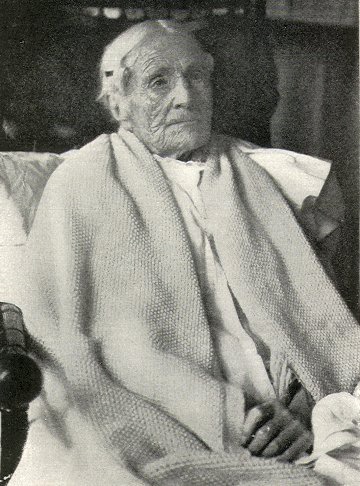
Ageing, or senescence, is the gradual decline in the body's function over time, bringing a rising risk of disease and death. Tissues repair themselves less well, organs work less efficiently, and the body becomes more fragile. It is a process so familiar that we rarely ask why it should happen at all.
At the level of cells, ageing involves accumulating damage to DNA and proteins, the shortening of protective caps on the chromosomes called telomeres, and cells that stop dividing or stop working properly. Many small failures, building up over years, add up to the visible decline of the whole body.
Ageing does not proceed uniformly. Different tissues and organs age at different rates, and different species age at hugely different speeds. A mouse grows old in a couple of years, a human in decades, and some creatures barely seem to age at all. This variety is itself a clue, and a puzzle.
One family of theories holds that ageing is simply wear and tear. Over time, damage from the ordinary business of living, from the chemistry of metabolism, from radiation and toxins, builds up faster than the body can repair it. On this view, ageing is the slow accumulation of unrepaired harm.

A second, evolutionary view asks why natural selection has not simply eliminated ageing. The answer, it suggests, is that selection weakens with age. Because most reproduction happens early in life, harmful effects that strike later go uncorrected, and genes that help when young may even harm us when old.
These ideas raise a deep question: is ageing simply unavoidable decay, or is it in some sense programmed, an evolved process that might be slowed or switched off? The two views are not mutually exclusive, and the truth may combine accumulated damage with evolved limits on how much the body invests in repair.
If ageing has identifiable causes, perhaps it can be slowed. Researchers study creatures that age slowly, diets and drugs that extend life in animals, and the biology of cellular damage and repair, hoping to find ways to keep people healthier for longer. The field is active, hopeful, and full of debate.
Researchers still disagree about how much of ageing is unavoidable decay and how much is an evolved or programmable process, and about which cellular changes are causes rather than symptoms. Whether human ageing can be meaningfully delayed remains a major open question, with enormous stakes for medicine and society.
