Radioactive decay is the process by which unstable atomic nuclei spontaneously break down, releasing energy and particles and transforming into other elements. It is a thoroughly proven phenomenon that reshaped physics, chemistry, and even our understanding of Earth's age.
At the heart of every atom is a nucleus, and in some atoms this nucleus is unstable. At an unpredictable moment, it sheds energy by emitting radiation, transforming into a more stable form. This spontaneous breakdown, happening deep within the atom, is radioactive decay.
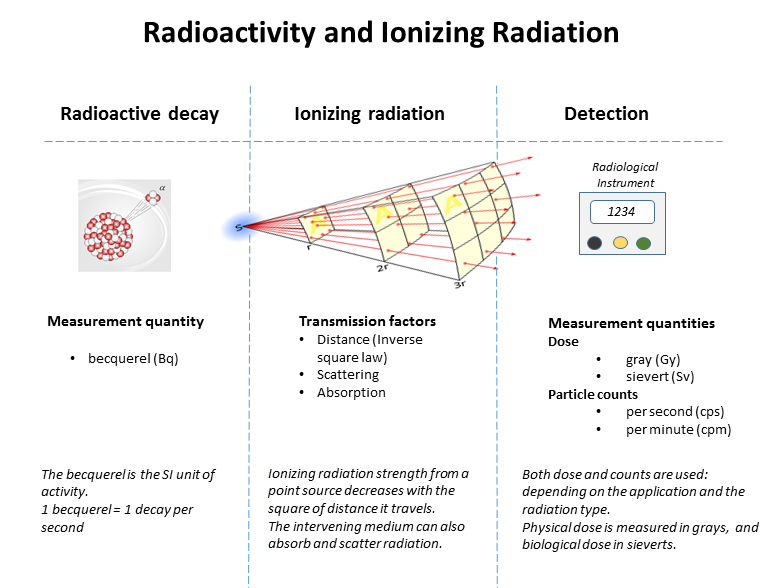
Decay comes in several forms. Alpha decay emits a heavy, slow particle; beta decay emits a fast, light one; and gamma decay releases pure energy as high frequency radiation. Each kind has different penetrating power and effects, and a single radioactive substance may decay through several of them.
As a nucleus decays, it can change into the nucleus of a different element entirely, achieving the transmutation that alchemists dreamed of. A radioactive atom of one element may, over a series of decays, become an atom of another, transforming itself through a chain of steps until it reaches stability.
Although any single atom decays at a random, unpredictable instant, a large collection of them decays at a steady, precisely measurable rate. The time for half of a sample to decay, its half life, is fixed and characteristic, ranging from fractions of a second to billions of years depending on the substance.
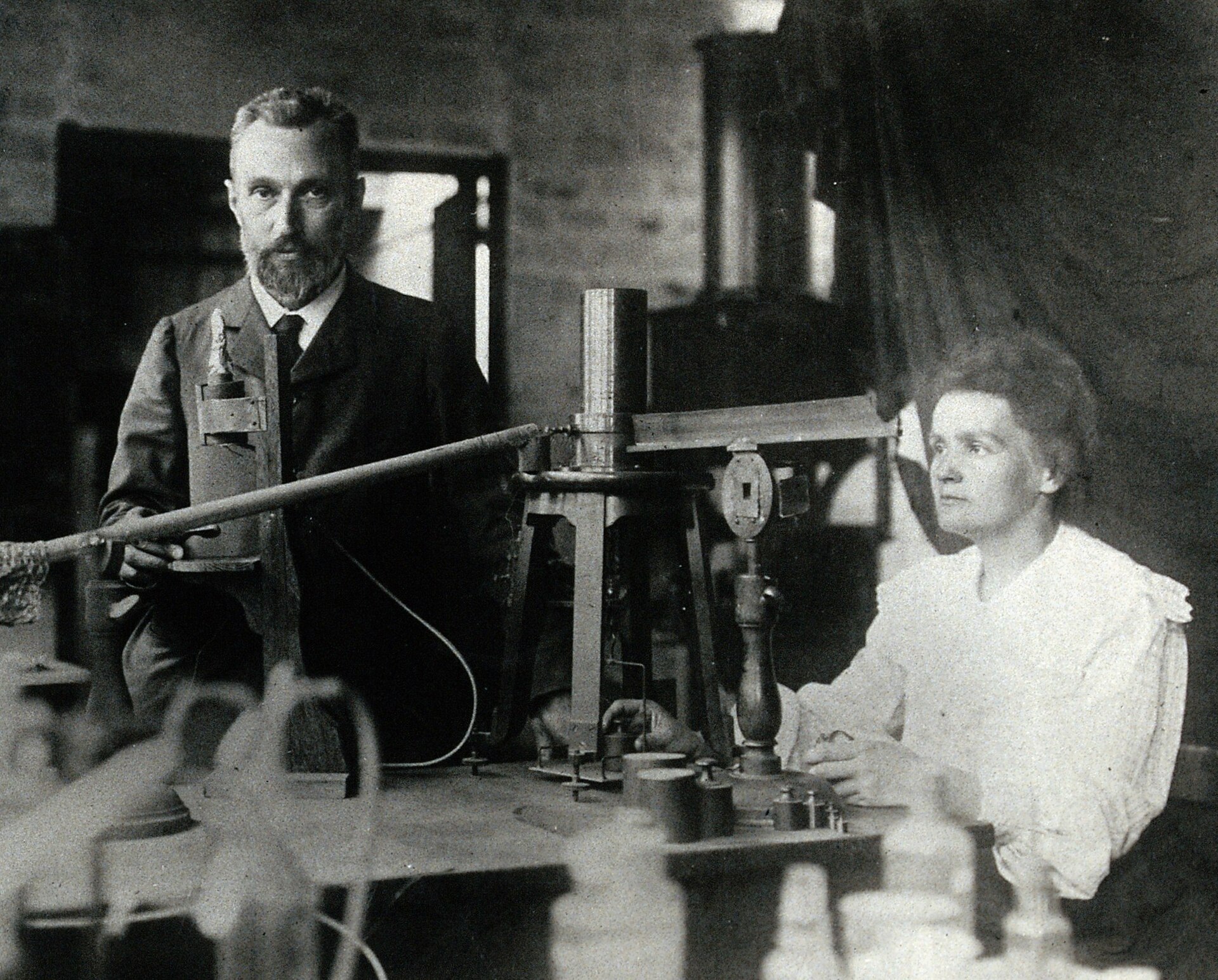
Radioactivity was discovered in 1896 by Henri Becquerel and studied deeply by Marie and Pierre Curie, who isolated new radioactive elements such as radium and gave the phenomenon its name. Their painstaking, dangerous work, for which Marie Curie won two Nobel Prizes, founded an entire new field of science.
Ernest Rutherford and others worked out the different types of radiation and showed, through careful and repeatable experiments, that decay genuinely transmutes one element into another. The reality and the regularity of radioactive decay were established firmly as solid, measurable physics.
The steady, clock like rate of decay makes radioactive atoms into natural timepieces. By measuring how much of a radioactive substance has decayed, scientists can date rocks, fossils, and ancient artefacts. This is how the great age of the Earth, billions of years, was finally established beyond doubt.
Radioactive decay also releases the energy that powers nuclear reactors and weapons, and it is harnessed in medicine to image the body and to treat cancer with targeted radiation. Few discoveries have had such far reaching effects, from dating the past to lighting cities to fighting disease.
