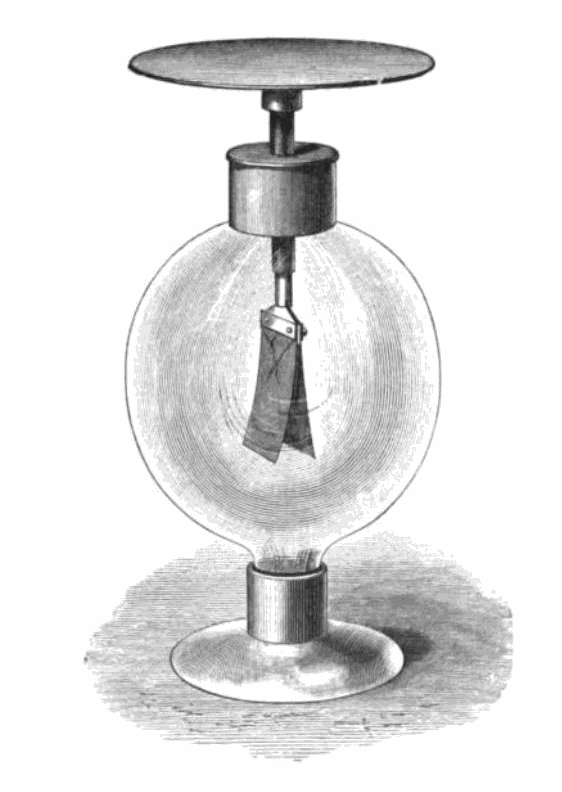
The photoelectric effect is the release of electrons from a material when light shines on it. Simple to observe yet impossible to explain with older physics, it provided one of the first decisive proofs that light comes in discrete packets of energy.
When light of the right kind strikes a metal surface, it can eject electrons from the metal. The effect is easy to demonstrate and was well known to nineteenth century physicists, who could measure the tiny currents of liberated electrons. But its details held a deep surprise.
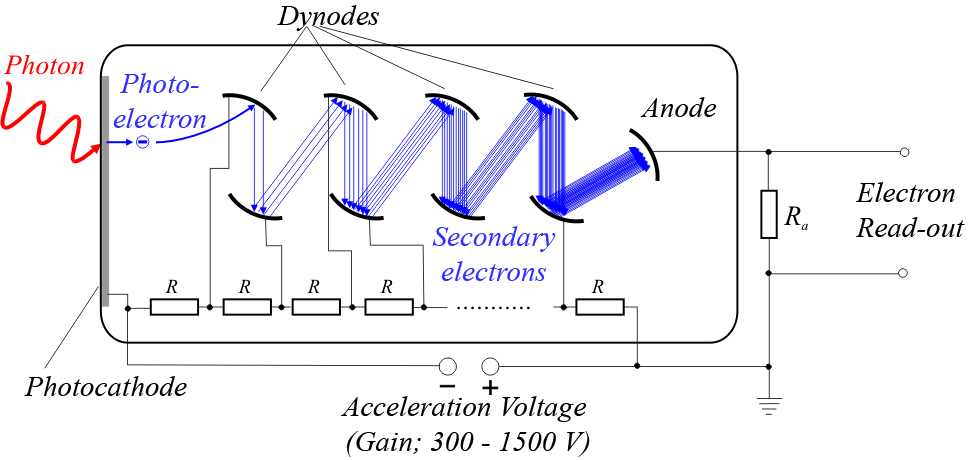
Curiously, whether electrons are ejected depends on the colour, or frequency, of the light, not its brightness. Dim blue or ultraviolet light can free electrons, while even very bright red light may free none at all. And increasing the brightness produces more electrons, but not faster ones. These rules made no sense at the time.
Older physics pictured light purely as a wave, and a wave's energy depends on its brightness. So a bright enough light of any colour should, given time, shake electrons loose, and brighter light should give them more energy. The photoelectric effect flatly contradicted these expectations, leaving physicists baffled.
In 1905, Albert Einstein offered a radical explanation. Light, he proposed, comes in discrete packets of energy, later called photons, with each photon's energy set by the light's frequency, its colour. A single photon either has enough energy to knock out an electron, or it does not.
This neatly explained the puzzling rules. A blue or ultraviolet photon carries enough energy to free an electron; a red photon does not, no matter how many of them arrive. Brighter light means more photons, hence more freed electrons, but each electron's energy depends only on the colour. The puzzle dissolved.
Einstein's account made precise, testable predictions, and careful experiments confirmed them exactly. The relationship between light's frequency and the energy of the freed electrons matched his formula. For this work, which helped found quantum physics, Einstein was awarded the Nobel Prize.
The photoelectric effect was a foundation stone of quantum mechanics, showing that light has a particle nature alongside its wave nature. This strange dual character, that light is both wave and particle, became one of the central and most puzzling features of the quantum world.
Far from a mere curiosity, the photoelectric effect is intensely practical. It underlies the solar cells that turn sunlight into electricity, the light sensors in cameras and automatic doors, and many devices that detect or measure light. It is proven, everyday physics with profound implications for our understanding of nature.
