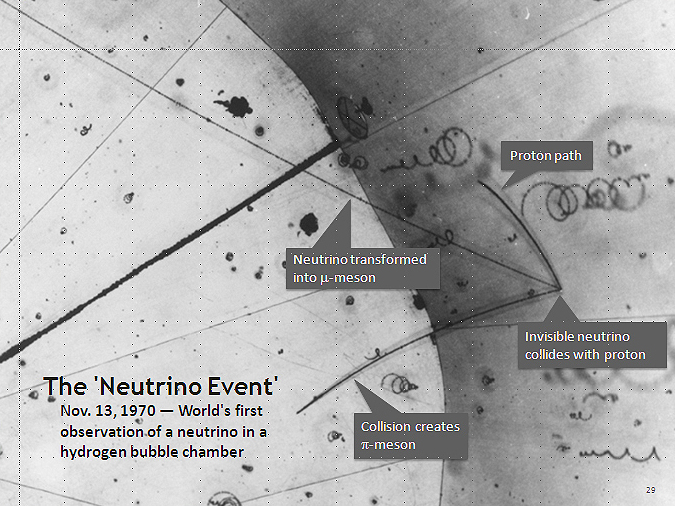
The neutrino is a tiny, almost massless subatomic particle that barely interacts with anything, streaming through matter, and through us, in unimaginable numbers. Once a desperate theoretical guess, its existence has been firmly proven, and it has become a key tool for exploring the universe.
Neutrinos are so reluctant to interact with matter that they pass through almost everything as if it were not there. Trillions stream through your body every second without leaving a trace, and a typical neutrino could fly through light years of solid lead unhindered. They earn their nickname, the ghost particle.
Neutrinos slip through matter because they have no electric charge and almost no mass, feeling only the feeblest of nature's forces. While most particles are jostled and stopped by the atoms around them, neutrinos ignore them almost entirely, which is exactly what makes them so fiendishly hard to catch.
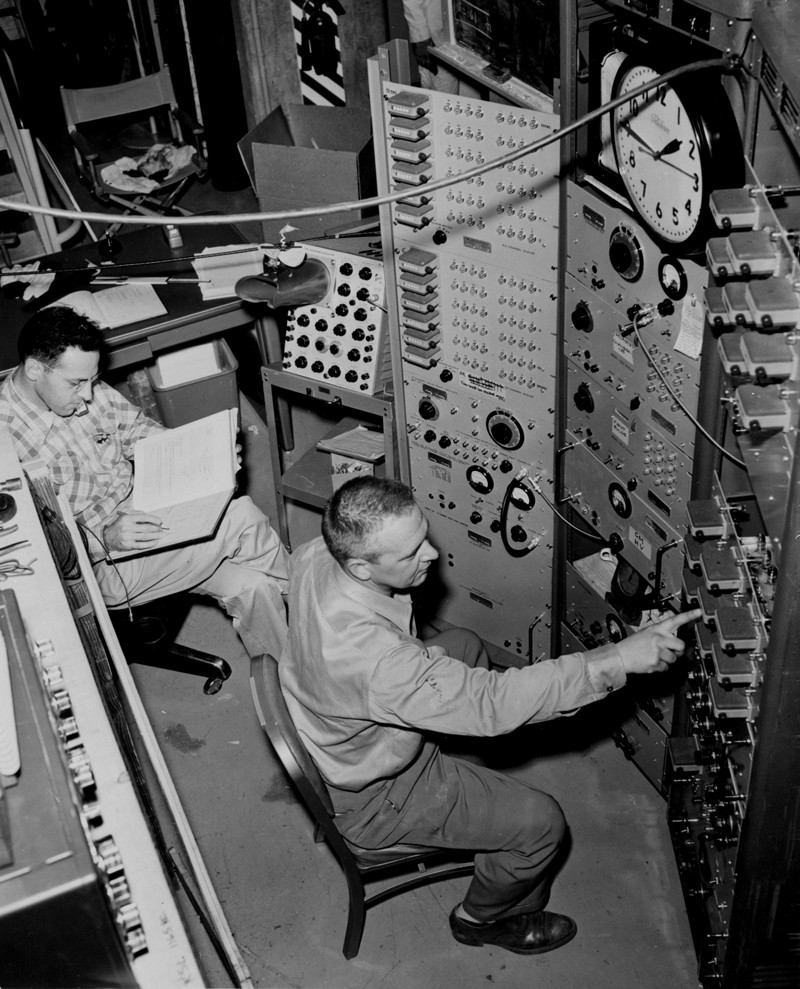
The neutrino was first proposed in 1930 by Wolfgang Pauli, to rescue the law of energy conservation. In certain radioactive decays, energy seemed to vanish, which would violate a sacred principle of physics. Pauli suggested an unseen particle was secretly carrying the missing energy away, a bold and reluctant guess.
Pauli feared his particle was so faint it could never be detected. But in 1956, Fred Reines and Clyde Cowan finally caught neutrinos streaming from a nuclear reactor, using a large detector to spot their rare interactions. After a quarter century as a theoretical idea, the neutrino was proven real.

Because neutrinos interact so rarely, detecting them requires enormous detectors, often huge tanks of water or other material buried deep underground to shield them from other particles. Even so, only a tiny fraction of the passing neutrinos ever leaves a trace, so patience and great size are essential.
Studying neutrinos has brought surprises and Nobel Prizes. They come in three types, and remarkably they can change from one type to another as they travel, a discovery that proved they have a tiny but real mass, overturning the earlier belief that they were completely massless.
Because neutrinos pass through almost everything, they carry information from places that light cannot escape, such as the cores of stars and the heart of supernova explosions. They let astronomers peer inside the Sun and witness cosmic catastrophes that would otherwise be hidden from view.
Giant underground detectors now use neutrinos to study the Sun, the deep interior of the Earth, and the distant, violent universe, opening a new branch of astronomy. The ghost particle, once a desperate guess to balance the books of physics, has become a powerful messenger from the cosmos.
