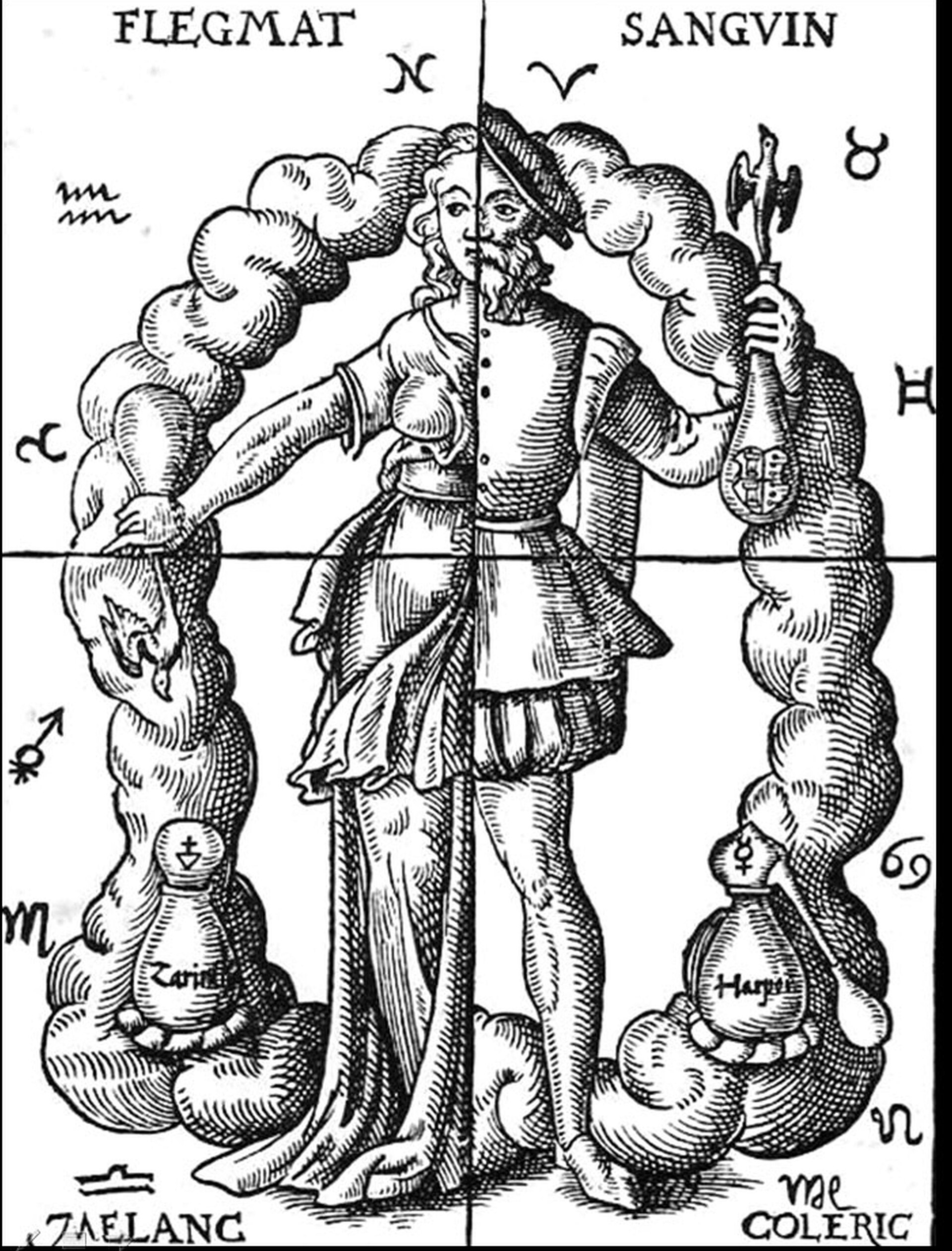
Humorism, or humoral theory, was the belief that human health depends on the balance of four bodily fluids, called humors: blood, phlegm, yellow bile, and black bile. It was the foundation of Western medicine for roughly two thousand years before being discarded, and few wrong ideas have ever held on for so long.
Rooted in ancient Greek medicine and elaborated above all by Hippocrates and later Galen, the theory held that an excess or shortage of any humor caused illness. Treatment aimed to rebalance the humors, which is precisely how harmful practices such as bloodletting, purging, and rigid dietary rules became the standard of care for centuries.
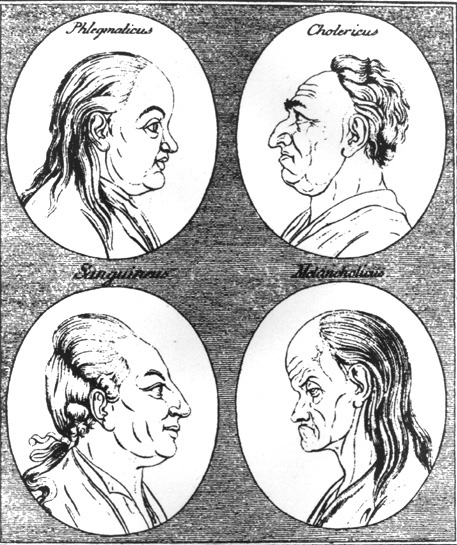
Humorism was a grand, all encompassing system. The four humors were linked to the four elements, the four seasons, and four personality types, so that a person dominated by blood was cheerful while one dominated by black bile was gloomy. It claimed to explain not just disease but temperament, season, and the whole order of nature in one neat scheme.
The four humors are not real substances that govern health, and disease does not arise from their imbalance. As anatomy revealed the body's true structure, as chemistry explained its real processes, and as germ theory identified the actual causes of infection, every part of humoral medicine was shown to be mistaken.
Part of humorism's staying power was its very completeness. Because it could explain any illness after the fact, by pointing to some imbalance, it was almost impossible to prove wrong from within, and its treatments, when patients happened to recover on their own, seemed to be confirmed. Tested honestly, though, its remedies proved useless at best and dangerous at worst.
Humorism is fully debunked, yet its influence lingers quietly in everyday language. The words sanguine, phlegmatic, choleric, and melancholic all come straight from the four humors, and the very idea of a balanced "temperament" is its direct descendant.
The long reign of humorism is a reminder of how deeply a wrong theory can shape the way people understand the body and the mind, long after the theory itself has fallen, and of why medicine had to learn to test its ideas against careful evidence rather than elegant systems.
