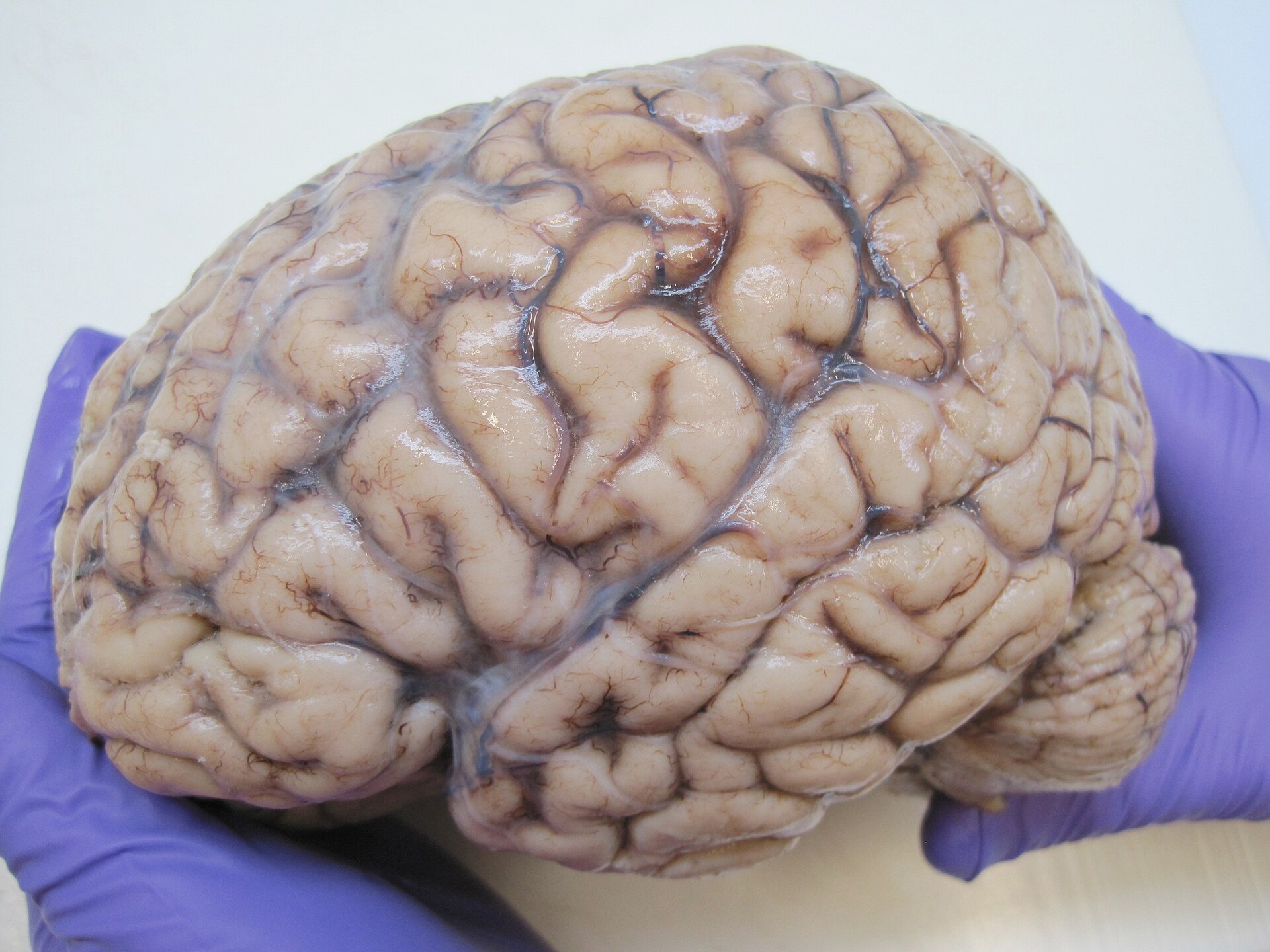
The human brain is the command centre of the body and the most complex object known in the universe. Weighing only about 1.4 kilograms, it contains roughly 86 billion nerve cells, or neurons, wired together by trillions of connections, and from this dense web emerge everything we think, feel, remember, and do.
The brain has three broad parts. The cerebrum, the large wrinkled mass that fills most of the skull, handles conscious thought, the senses, voluntary movement, language, and memory. The cerebellum, tucked beneath it at the back, coordinates balance and fine, practised movement. The brainstem, where the brain meets the spinal cord, controls the automatic functions that keep us alive, such as breathing and heartbeat.
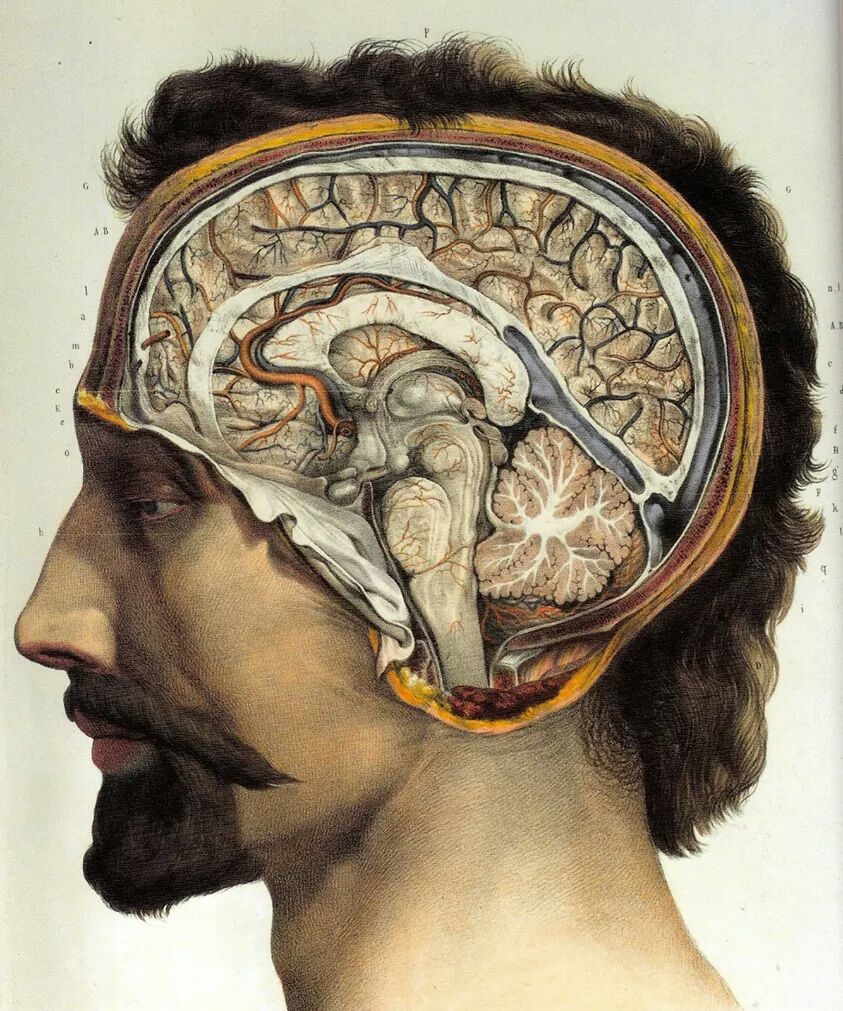
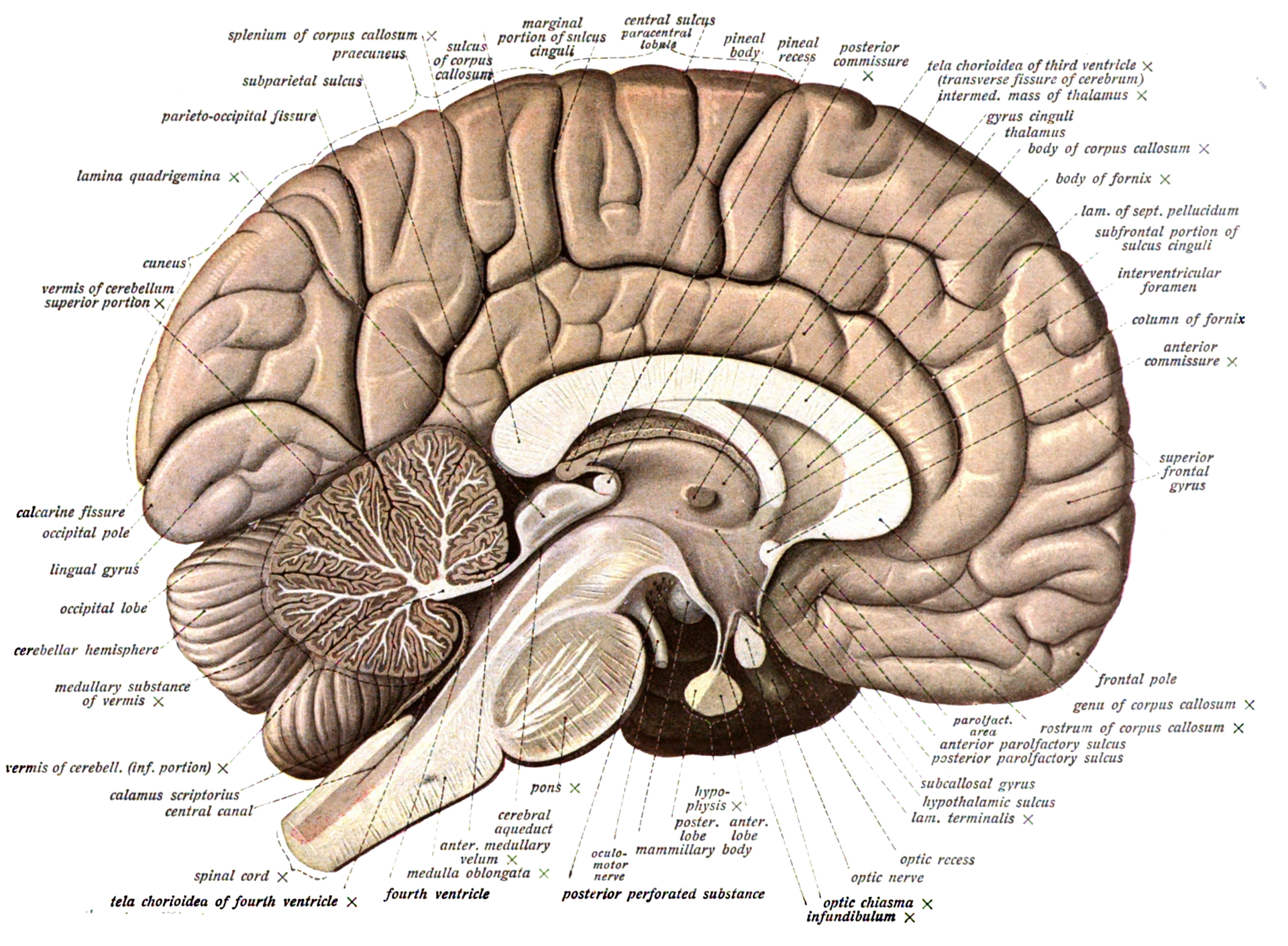
The deep folds and grooves of the cerebrum vastly increase its surface area, packing more processing power into a limited space. If the wrinkled outer layer were smoothed out flat, it would cover an area far larger than the skull that holds it. Anatomists spent centuries mapping these folds and the structures beneath them.
The brain runs on electricity and chemistry. Neurons fire tiny electrical impulses and pass signals to one another across gaps called synapses using chemical messengers known as neurotransmitters. The pattern of these connections, constantly strengthening and weakening, is the physical basis of learning and memory.
The cerebrum is split into left and right hemispheres, joined by a thick bundle of fibres that lets them communicate. The two sides are not identical: in most people, areas handling language sit mainly on the left, while the right tends to specialise in spatial and visual processing. The popular idea of strictly "left-brained" or "right-brained" people, though, is a myth, as the hemispheres work together constantly.
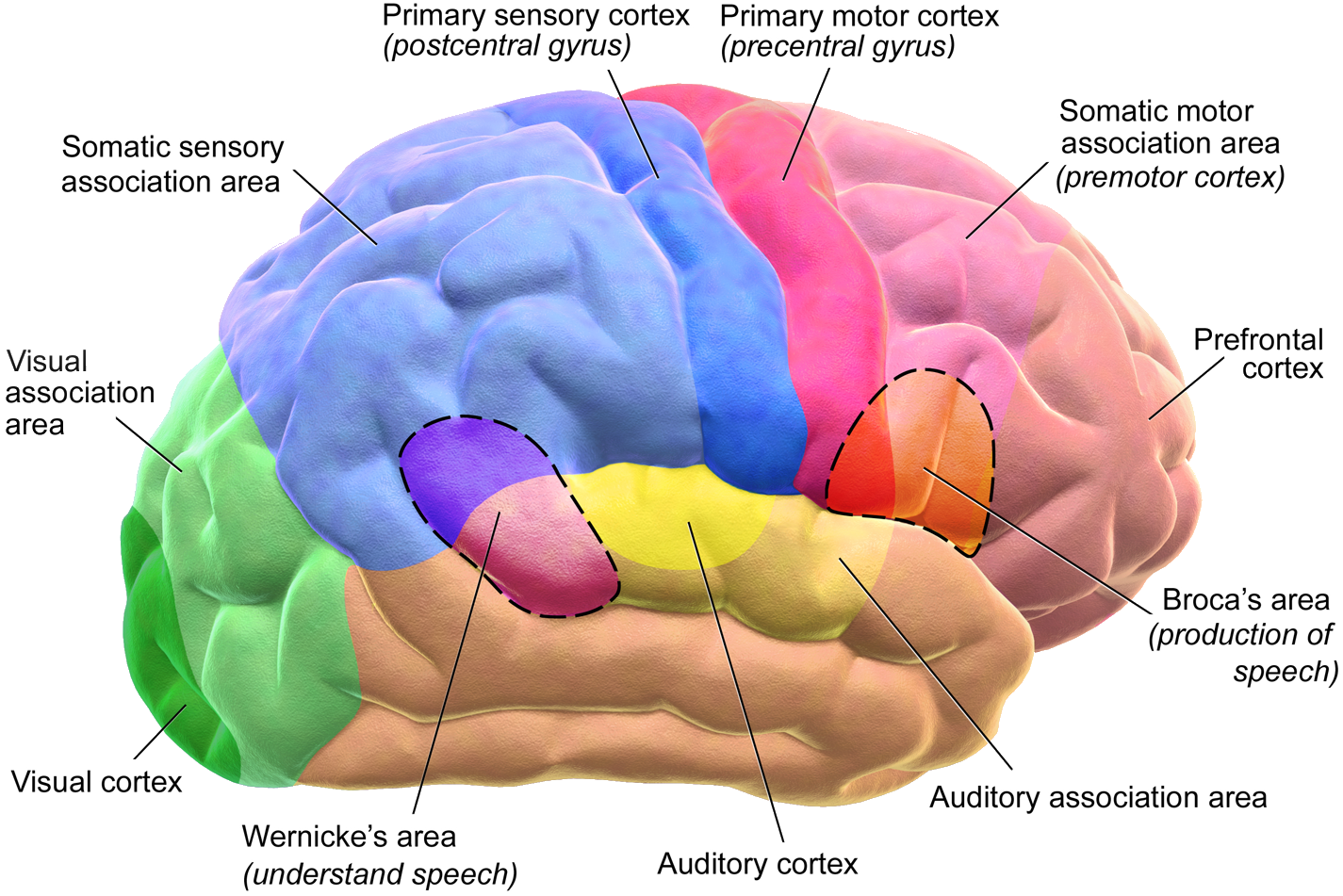
Different regions specialise in different tasks, yet they work as an integrated whole. The outer layer, the cerebral cortex, is mapped into areas responsible for movement, sensation, vision, hearing, and higher reasoning, so that damage to one patch can affect a very specific ability while leaving others intact.
For its modest size, the brain is astonishingly demanding, consuming about a fifth of the body's energy even though it makes up only a fiftieth of its weight. It is also remarkably plastic: it rewires itself throughout life in response to experience, which is how we learn new skills and, to a degree, how the brain recovers after injury. This adaptability is greatest in childhood but never fully disappears.
Despite centuries of study, the brain keeps its deepest secret: how the firing of billions of cells gives rise to consciousness, the felt experience of being a self. Modern tools such as brain imaging let scientists watch the living brain at work and have transformed our understanding of memory, emotion, and disease, yet the link between brain activity and the mind remains one of the greatest unanswered questions in all of science.
