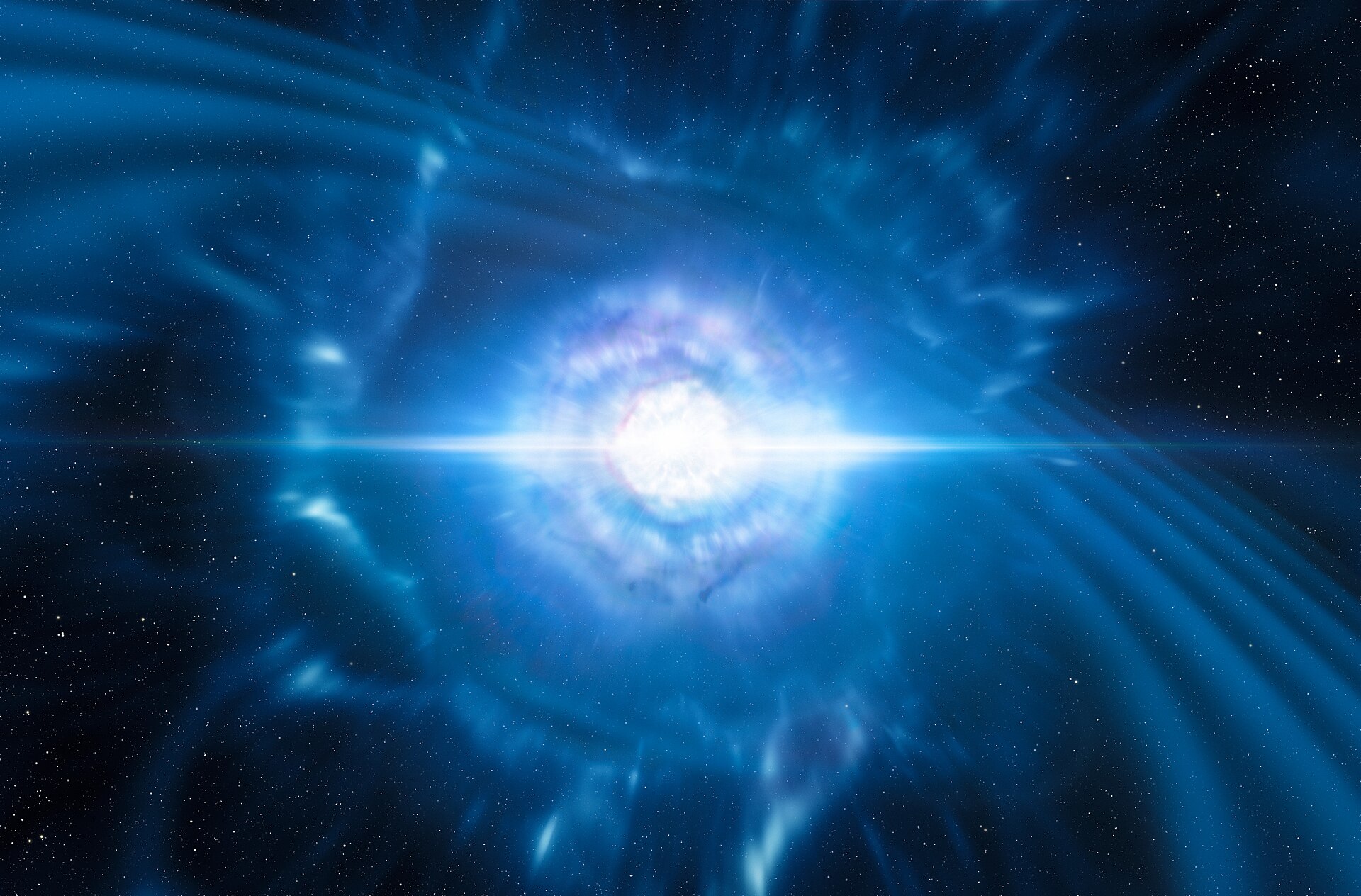
Gravitational waves are ripples in the fabric of space and time, set off by some of the most violent events in the universe. Predicted by Einstein a century before they were seen, their direct detection in 2015 confirmed them beyond doubt and opened a new way of observing the cosmos.
Einstein's theory of general relativity describes gravity not as a force but as the bending of spacetime by mass. When very massive objects accelerate, they shake spacetime itself, sending out waves that travel outward at the speed of light, gently stretching and squeezing space as they pass.
Einstein predicted gravitational waves in 1916, but he doubted they could ever be detected, so faint would they be by the time they reached Earth. For most of a century they remained a theoretical curiosity, their existence accepted by physicists but their direct observation seemingly out of reach.
The strongest gravitational waves come from the most violent events imaginable: pairs of black holes spiralling together and merging, or dense neutron stars colliding. These cataclysms release stupendous energy in the form of gravitational waves, shaking the universe in their final moments.
By the time these waves reach Earth, they are unimaginably weak, shifting distances by less than the width of a single proton across a detector kilometres long. Catching such a whisper required instruments of almost incredible sensitivity, decades in the making.
In 2015 the LIGO observatories, a pair of vast, ultra precise instruments, caught the unmistakable signal of two black holes colliding more than a billion light years away. The waveform matched Einstein's predictions exactly. It was a triumph honoured with a Nobel Prize, and it has since been repeated many times.
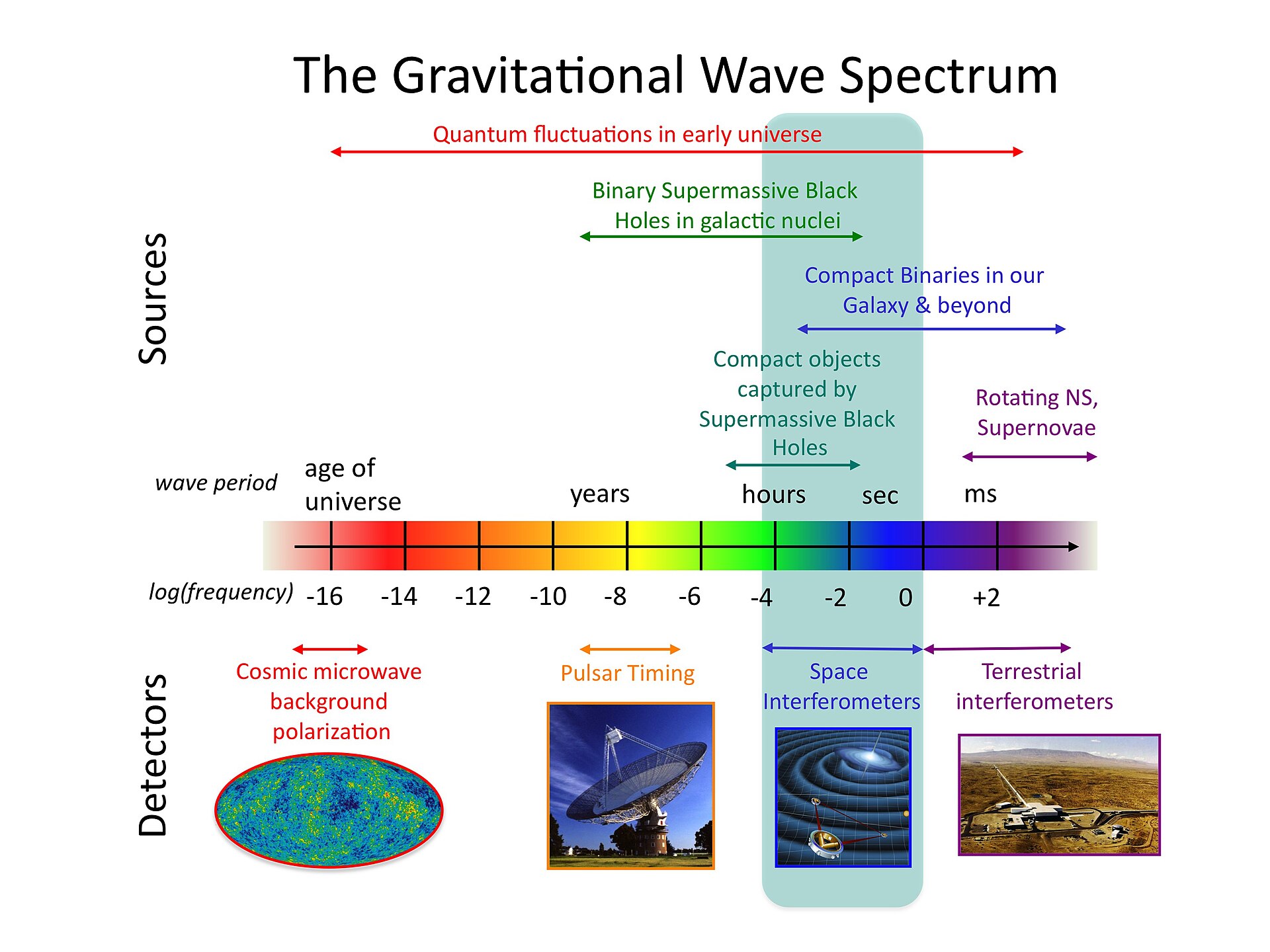
The detectors work by splitting a laser beam down two long arms set at right angles. A passing gravitational wave stretches one arm and squeezes the other by a minuscule amount, shifting the laser light in a way that can be measured. The precision required is among the greatest ever achieved.
Gravitational waves let astronomers sense events that give off little or no light, such as colliding black holes, revealing a hidden side of the universe entirely invisible to ordinary telescopes. They are a wholly new way of observing the cosmos, listening to it rather than looking at it.
The detection of two neutron stars merging, seen in both gravitational waves and light at once, confirmed where some heavy elements like gold are forged, and let scientists study the event from two kinds of signal together. A field that began as a bold prediction is now a thriving new branch of astronomy.
