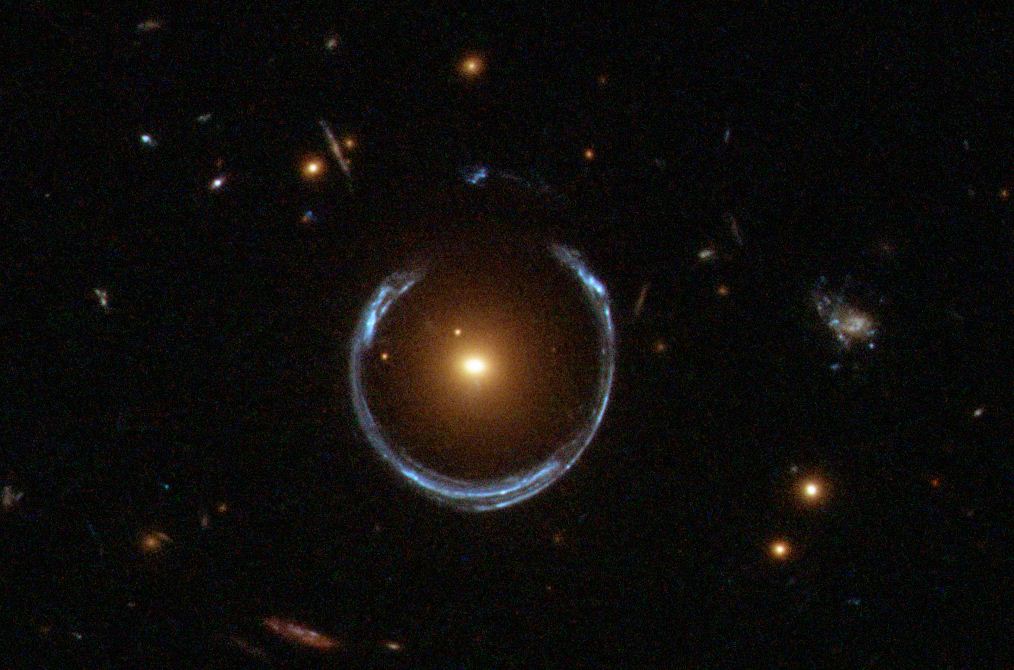
Gravitational lensing is the bending of light from distant objects by the gravity of massive bodies that lie in between, which can magnify and distort the images we see. Predicted by general relativity and now routinely observed, it has become a powerful tool of astronomy.
Because gravity bends the path of light, a massive object such as a galaxy or a cluster of galaxies acts like a lens. Light from something far behind it is bent as it passes, so the distant object can appear brightened, stretched into arcs, or even multiplied into several images at once.
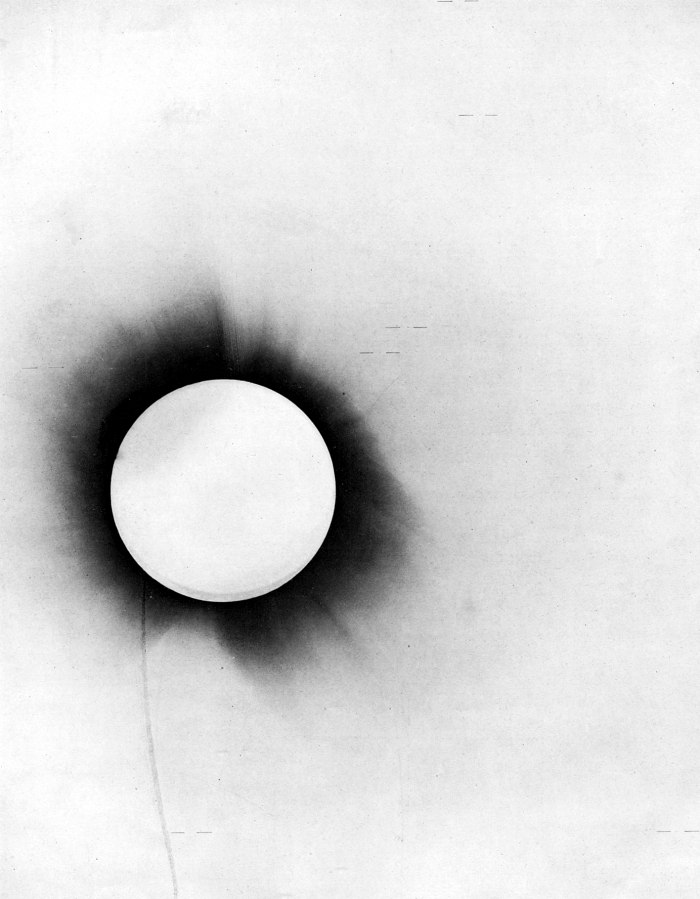
A lens of glass bends light by refraction; a gravitational lens bends it by warping the very space the light travels through. The more massive the intervening object, and the more closely the light passes, the more the path is bent. The result is a natural lens made not of glass but of gravity itself.
The patterns lensing produces are spectacular. When a distant source, a lens, and the observer line up perfectly, the light can be smeared into a complete circle, called an Einstein ring. Imperfect alignments produce dramatic arcs, or split a single distant object into several separate images around the lens.
Einstein himself worked out that gravity could create such lenses, though he doubted one would ever be seen. Decades later, astronomers found exactly the predicted patterns: multiple images of a single distant quasar, then rings and arcs, confirming the prediction and the underlying theory of gravity again and again.
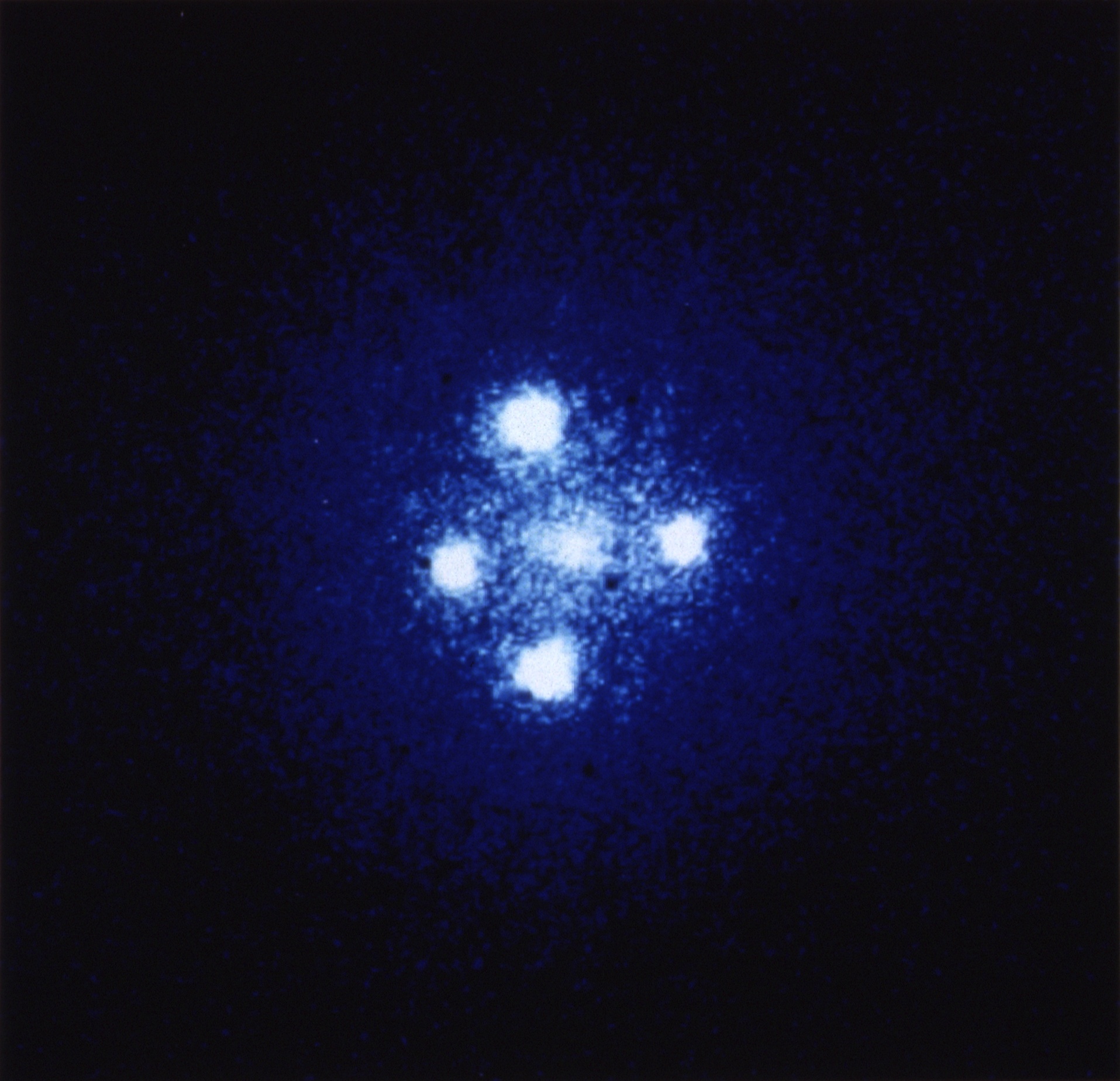
Gravitational lensing has been observed countless times, in many forms and across the universe. Each observation matches the predictions of general relativity, making lensing not only a confirmation of Einstein's theory but a reliable, well understood phenomenon that astronomers can use with confidence.
Because the amount of bending depends on the mass of the lens, lensing lets astronomers weigh galaxies and clusters, including their unseen "dark matter," which betrays itself only through its gravity. By mapping how lensing distorts background light, scientists chart the distribution of this mysterious, invisible matter.
Lensing also magnifies extremely distant galaxies, letting telescopes see fainter, farther objects than they otherwise could. A massive foreground cluster can act as a natural telescope, brightening galaxies from the early universe and revealing them in detail that would otherwise be impossible to capture.
