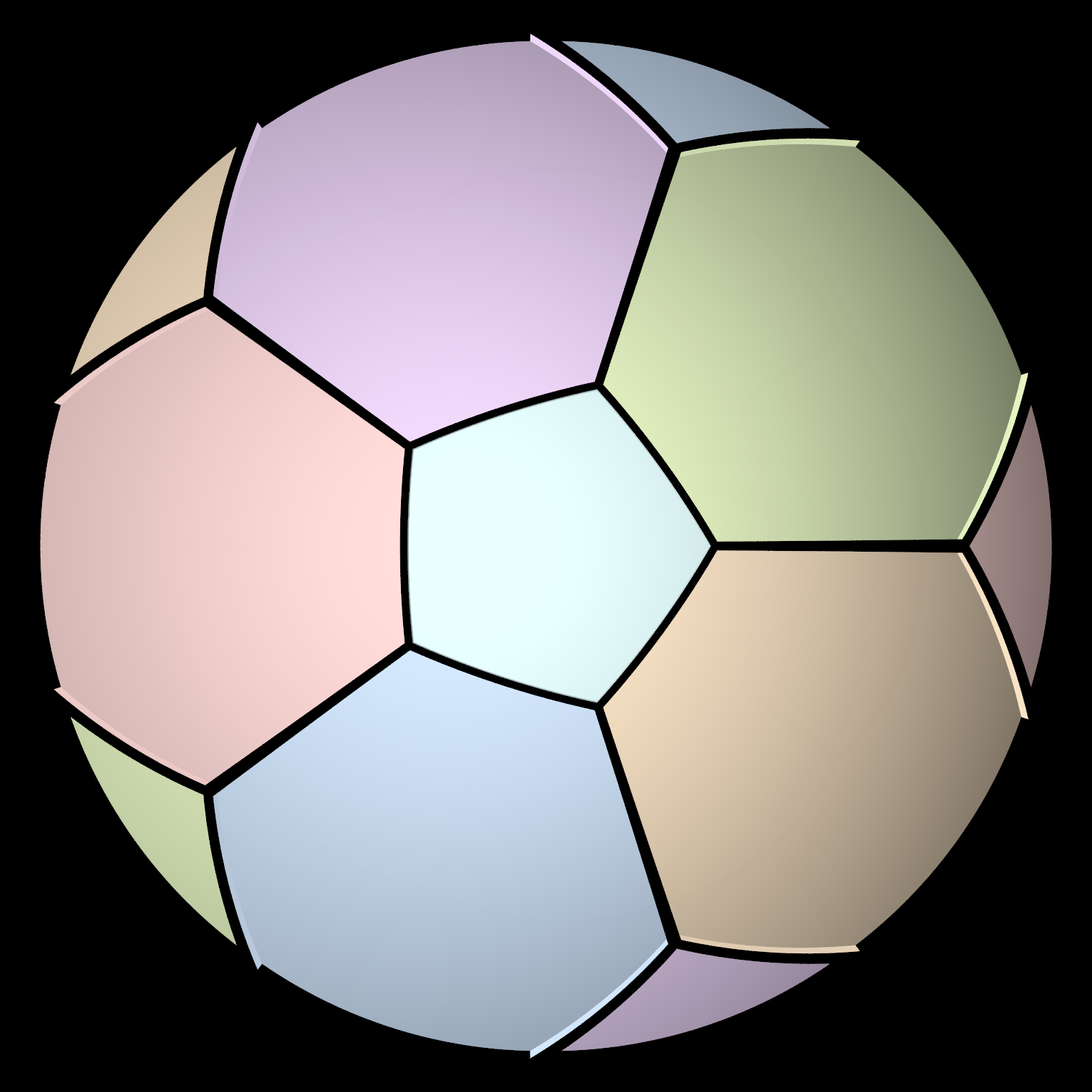
The four color theorem states that any map drawn on a flat surface can be colored using only four colors in such a way that no two regions sharing a border are given the same color. First conjectured in 1852, it became one of the most discussed and surprising problems in the history of mathematics.
Mapmakers had long noticed that four colors always seemed to be enough, no matter how tangled the borders. Proving it, however, meant showing that four colors suffice for every conceivable map, including ones far more complex than any real geography.
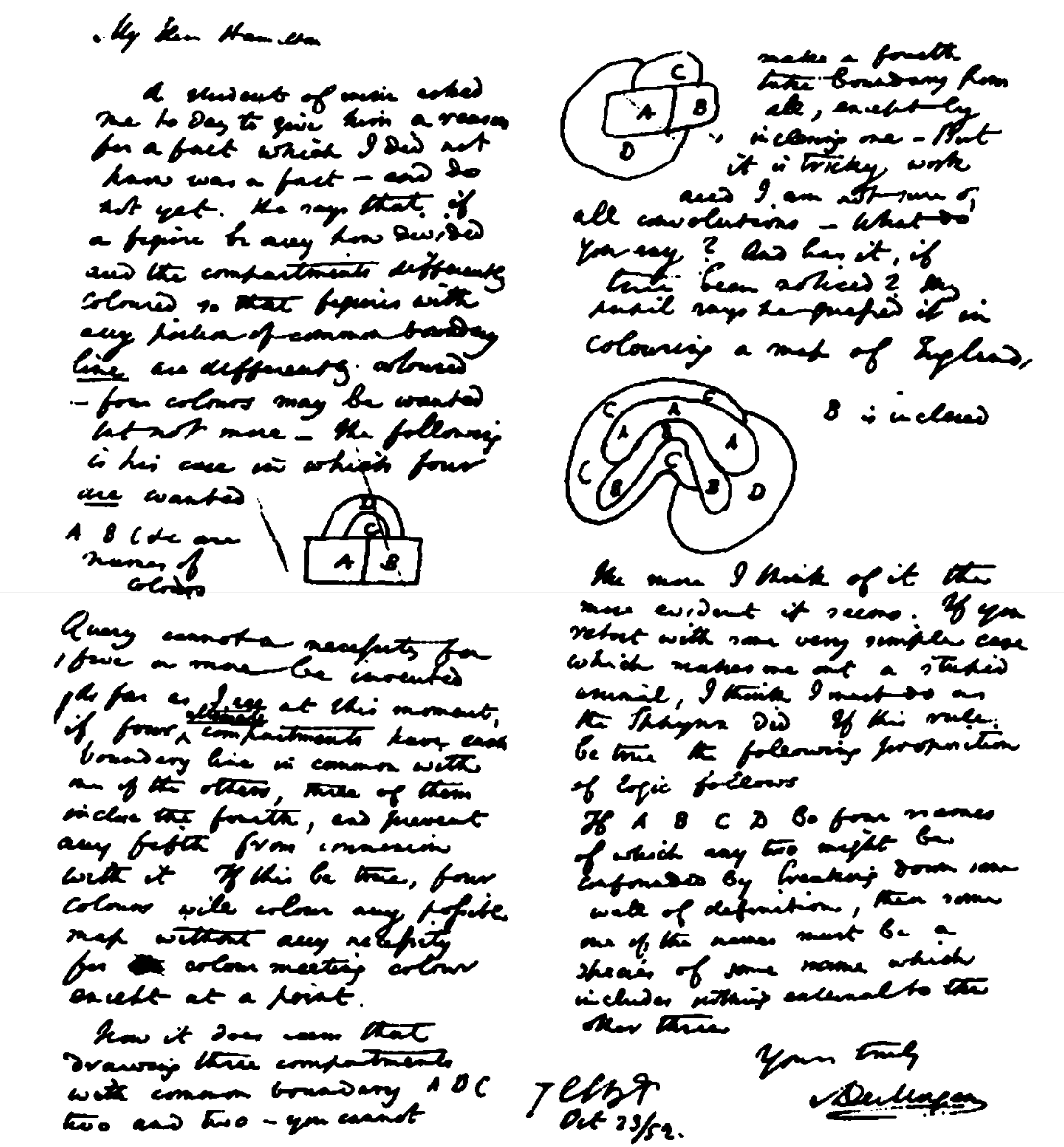
The problem was first raised in 1852 by a student, Francis Guthrie, who noticed while coloring a map of the counties of England that four colors always sufficed. His question passed through his brother to the mathematician Augustus De Morgan, who spread it among his colleagues.
Over more than a century, many proposed proofs were put forward and then quietly found to contain fatal errors. One famous attempt was widely accepted for eleven years before a flaw was discovered, and the problem gained a reputation for being deceptively hard, luring in confident solvers only to defeat them.
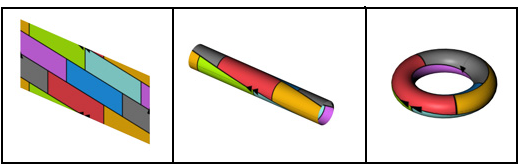
The result depends crucially on the flat, plane like surface of an ordinary map. On a doughnut shaped surface, called a torus, the rules change, and up to seven colors can be required. This sensitivity to the shape of the surface is part of what made the plane case so subtle to pin down.
The theorem was finally proven in 1976 by Kenneth Appel and Wolfgang Haken, but in a way that startled the mathematical world. They reduced the infinite problem to a large but finite set of nearly two thousand specific configurations, and then used a computer to check each one. It was the first major theorem whose proof depended essentially on a machine.
Because the proof rested on computer calculation, with steps no human could realistically verify by hand, it provoked a lasting debate about what a mathematical proof really is. Could a result be considered proven if no single person could read and check every step?
In the decades since, computer assisted proofs have become an accepted and increasingly important tool, and the four color theorem is remembered as the case that opened that door. The result itself is now beyond doubt: on any flat map, four colors always suffice.
