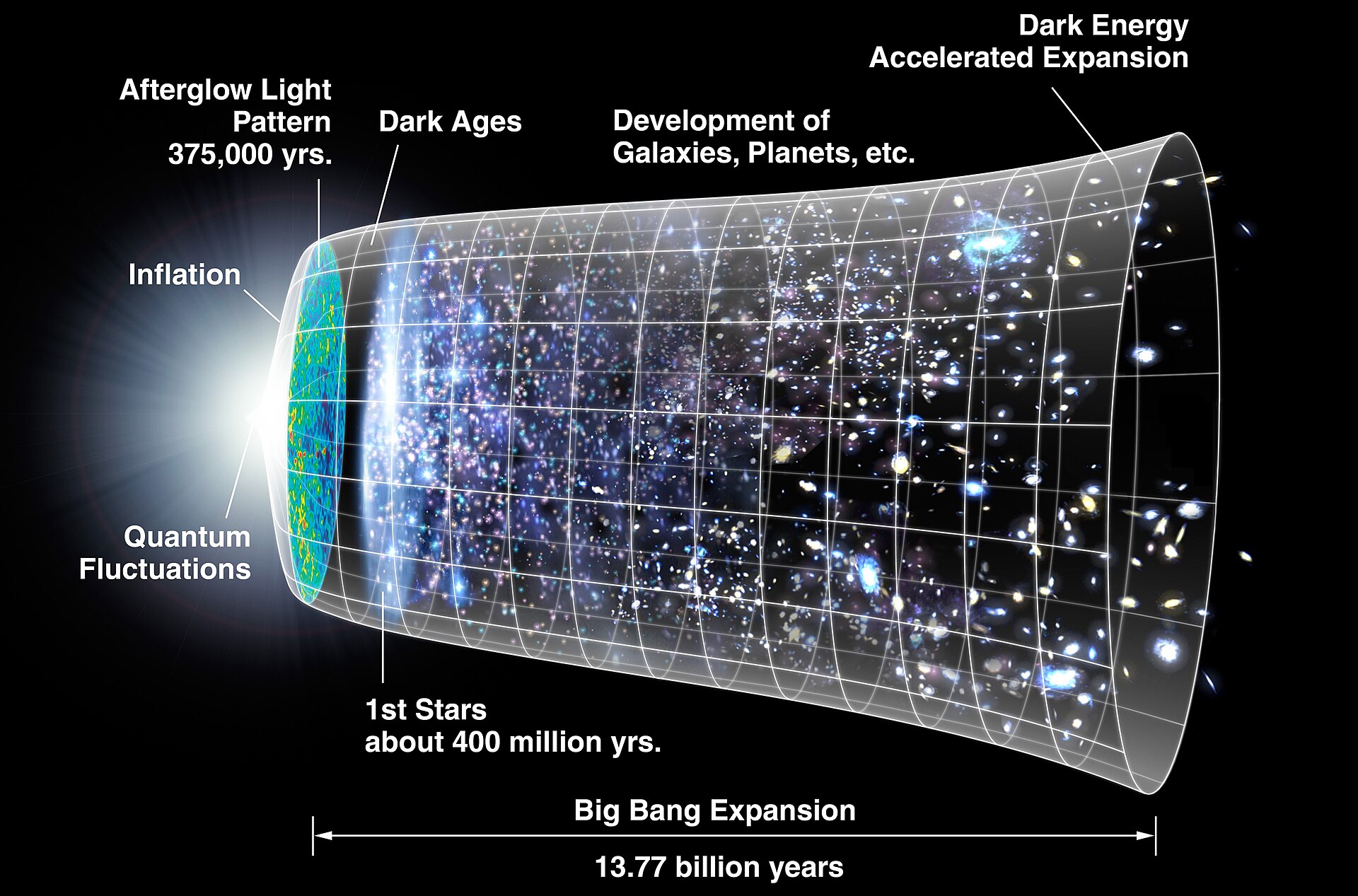
The universe is expanding: the galaxies are, on average, moving apart, and the space between them is stretching. Once a startling discovery, the expansion of the universe is now established beyond doubt and is the foundation of modern cosmology.
Almost every distant galaxy is moving away from us, and the farther away it is, the faster it recedes. This simple, sweeping pattern is exactly what you would expect if the whole universe were expanding, carrying the galaxies apart from one another in every direction.
It is important to grasp that the galaxies are not flying out through space from some central explosion. Rather, space itself is stretching, carrying the galaxies along with it like dots painted on the surface of an inflating balloon. Crucially, there is no centre; every observer, anywhere, sees the same outward rush.
In the 1920s, the astronomer Edwin Hubble measured the distances and motions of distant galaxies and found the telltale relationship: the more distant the galaxy, the faster it was receding. This discovery overturned the long held belief in a static, unchanging universe and revealed a cosmos in motion.
Astronomers detect this motion through a shift in the colour of a galaxy's light. As a galaxy recedes, its light is stretched toward the red end of the spectrum, an effect called redshift. By measuring this shift, astronomers can tell how fast a galaxy is moving away, and the readings confirm the expansion again and again.
The expansion has been verified by several independent lines of evidence. The redshifts of distant galaxies, the faint afterglow of the early universe known as the cosmic microwave background, and the measured abundance of the lightest chemical elements all fit an expanding cosmos with great precision.
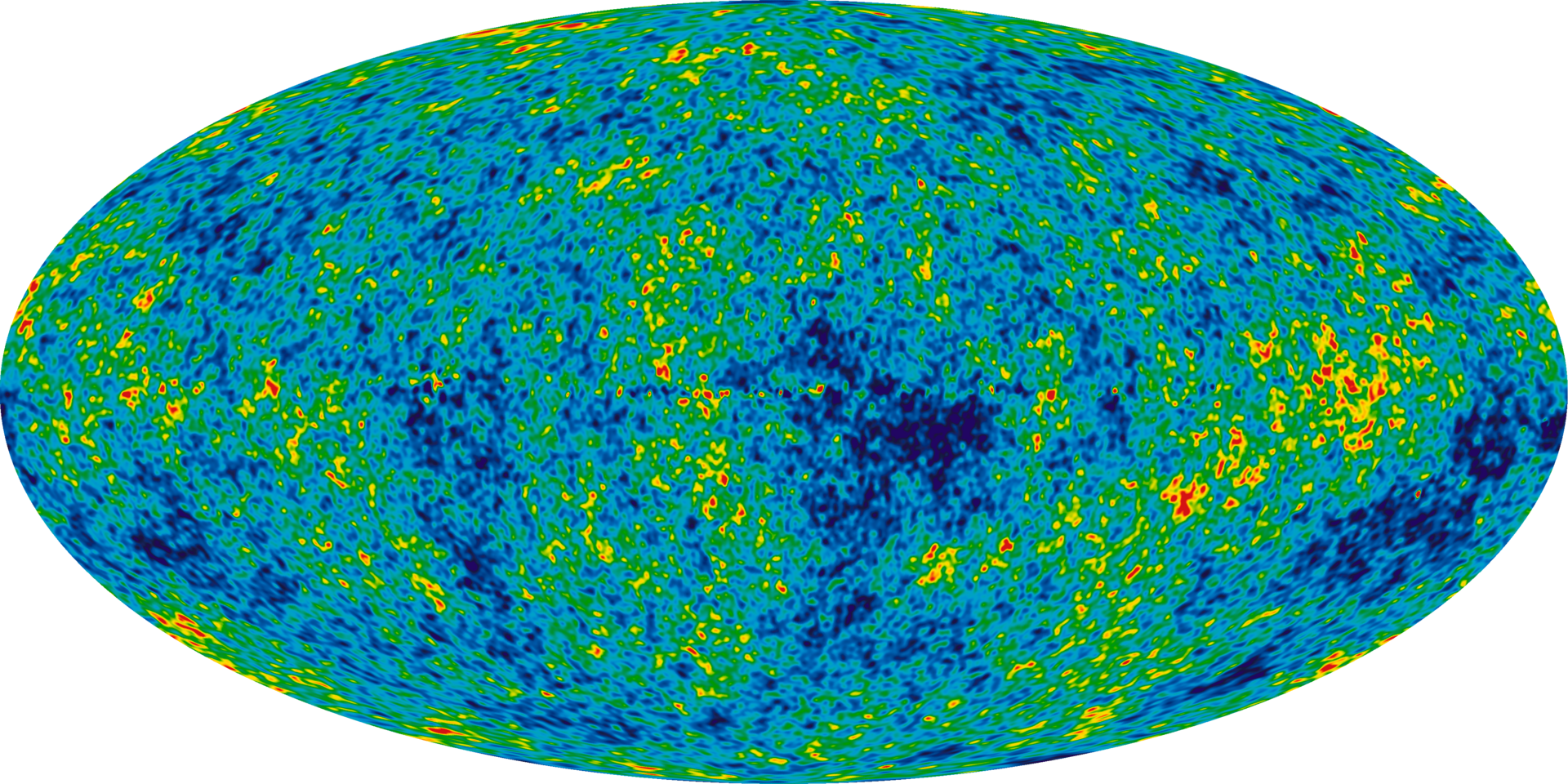
The clinching evidence is the cosmic microwave background, a faint glow filling all of space, left over from a time when the universe was hot and dense. Its existence, and its exact properties, match the predictions of an expanding universe that began in a hot Big Bang, ruling out the alternatives.
Running the expansion backward leads to a remarkable conclusion: long ago the universe was extremely hot, dense, and small. About 13.8 billion years ago it began expanding from this state, the event we call the Big Bang. The expansion we see today is the continuation of that beginning.
In the late 1990s, astronomers made a surprising discovery: the expansion is not slowing under gravity, as expected, but speeding up, driven by a mysterious "dark energy." What dark energy is remains unknown. But that the universe expands, and now accelerates, is no longer in any doubt, a proven pillar of cosmology.
