
The Doppler effect is the change in the observed frequency of a wave when its source and the observer move relative to each other. It is why the pitch of a siren drops as an ambulance speeds past, and it is a thoroughly established and widely used piece of physics.
Everyone has heard it: as an ambulance or train races toward you its siren or horn sounds higher, and as it passes and speeds away the pitch suddenly drops. The vehicle's sound has not changed; what changes is how the waves reach your ears as it moves. This everyday experience is the Doppler effect.

As a source of sound moves toward you, the waves ahead of it bunch up, arriving more often and so sounding higher. As it moves away, the waves stretch out, arriving less often and sounding lower. The faster the motion, the greater the shift. The pitch change captures the source's speed.
The Doppler effect is not limited to sound. It applies to light and all other waves. An approaching light source looks slightly bluer, its waves squeezed, and a receding one slightly redder, its waves stretched. This shift in light is far too small to notice in daily life but is hugely important in astronomy.
The effect was predicted by Christian Doppler in 1842. A few years later it was confirmed in a memorable experiment in which musicians played a steady note aboard a moving train while listeners with a good ear noted how the pitch changed as the train approached and departed, just as Doppler had foretold.
Since then the Doppler effect has been verified countless times, for sound, light, and radio waves alike. It is consistent and reliable enough to build precise scientific instruments upon, and its predictions hold with great accuracy across an enormous range of speeds and circumstances.
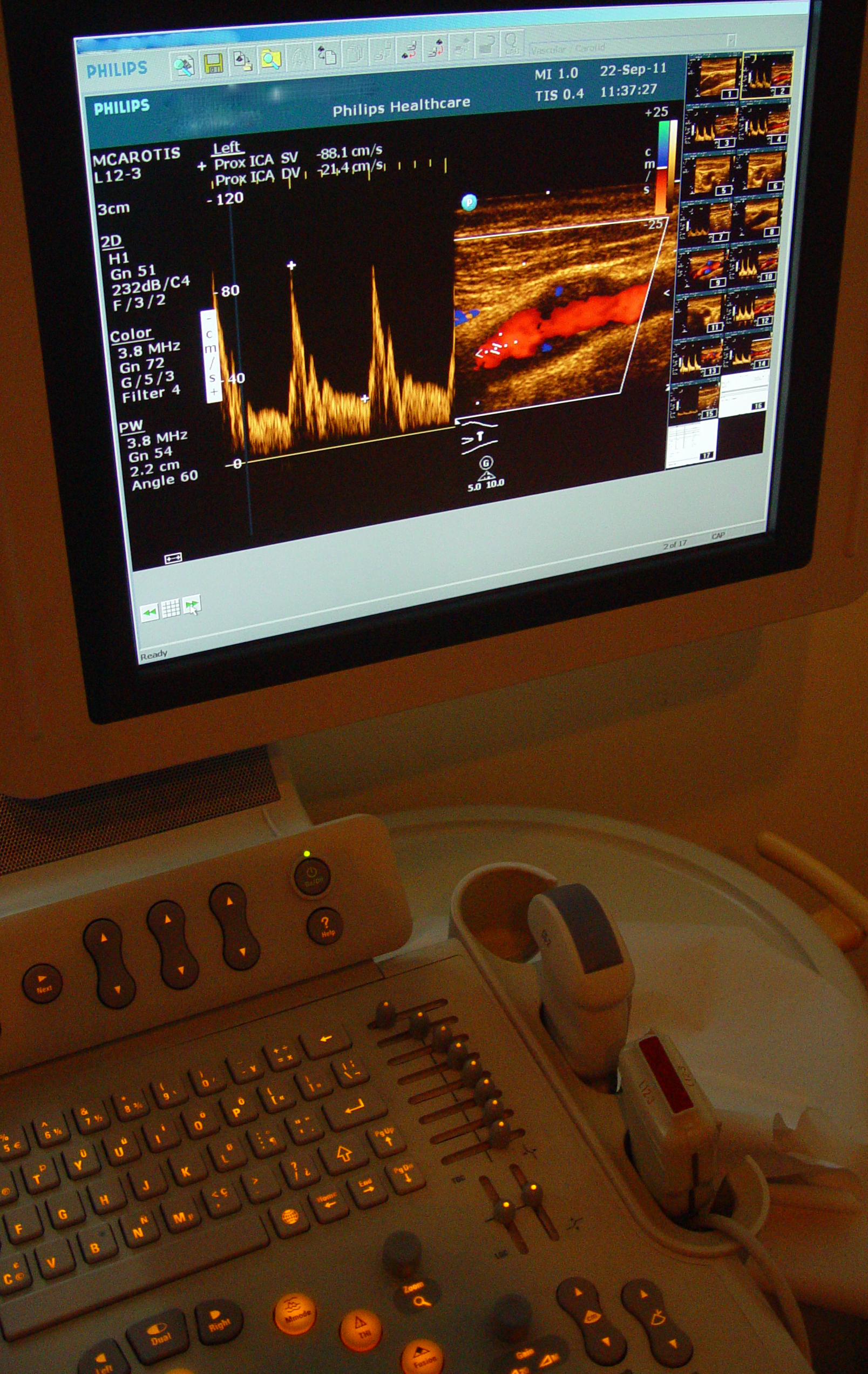
The Doppler effect is put to work all around us. Radar guns measure the speed of cars and baseballs by bouncing waves off them and reading the shift. Weather radar tracks the motion of rain and storms. Doppler ultrasound lets doctors watch blood flow through the body without a single cut.
In astronomy the effect is indispensable. The redshift of light from distant galaxies, a Doppler like stretching, revealed that the universe is expanding. Tiny Doppler wobbles in the light of stars betray the gravitational tug of unseen planets, one of the main ways astronomers have discovered worlds beyond our own.
Few effects are so simple to grasp yet so widely useful. From a passing siren to the speed of a galaxy, the Doppler effect lets us read motion from waves, turning a familiar everyday experience into a precise and powerful scientific tool.
