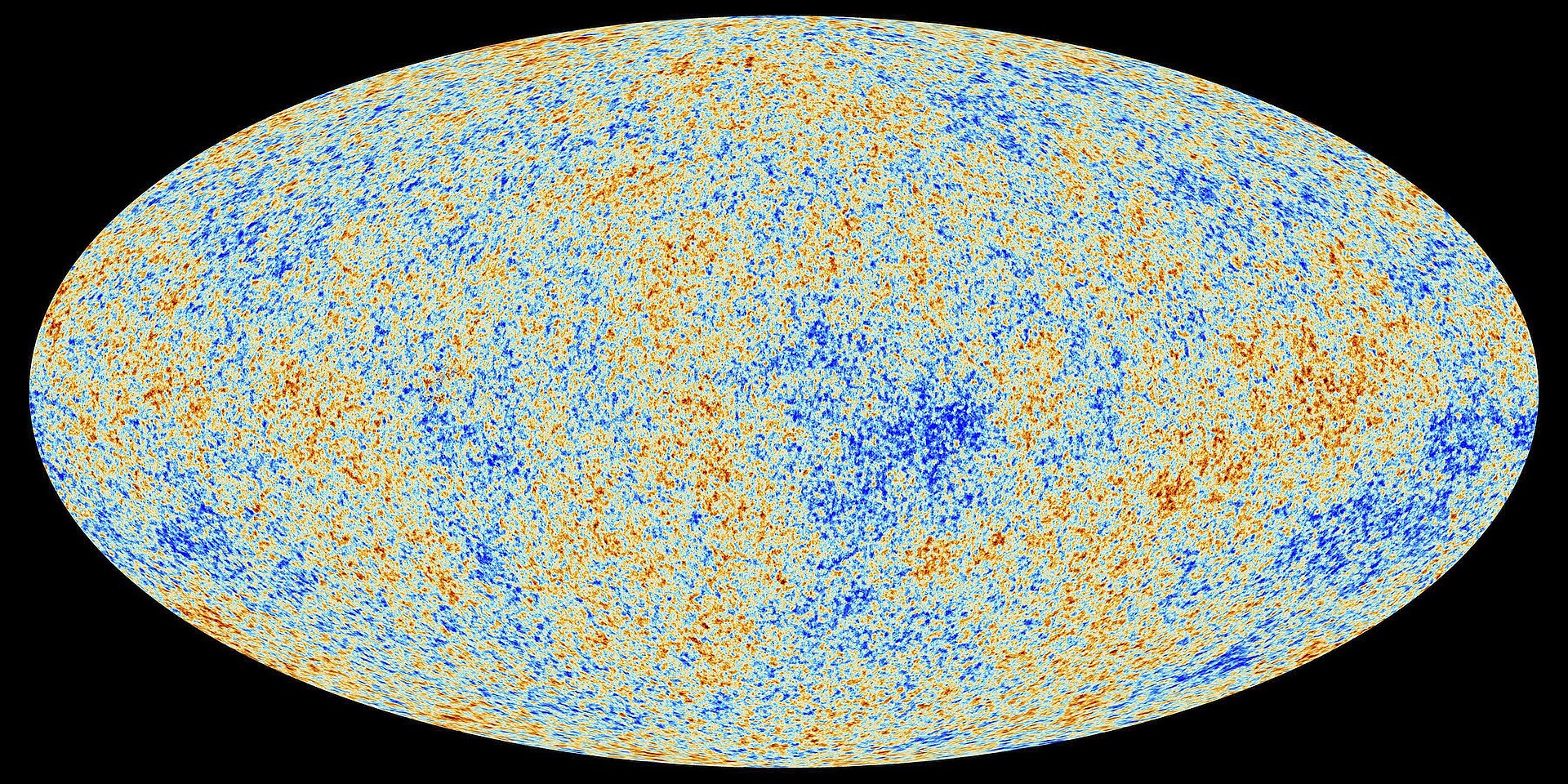
The cosmic microwave background is a faint glow of microwave radiation that fills all of space, the leftover heat from the early universe. Its discovery was the decisive evidence for the Big Bang and is one of the most important findings in the history of cosmology.
About 380,000 years after the Big Bang, the universe had cooled enough for atoms to form, and for the first time light could travel freely through space. That ancient light still streams through the cosmos today, and it is the oldest light we can ever see, a snapshot of the universe in its infancy.
In the long ages since, the expansion of the universe has stretched that ancient light, lengthening its waves until it now arrives as faint microwaves rather than visible light. It comes from every direction at once, a uniform glow at just a few degrees above absolute zero, filling the whole sky.
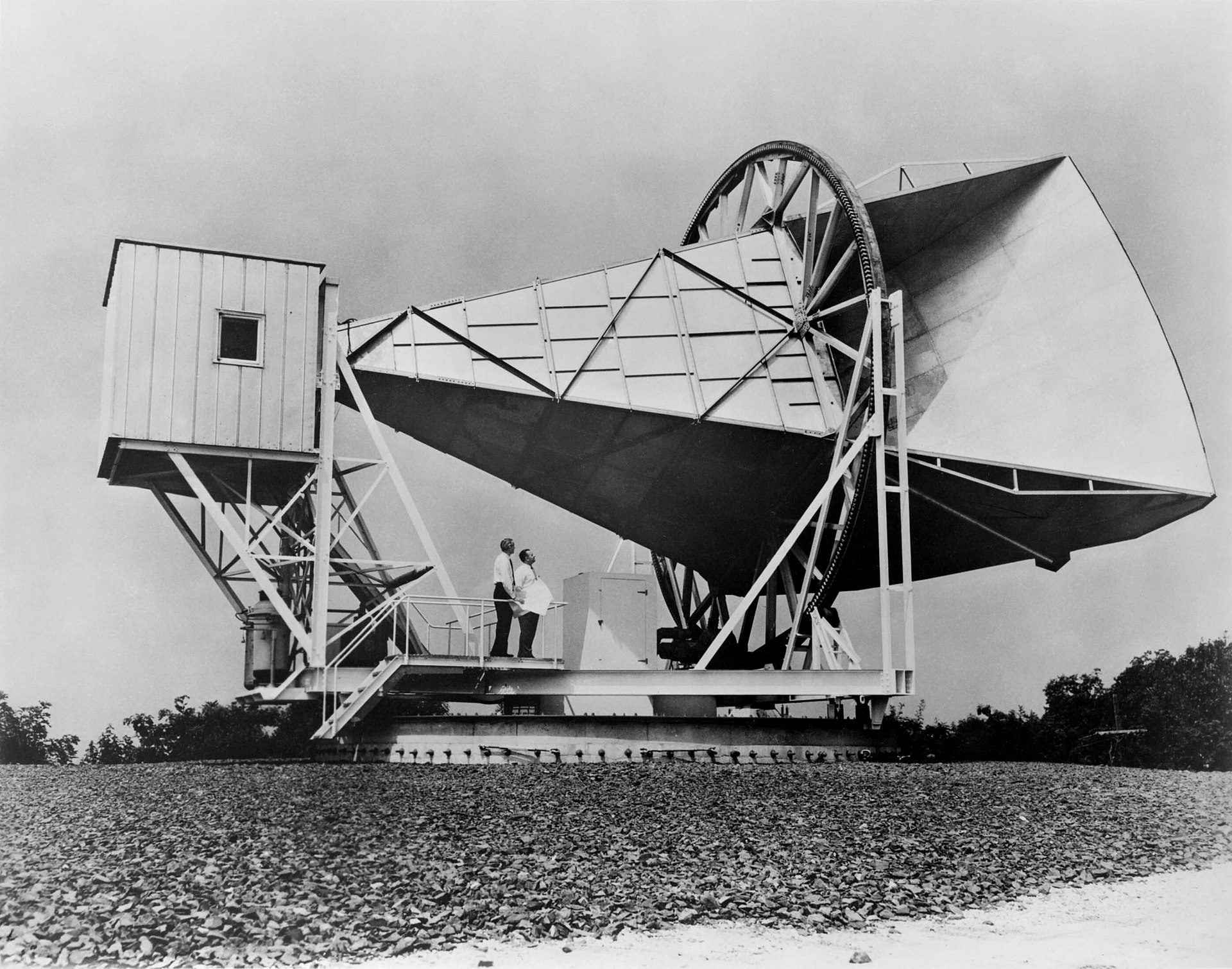
The existence of this relic radiation was predicted in the 1940s by scientists working out the consequences of a hot, dense early universe. If the cosmos had begun in a Big Bang, they reasoned, its leftover heat should still be detectable, a faint, uniform hiss coming from all directions.
In 1965, two radio engineers, Arno Penzias and Robert Wilson, detected an unexplained hiss in their antenna coming from every direction, which they could not get rid of. It turned out to be the predicted afterglow of the Big Bang. Their accidental find, which won a Nobel Prize, was the discovery the theory needed.
Later space missions mapped the cosmic microwave background across the whole sky in extraordinary detail, confirming its properties again and again with growing precision. Its temperature, its spectrum, and its faint patterns all match the predictions of a universe born in a hot Big Bang, ruling out the alternatives.
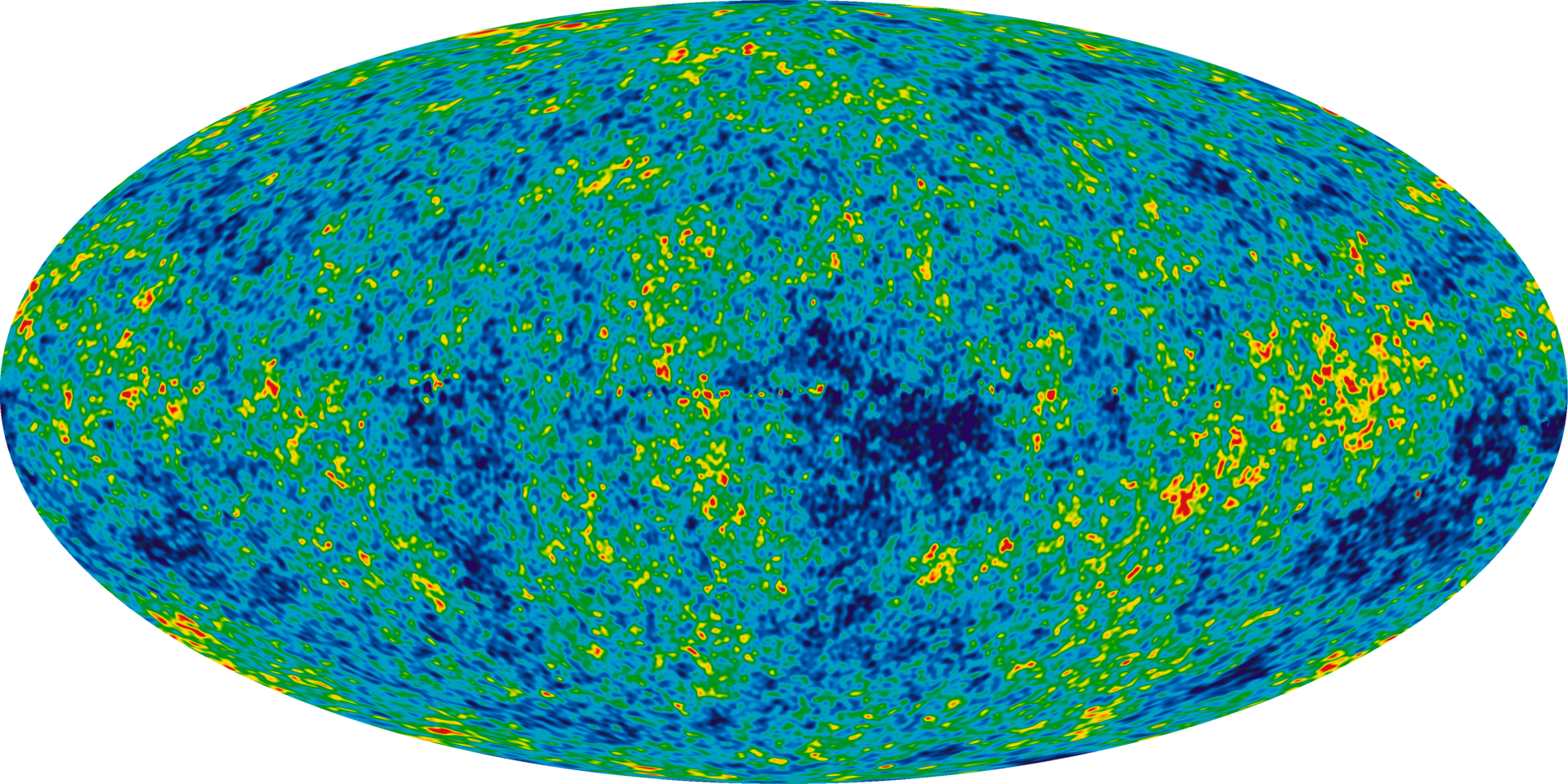
The background is almost perfectly uniform, but it carries tiny ripples, differences of a hundred thousandth of a degree, mapped by the space missions. These ripples are the seeds from which galaxies later grew, gathered together by gravity. The cosmic microwave background is, in effect, a baby picture of the cosmos.
By studying these patterns in fine detail, cosmologists have measured the age, composition, and geometry of the universe with remarkable accuracy. The radiation tells us how old the cosmos is, how much ordinary matter and dark matter it contains, and that its overall shape is flat.
The cosmic microwave background remains a cornerstone of modern cosmology, the single most powerful tool for studying the early universe. From an accidental hiss in an antenna grew our deepest window onto the origin and structure of everything, a proven relic of the universe's fiery birth.
