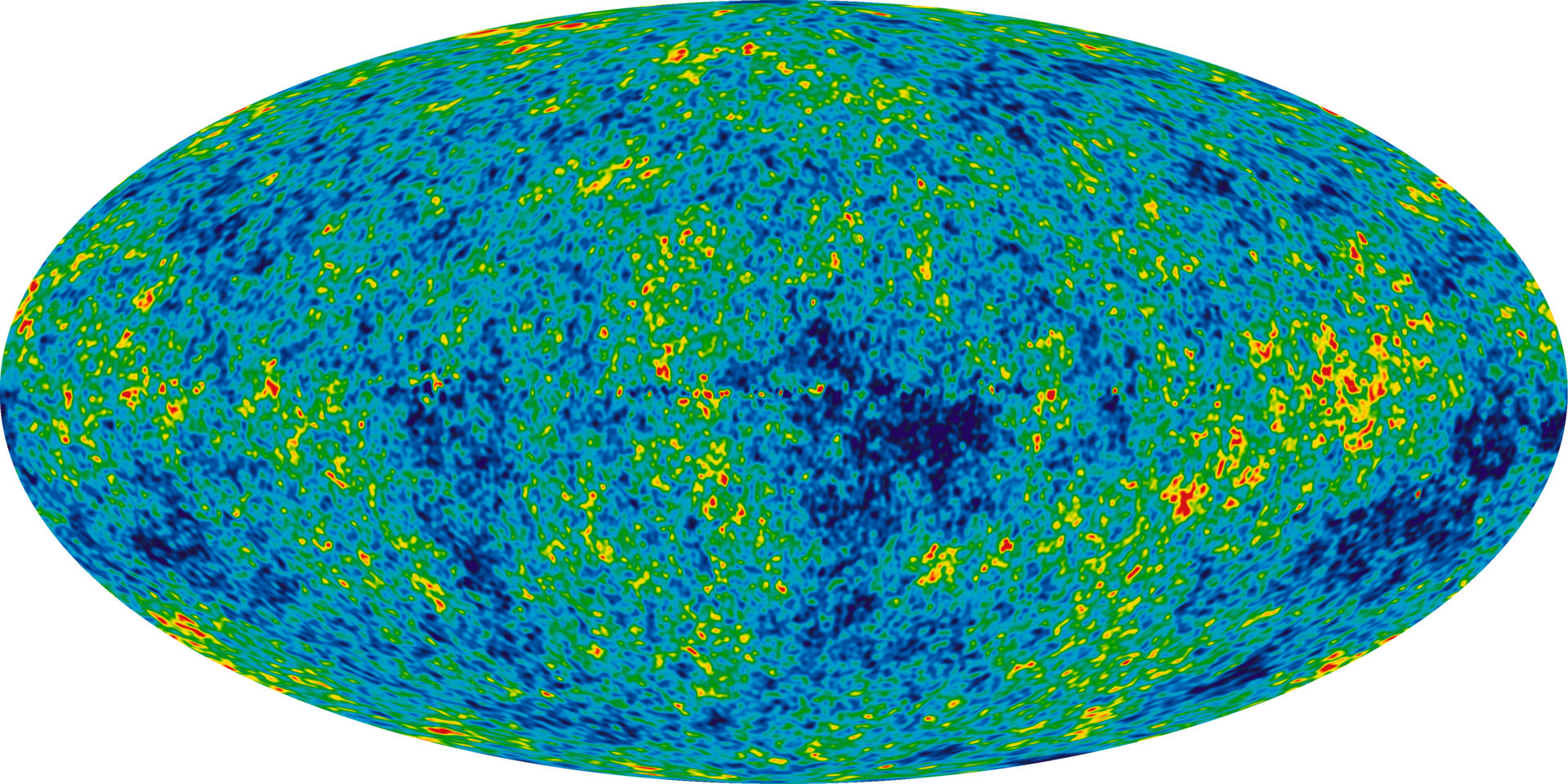
The universe is about 13.8 billion years old. Once a matter of wide uncertainty and heated debate, this figure is now known with remarkable precision, thanks to several entirely independent lines of evidence that all converge on the same answer.
One method works backward from the expansion of the universe itself. Galaxies are rushing apart, and by measuring how fast distant ones are receding and how that rate has changed over cosmic history, astronomers can run the expansion in reverse, like rewinding a film, to the moment everything was packed together at the beginning.
A second, independent method reads the faint afterglow of the early universe, the cosmic microwave background. This relic radiation, released when the cosmos first became transparent, fills the whole sky, and the detailed pattern of tiny temperature ripples within it encodes the age, composition, and geometry of the universe with extraordinary precision.
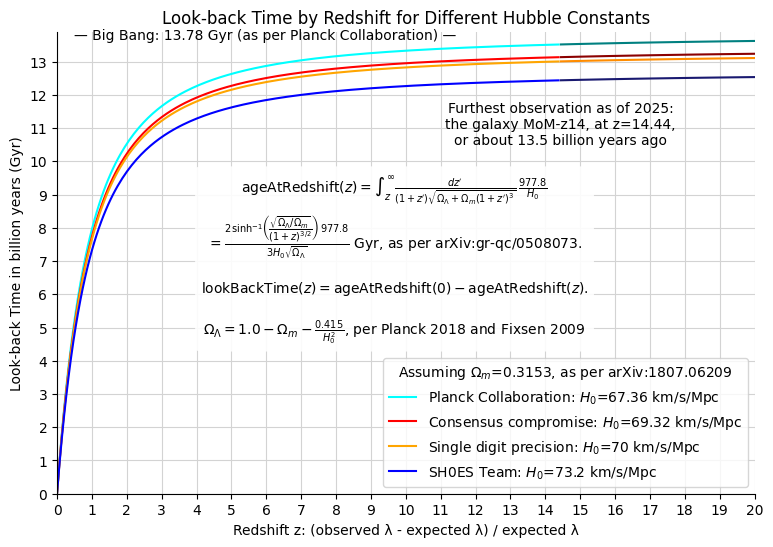
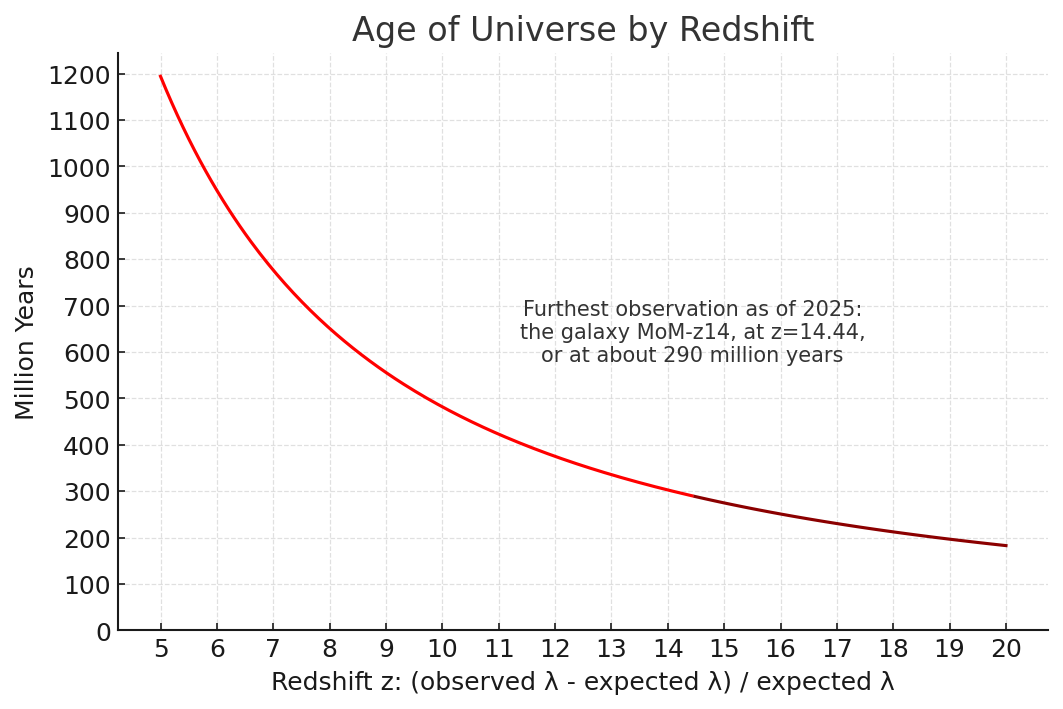
The relationship between an object's redshift and the corresponding age of the universe has been mapped out in detail, turning measurements of distant galaxies into a timeline of cosmic history. Each step outward in distance is also a step backward in time toward the beginning.
The real power of the result lies in this agreement. The measured expansion rate, the detailed structure of the cosmic background, and the ages of the very oldest known stars all point to roughly 13.8 billion years. When several methods that rely on completely different physics arrive at the same number, scientists can be confident the number is right.
The oldest stars provide a particularly clean sanity check. These ancient stars, found in the dense clusters that orbit our galaxy, can be dated from their physics, and they obviously cannot be older than the universe that contains them. Their ages sit comfortably just under the 13.8 billion year figure, exactly as they should.
A century ago, scientists did not even agree on whether the universe had a beginning at all, or whether it was eternal and unchanging. Careful measurement has since turned its age into one of the well established quantities of modern cosmology.
It is a striking demonstration that even something as seemingly unknowable as the age of everything can, with patience and ingenuity, be measured and pinned down to within a small margin, one of the quiet triumphs of modern science.
