Vatican City is the smallest sovereign state in the world, a walled enclave of barely half a square kilometre within the city of Rome. It is the spiritual and administrative heart of the Roman Catholic Church and the residence of the Pope, who as its absolute monarch rules over a country that is also the headquarters of a faith followed by well over a billion people worldwide. Home to St Peter's Basilica, the Sistine Chapel, and treasures of art beyond counting, it is a unique nation, a tiny theocratic city-state of immense religious and cultural weight.
The Vatican is the last remnant of the Papal States, the broad territories across central Italy ruled by the popes for over a thousand years until they were absorbed into a unified Italy in 1870, leaving the pope a self-declared prisoner in the Vatican. The dispute was resolved only in 1929, when the Lateran Treaty between the Holy See and the Italian state created the independent Vatican City State, guaranteeing the pope a sovereign territory of his own. This tiny enclave thus preserves, in miniature, the ancient temporal sovereignty of the papacy.
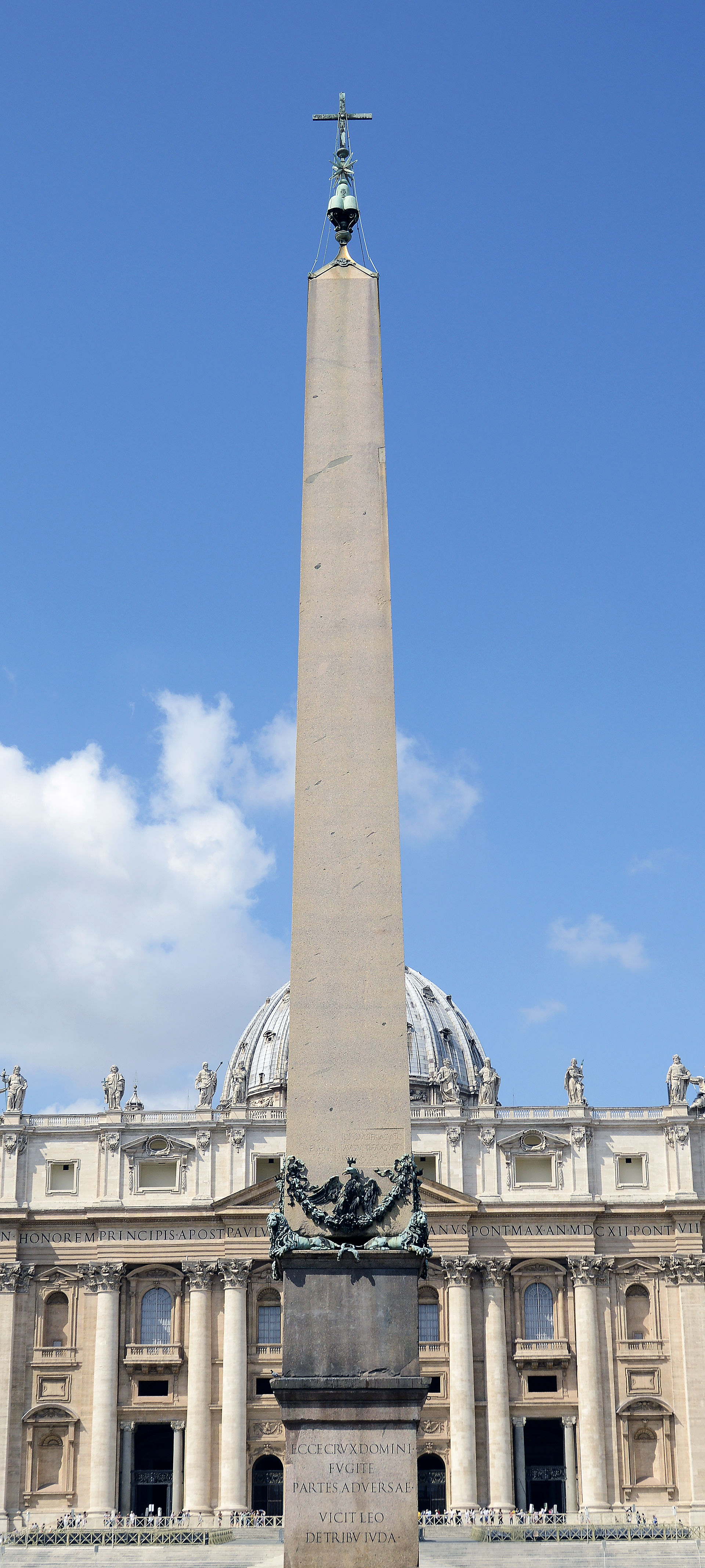
St Peter's Basilica is built over a site that Catholic tradition holds to be the burial place of the Apostle Peter, regarded as the first pope, martyred in Rome in the first century, and excavations beneath the basilica have uncovered an ancient necropolis and bones that the Church has identified as his. Many scholars accept that an early shrine marked a tomb venerated as Peter's, but the certain identification of the remains is debated, and the claim rests on a blend of tradition, archaeology, and faith rather than conclusive proof.
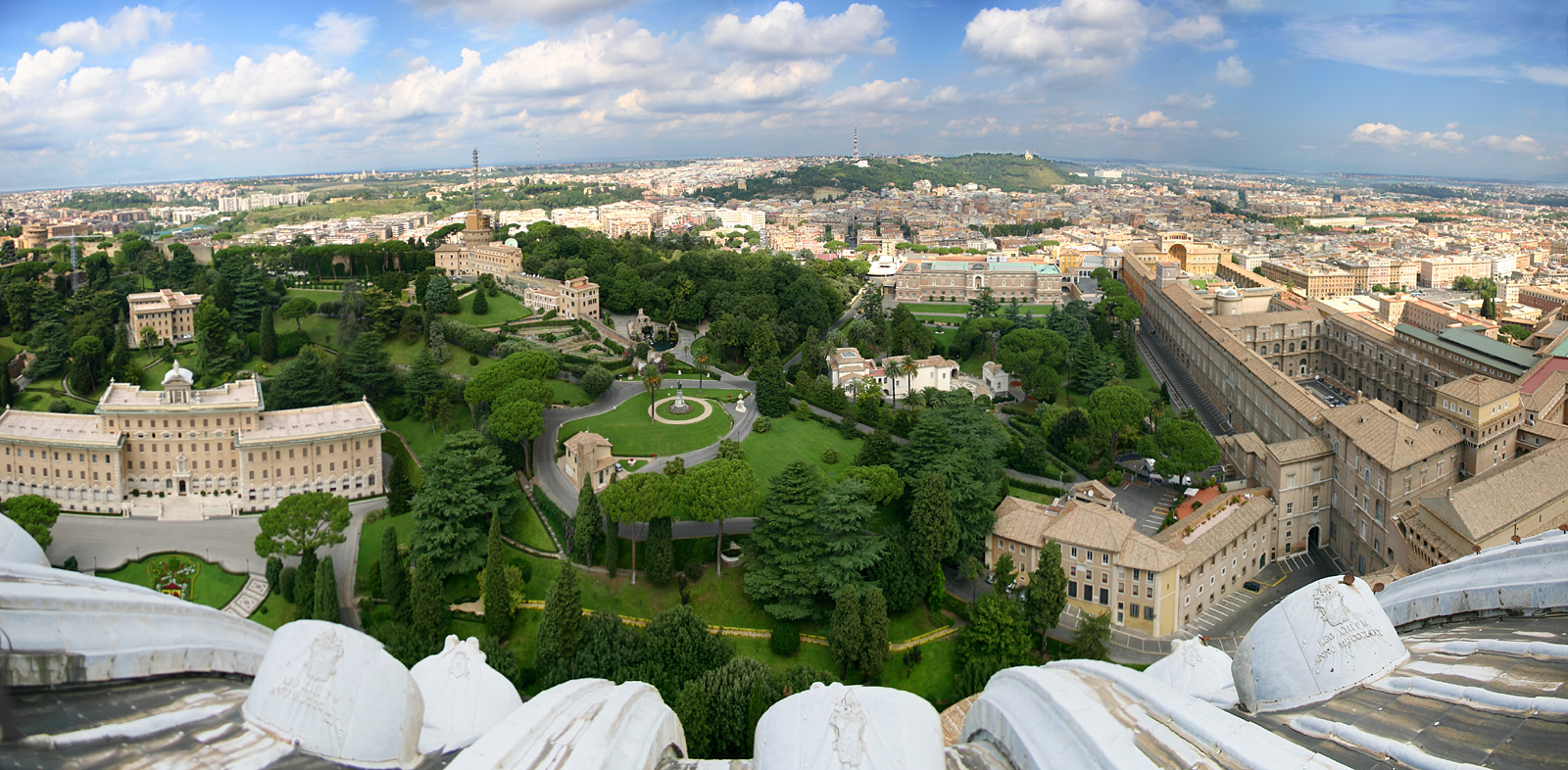
Vatican City is a tiny, walled enclave entirely surrounded by the city of Rome, on a low rise on the west bank of the Tiber known since antiquity as the Vatican Hill. Within its compact territory are St Peter's Square and Basilica, the Apostolic Palace, the museums, and a surprising expanse of carefully tended gardens that cover much of the state, giving it a green and tranquil heart behind its walls. It is wholly urban and landlocked within another city, a country that one can walk across in minutes yet that contains some of the world's greatest monuments.
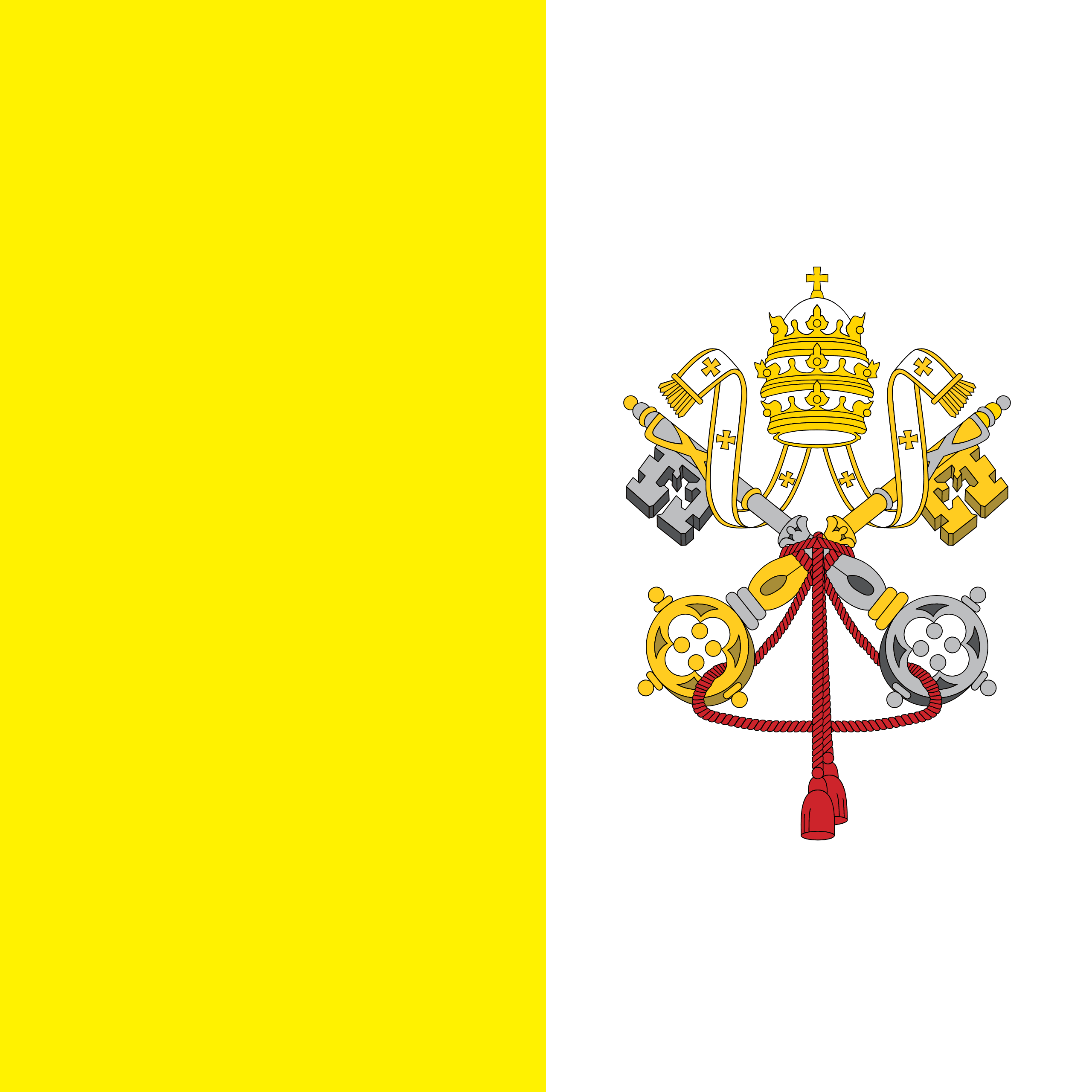
The flag of Vatican City is square, divided vertically into yellow and white halves, with the emblem of the papacy, the crossed keys of Saint Peter beneath the papal tiara, on the white side. The gold and silver of the two halves recall the keys themselves, said to be the keys to the kingdom of heaven entrusted to Peter, symbolising the spiritual authority of the pope. As one of only two square national flags in the world, and the emblem of a theocratic state, it is among the most distinctive of all national flags.
Religion is not merely present in Vatican City but is its entire reason for being: the state exists to serve the Roman Catholic Church and its leadership. The Pope, as Bishop of Rome, is both the head of state and the spiritual leader of the world's Catholics, and the Vatican is the seat of the Holy See, the central government of the Church. Its life revolves around the liturgy, the great ceremonies in St Peter's, the work of the various offices of Church administration, and the stream of pilgrims who come from across the world.
Vatican City has no distinct national cuisine of its own; the food eaten by the clergy, officials, Swiss Guards, and residents is essentially Roman and Italian, drawn from the surrounding city. Meals follow the traditions of central Italy, with pasta, regional Roman dishes, and the produce of the Italian markets. There are dining facilities and a famous supermarket and pharmacy serving the small community within the walls. The Vatican's culinary character, then, is simply that of Rome, the city that completely surrounds this unique ecclesiastical state.
Vatican City has no agriculture in any meaningful sense, given its minuscule size and wholly urban, monumental character, though its extensive gardens include ornamental plantings and historically some cultivation. It produces no food and relies entirely on Italy for its supplies. The state has no conventional economy of farming or industry; it sustains itself instead through the donations of the faithful around the world, the revenues of its museums, which draw millions of visitors, the sale of stamps, coins, and publications, and the management of the Holy See's investments.
The long rule of the Papal States, their loss to a united Italy in 1870, and the creation of the modern Vatican City by the Lateran Treaty of 1929 are the defining political events of the state's history. Within its walls have unfolded moments that shaped the wider Church and world, from great ecumenical councils to the elections of popes, signalled by the famous white smoke, and the dramatic resignations and deaths of pontiffs. As the centre of global Catholicism, the Vatican remains a stage for events watched by people of every nation.
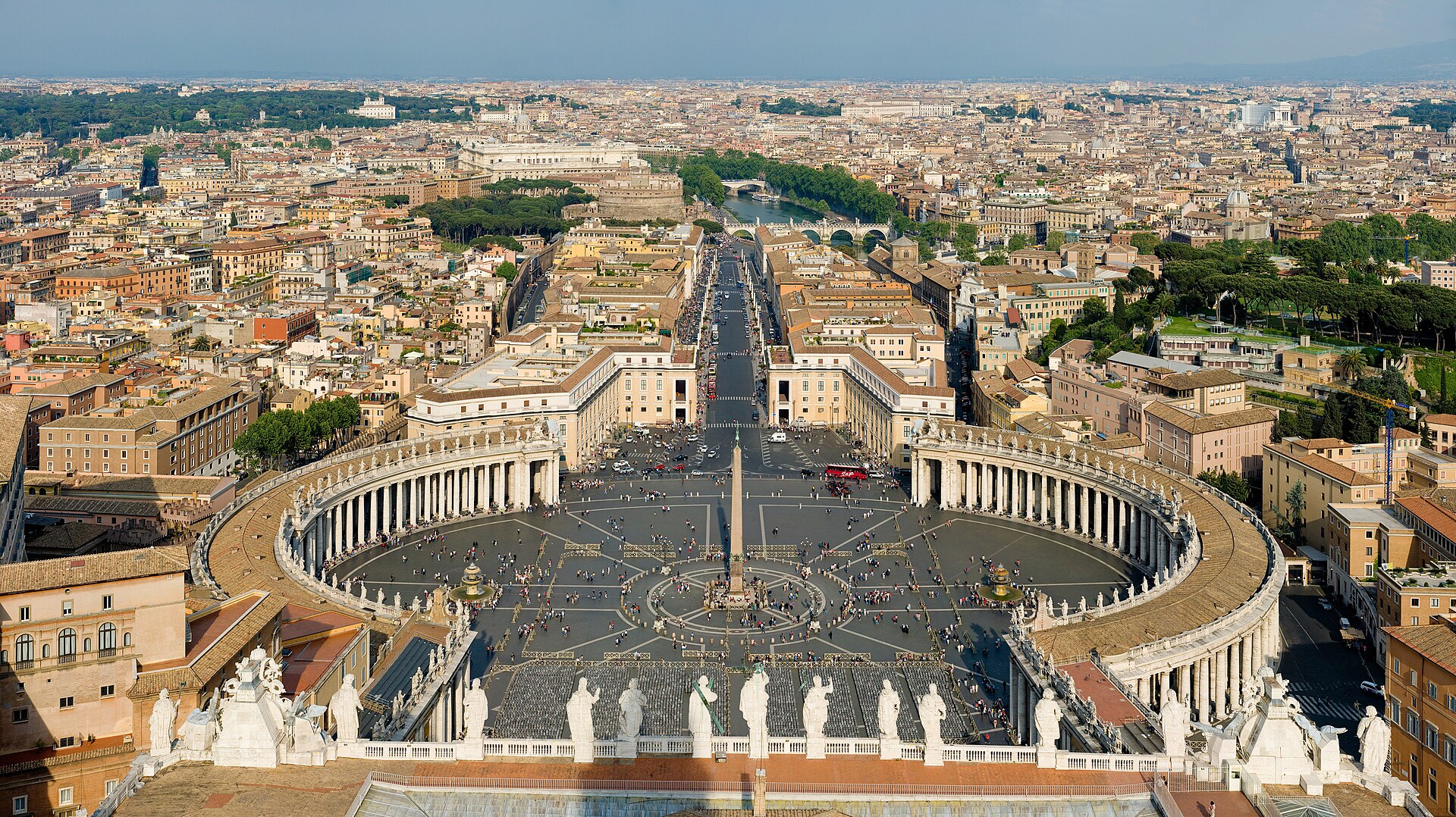
Vatican City has a population of only around 800 people, the smallest of any country in the world, and an unusual one: its residents are largely clergy, including cardinals and other officials, members of the Swiss Guard who protect the pope, and the small staff who serve the state, rather than families born into citizenship. Citizenship is generally tied to office or service and is not hereditary in the normal sense. Many who work in the Vatican actually live in surrounding Rome, and the official languages of its affairs include Latin and Italian.