
Uniformitarianism is the foundational principle of geology: that the same natural processes we observe today, such as erosion, sedimentation, and volcanism, have operated in the same way throughout Earth's history. Its motto is often given as "the present is the key to the past."
The core idea is simple but powerful: by watching the slow, everyday processes that shape the Earth now, rivers carrying sediment, waves wearing cliffs, volcanoes building mountains, we can understand how the rocks and landscapes of the distant past were formed. The processes of today are the key to reading history in stone.
Before this idea took hold, many believed Earth's features were shaped by sudden, one off catastrophes, often within a span of only a few thousand years, a view called catastrophism. Mountains and canyons were seen as the work of great floods or upheavals in a young world, not the patient labour of ordinary forces.
In the late eighteenth century, the Scottish geologist James Hutton argued that slow, ongoing processes, given vast spans of time, could carve valleys, raise mountains, and lay down thick beds of rock, layer by layer. Studying the rocks of Scotland, he saw cycles of building up and wearing down repeating endlessly.
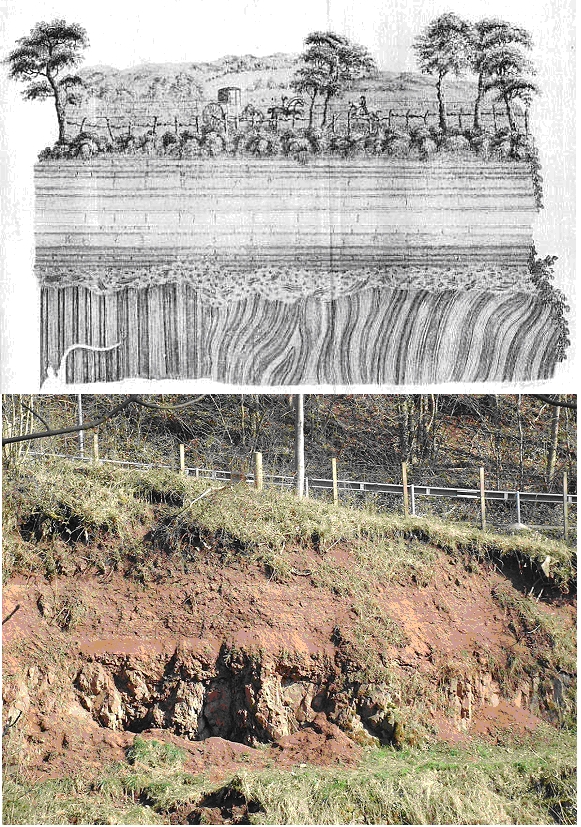
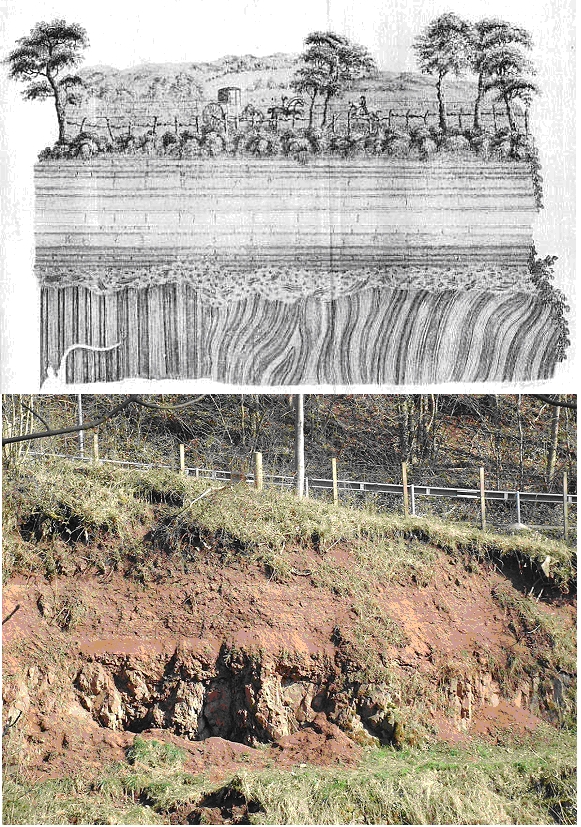
Hutton found places where one set of rock layers had been tilted, worn down, and then buried beneath new horizontal layers, a feature called an unconformity. To form such a thing required immense stretches of time, far more than tradition allowed. In these silent stones he read the deep antiquity of the Earth.
Uniformitarianism implies that the Earth is extraordinarily old, far older than people once imagined, because slow processes need immense time to produce the features we see. This recognition of "deep time," of an Earth ancient almost beyond comprehension, was one of the great revolutions in human thought.
The geologist Charles Lyell developed and popularized uniformitarianism in the nineteenth century through his influential writings, making it the guiding principle of the young science of geology. His work convinced a generation of scientists that the Earth's story was one of gradual, lawful change over unimaginable time.
The recognition of deep time had consequences far beyond geology. It gave Charles Darwin the vast timescale his theory of evolution required, for natural selection needs immense stretches of time to reshape life. Geology, by stretching out the past, made the slow evolution of species conceivable.
Modern geology accepts that Earth's history includes both slow, steady change and occasional sudden events, such as asteroid impacts and great eruptions, a balanced view sometimes called actualism. But the core insight stands: by studying the ordinary processes at work today, geologists can read the long story written in the rocks. Uniformitarianism remains the bedrock of how we understand our planet's past.
