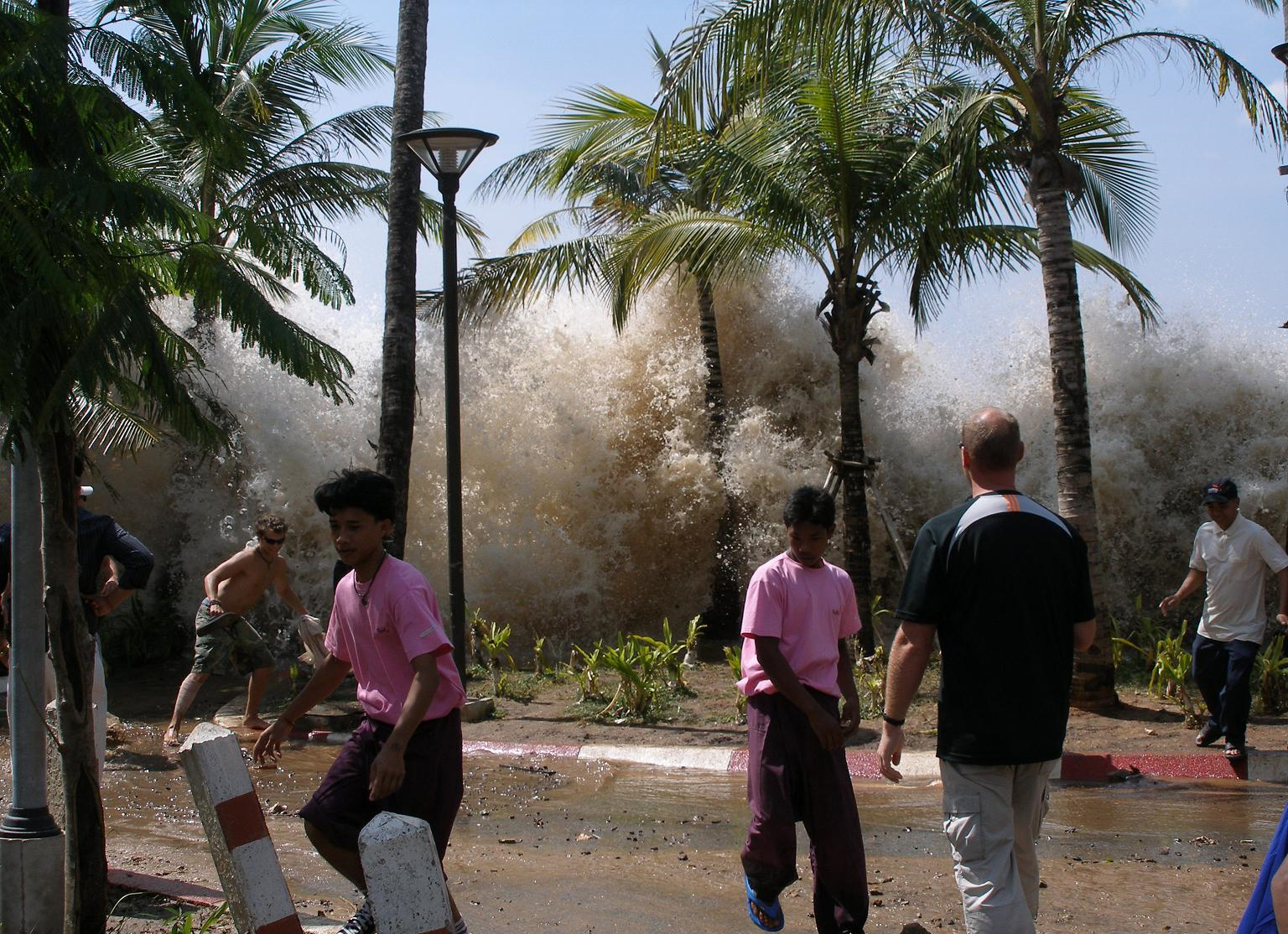
A tsunami is a series of enormous ocean waves caused by the sudden displacement of a large volume of water, most often by an undersea earthquake. Capable of crossing entire oceans and striking distant coasts with devastating force, tsunamis are among the deadliest natural hazards on Earth.
Most tsunamis begin when a powerful undersea earthquake thrusts a section of the seafloor upward or lets it drop, shoving the whole column of water above it. The disturbance spreads outward as a series of long, low waves. Underwater landslides, volcanic eruptions, and, very rarely, asteroid impacts can also generate them.
In the deep ocean these waves may be only a metre or so high but stretch for hundreds of kilometres from crest to crest, racing across the sea as fast as a jet airliner. A ship in deep water might not even notice one passing beneath it, which is part of what makes them so insidious: the danger is hidden until the wave reaches the coast.
A tsunami is dangerous not because of its height in the open sea but because of what happens at the shore. As the wave reaches shallow water it slows down and its energy piles up, so the wave grows dramatically in height, sometimes to tens of metres, and surges far inland.
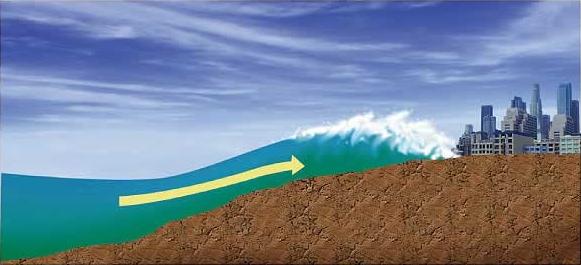
Often the sea first draws back dramatically, exposing the seabed, before the water returns as a fast, relentless wall that sweeps away everything in its path. A tsunami is not a single wave but a series, and later waves can be larger than the first, so the danger persists long after the initial surge.
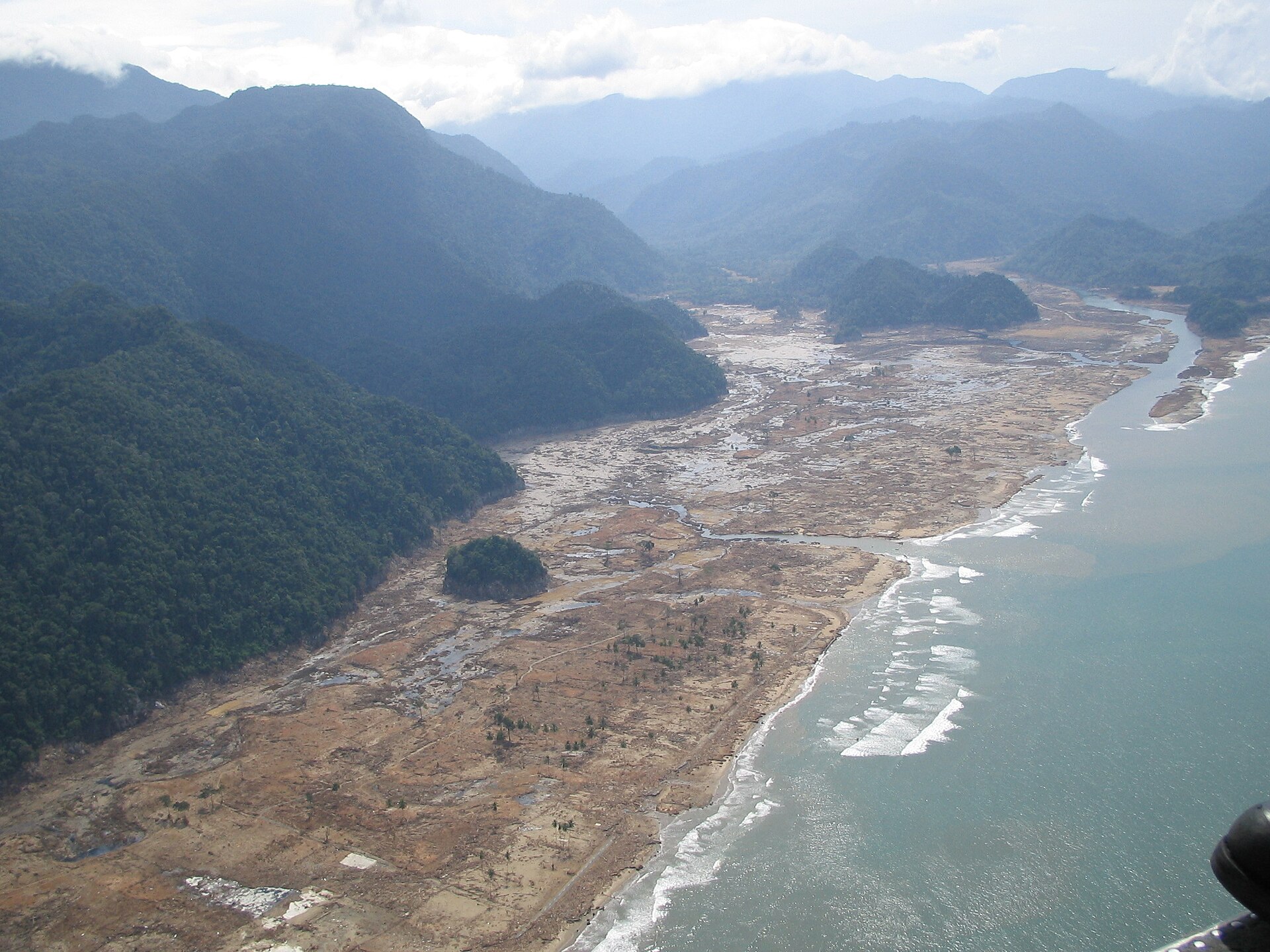
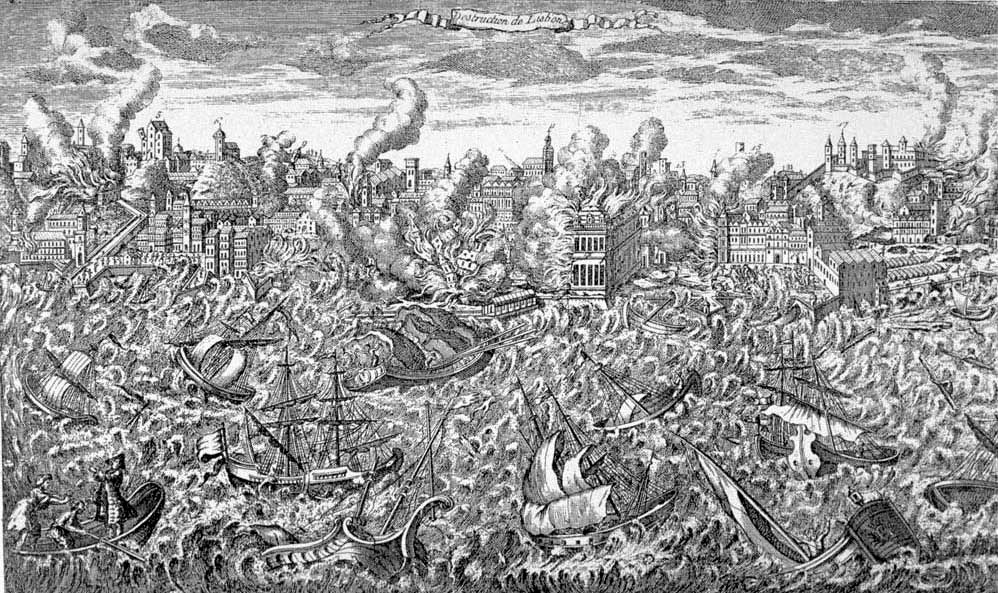
History is marked by catastrophic tsunamis, from the great wave that followed the 1755 Lisbon earthquake to the 2004 Indian Ocean tsunami, which killed well over 200,000 people across more than a dozen countries, and the 2011 disaster in Japan that triggered the Fukushima nuclear accident.
Because tsunamis can take hours to cross an ocean, warning systems can save many lives by detecting the earthquakes that cause them and tracking the waves with sensors on the seafloor and buoys at the surface. Alerts can then be broadcast to threatened coasts while the waves are still far out at sea.
Equally important is local knowledge. The natural warning signs of a strong coastal earthquake or a sudden retreat of the sea mean there may be only minutes to act, and in many tsunami-prone communities people are now taught a simple rule: if the ground shakes hard or the sea pulls back, move immediately to high ground.
