Topology is the branch of mathematics that studies the properties of shapes that survive stretching, bending, and twisting, but not tearing or gluing. Sometimes called "rubber sheet geometry," it captures a deep and flexible idea of what it means for two shapes to be the same.
In topology, a shape can be deformed freely as long as it is not cut or joined. By this rule a square and a circle are the same, since one can be moulded into the other without tearing. What matters is not size or angle but features that survive any gentle reshaping.
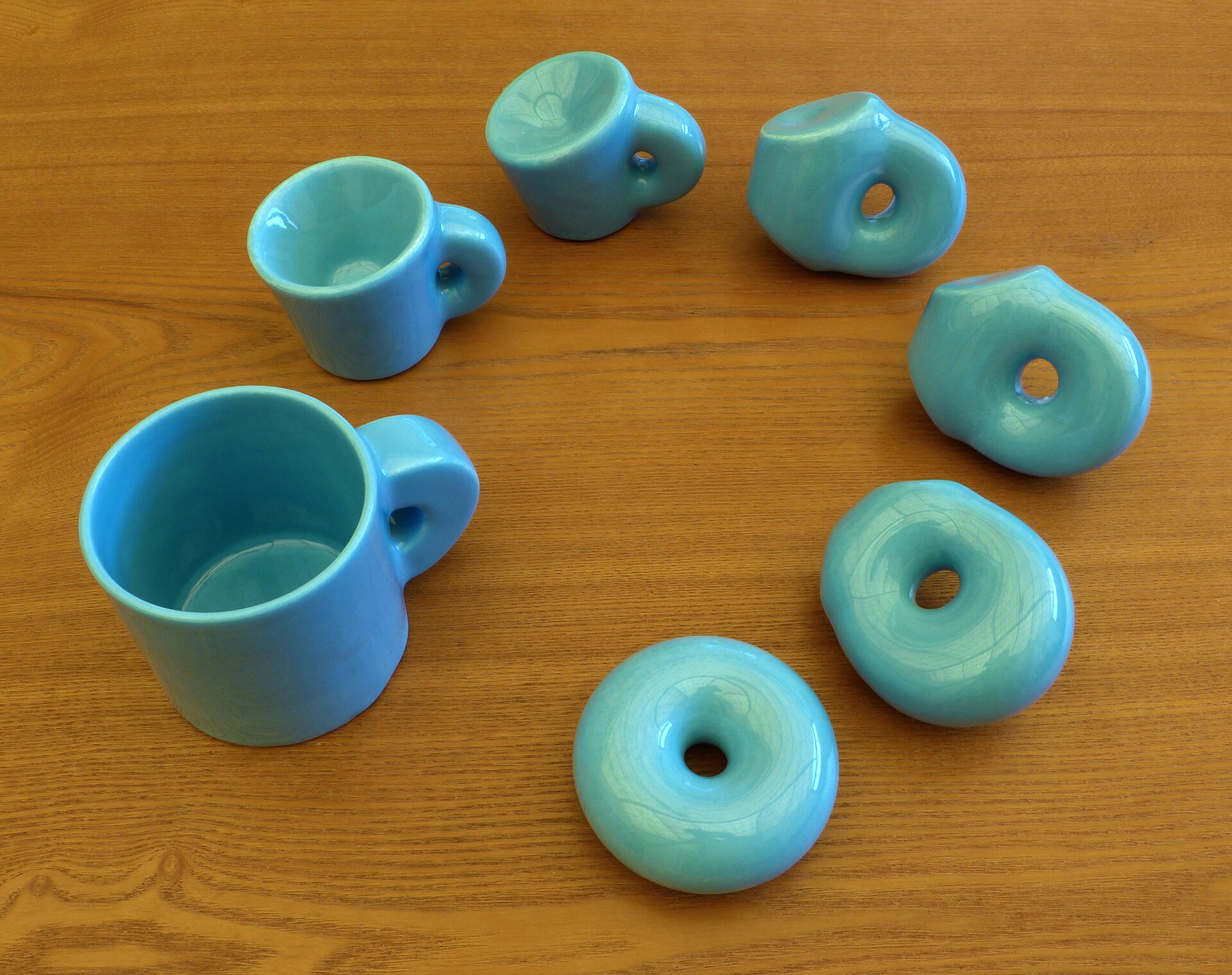
The classic example is that a coffee mug and a doughnut are, to a topologist, the same shape, because each has exactly one hole, and one can be smoothly deformed into the other. The handle of the mug becomes the doughnut's ring. The number of holes, not the everyday appearance, is what counts.
Topology studies properties that stay fixed under deformation, such as the number of holes, whether a shape is connected in one piece, and whether it has an inside and an outside. These robust features, unchanged by bending or stretching, are the true subject of the field.
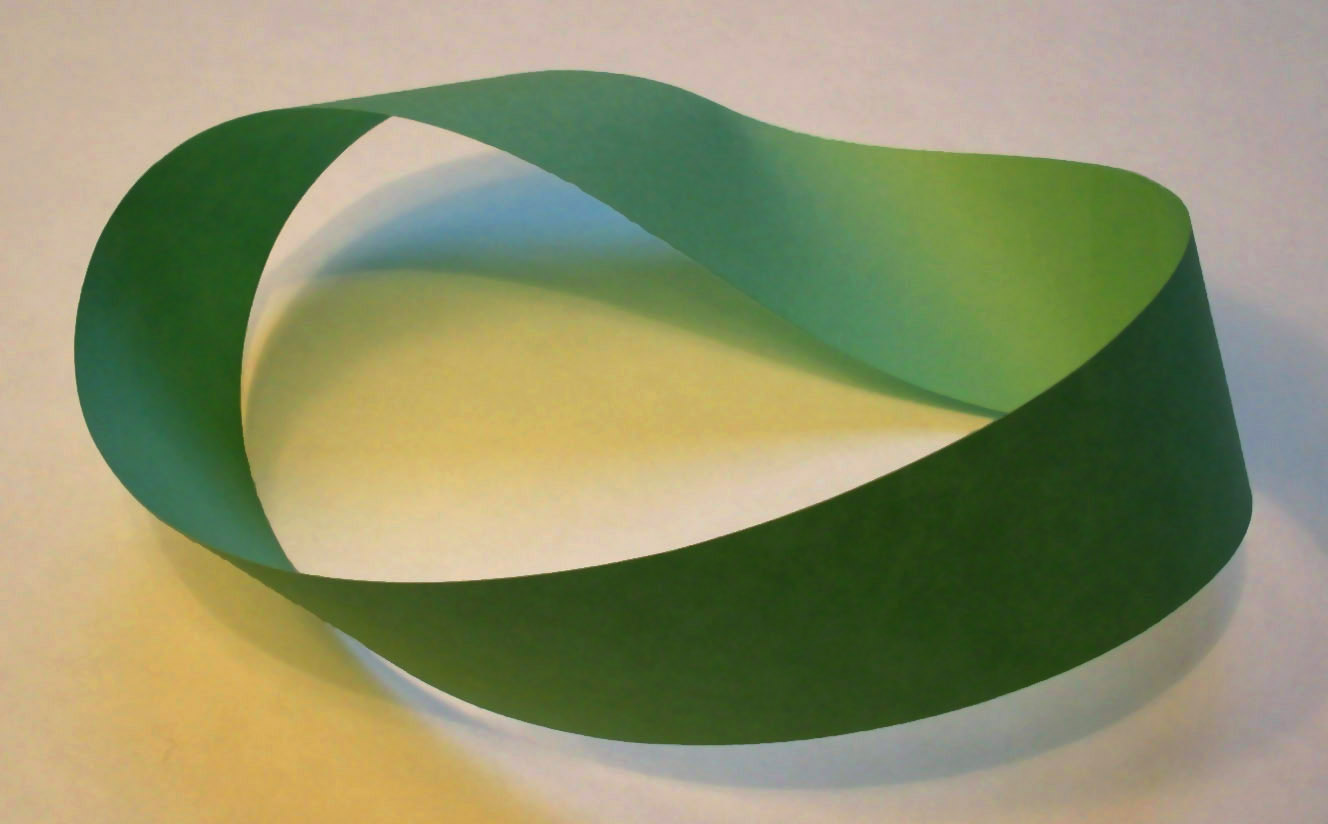
A favourite topological object is the Möbius strip, a band given a single twist before its ends are joined. It has only one side and one edge: an ant could crawl along its whole surface without ever crossing an edge. Such surprising objects reveal how strange and rich the study of shape can be.
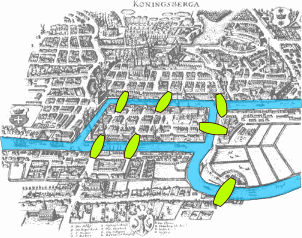
Topology grew from several roots, including Euler's solution to the puzzle of the bridges of Königsberg, which ignored distances entirely and cared only about connections. Over the nineteenth and twentieth centuries it matured from scattered insights into a rigorous field with its own powerful methods and language.
Topology is not limited to ordinary surfaces. It studies spaces of many dimensions that cannot be pictured directly, developing tools to tell them apart and to classify them. These abstract methods let mathematicians reason rigorously about objects far beyond the reach of everyday imagination.
Though it sounds abstract, topology has become essential across science. It helps physicists describe exotic states of matter and the shape of spacetime, helps biologists understand how strands of DNA are knotted and untangled, and underlies modern methods for finding structure in complex data.
