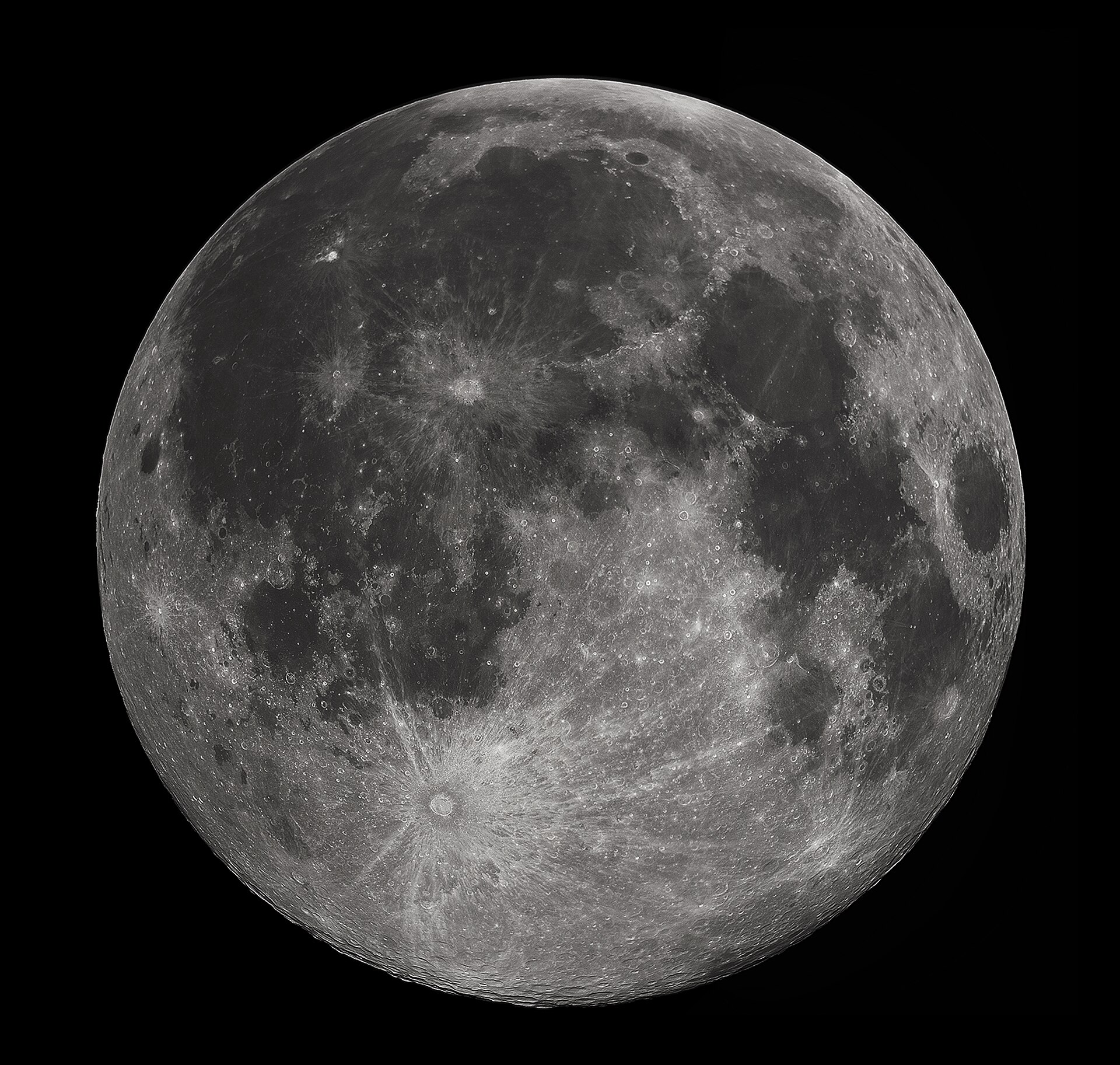
The Moon is Earth's only natural satellite and the brightest object in our night sky. Large in proportion to its planet and close enough to study with the naked eye, it has shaped life on Earth, guided calendars and myths for millennia, and become the only world beyond our own that humans have walked upon.
The leading explanation for the Moon's origin is the giant-impact hypothesis: that early in Earth's history, a Mars-sized body collided with the young planet, flinging a vast cloud of debris into orbit that coalesced into the Moon. This idea elegantly accounts for the Moon's size, its relatively small iron core, and the close chemical kinship between Moon rocks and Earth's mantle.
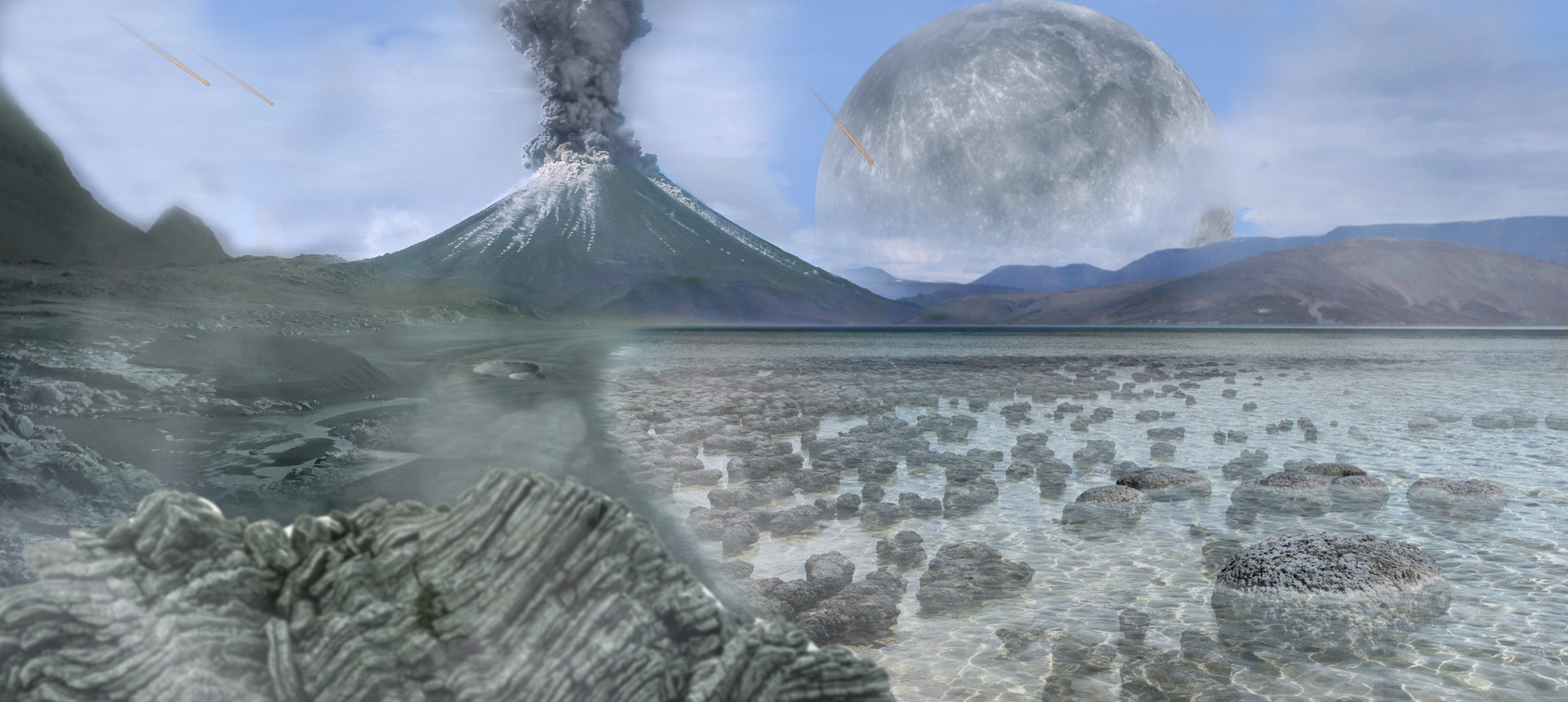
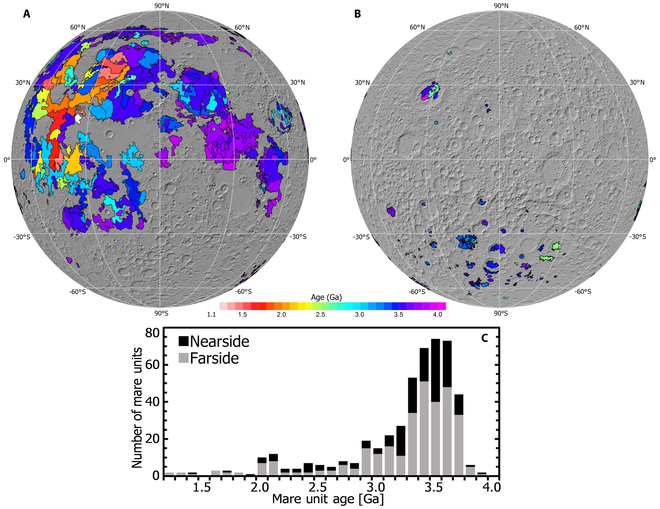
The Moon's grey, airless surface is a record of billions of years of bombardment, pocked with craters that never erode because there is no wind or water to wear them away. The dark patches visible from Earth are the maria, or "seas", vast plains of solidified lava from ancient eruptions, named by early astronomers who mistook them for bodies of water.
With no atmosphere to trap heat, surface temperatures swing from well above boiling in sunlight to far below freezing in shadow. The lack of air also means no weather, no sound, and a black sky even in daytime, and it leaves the surface exposed to the full force of radiation and the constant rain of tiny meteorites that grind the rock into fine dust.
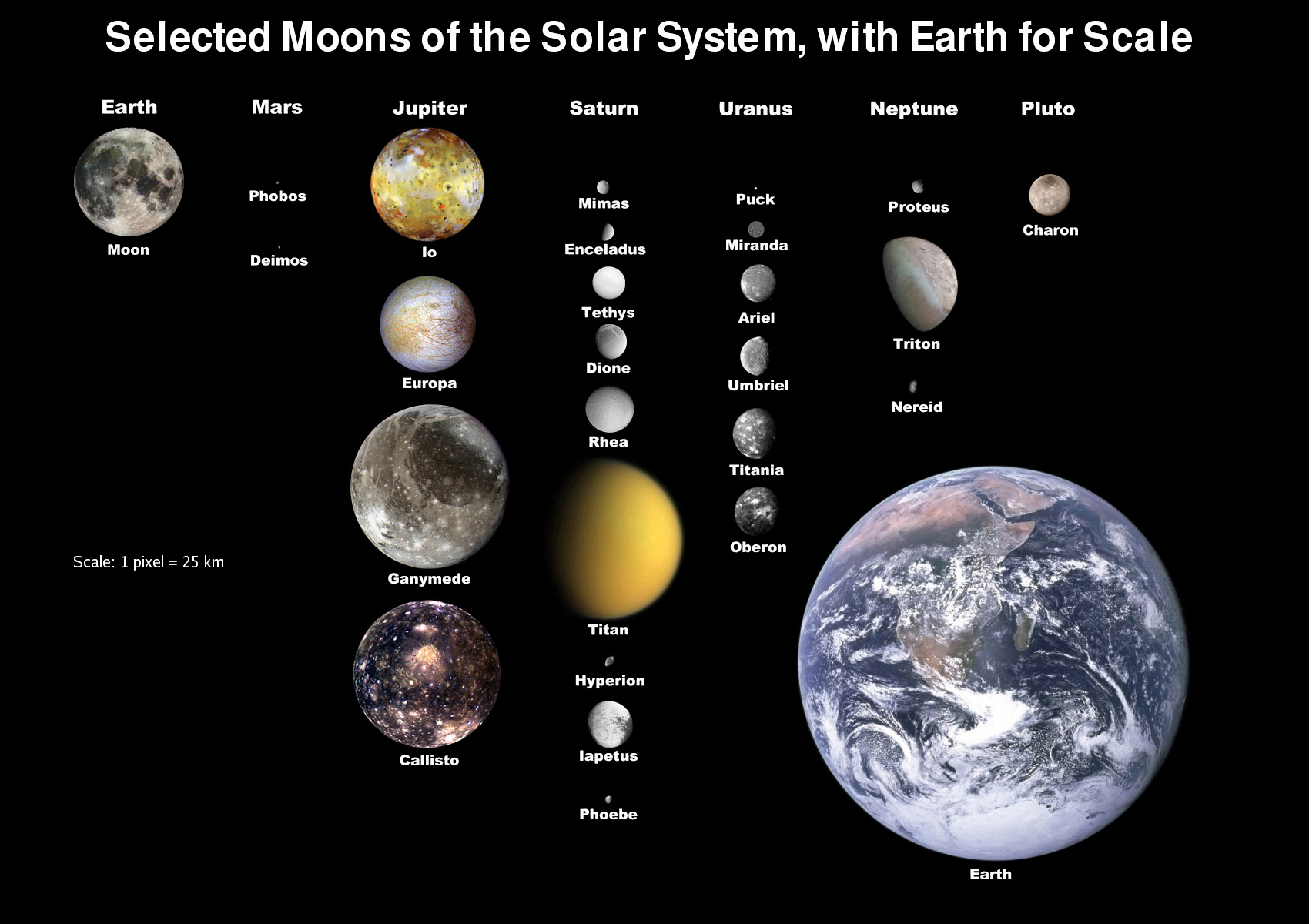
Compared with its planet, the Moon is unusually large, about a quarter of Earth's diameter. Most moons are tiny next to the worlds they orbit, which makes the Earth and Moon almost a double world, and helps explain how strongly the Moon influences our planet.
The Moon orbits Earth about every 27 days and rotates once in the same period, so it always keeps the same face turned toward us; the "far side" was unseen by human eyes until spacecraft photographed it. As the Moon circles Earth, the changing angle of sunlight produces its familiar cycle of phases. Its gravity is the main driver of the ocean tides, and over long timescales it stabilises the tilt of Earth's axis, helping to keep our climate steady. The Moon is also slowly drifting away from Earth, a few centimetres a year.
The Moon was the goal of the twentieth century's greatest feat of exploration. In July 1969, Apollo 11 carried the first humans to its surface, and over six landings astronauts brought back hundreds of kilograms of rock that transformed our understanding of the Solar System.
After decades of focusing on robotic missions, space agencies and private companies are again turning to the Moon, drawn by its scientific value, its frozen water at the poles, and its role as a stepping stone to Mars. A new generation of crewed missions aims to establish a more lasting human presence than the brief visits of the Apollo era.
