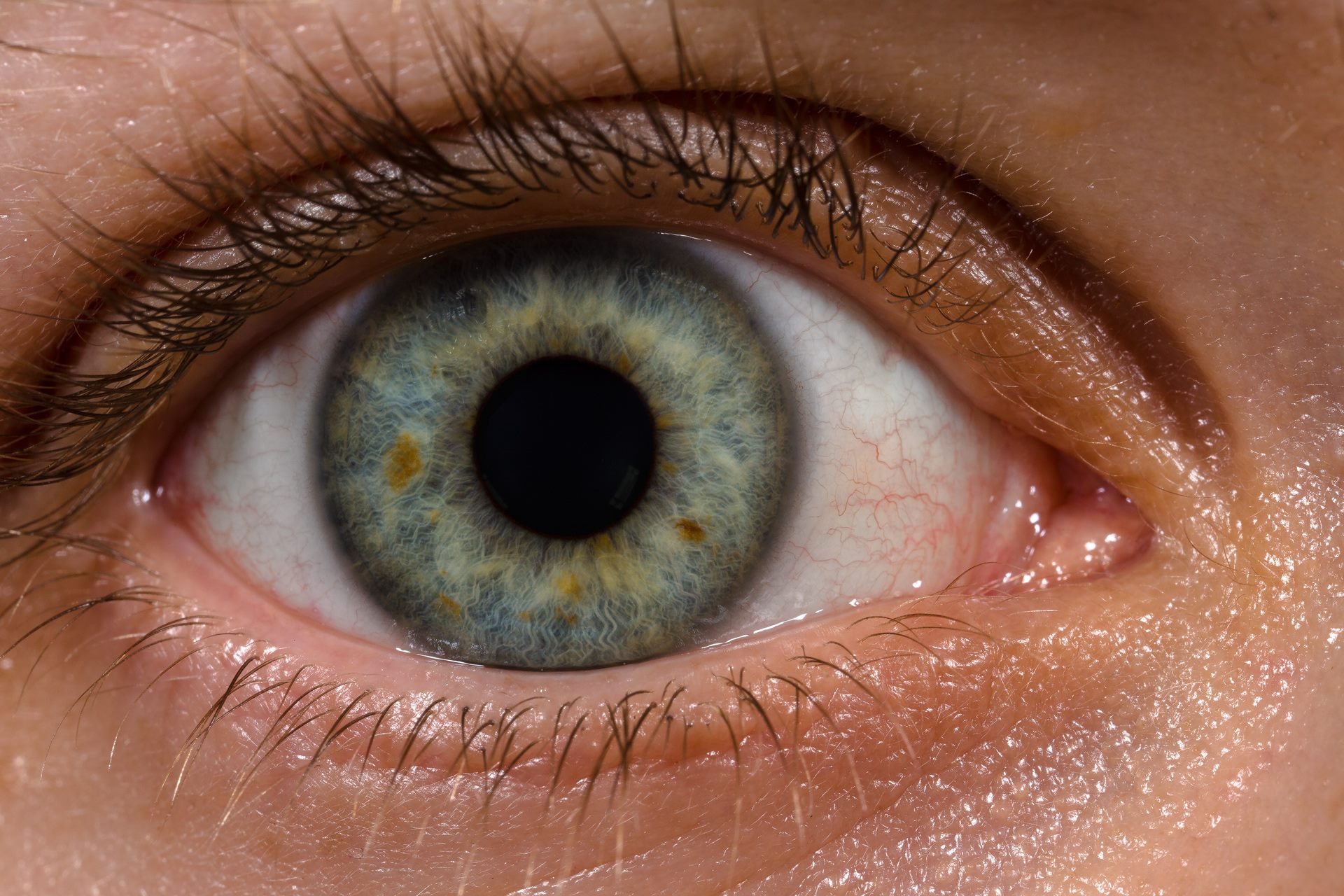
The human eye is the organ of sight, a remarkable structure that turns light into the images we see. Roughly the size of a ping pong ball, it captures light, focuses it, and converts it into nerve signals that the brain interprets as vision.
The eye works much like a camera, but one that adjusts itself continuously and automatically. Light enters through the clear front window, the cornea, passes through an opening called the pupil, and is focused by a flexible lens onto a light sensitive surface at the back. There it is turned into signals sent to the brain.
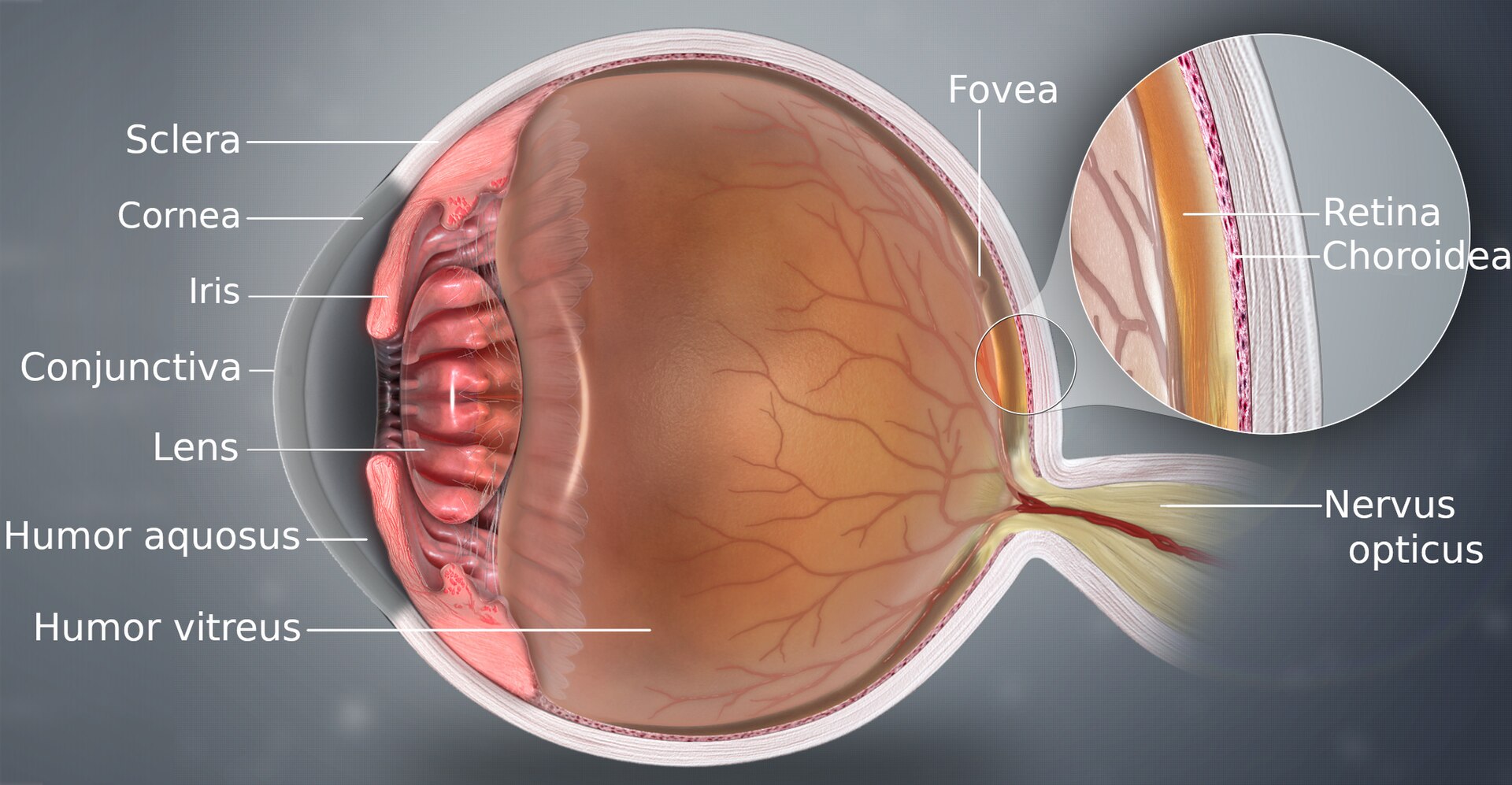
The cornea is the eye's clear outer dome, and it does most of the focusing as light enters. Behind it sits the coloured iris, a ring of muscle that controls the pupil, widening it in dim light to let more in and shrinking it in bright light to protect the eye. The colour of the iris is what we mean when we speak of eye colour.
Behind the pupil lies the lens, which fine tunes the focus. Tiny muscles change its shape, making it rounder to focus on near objects and flatter for distant ones, a process called accommodation. With age the lens stiffens, which is why many people need reading glasses, and clouding of the lens, called a cataract, is a common cause of poor sight.
The retina at the back of the eye is lined with millions of light sensitive cells. Rods are extremely sensitive and handle dim light and motion but not colour, which is why the world looks grey at night. Cones, concentrated near the centre, detect fine detail and come in types that respond to different colours, giving us full colour vision.
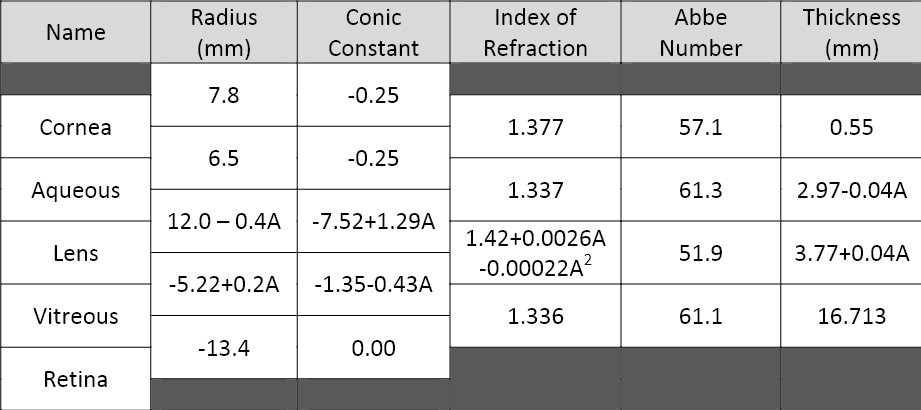
When light strikes the rods and cones, it triggers chemical changes that produce electrical signals. These travel along the optic nerve to the brain. There is one spot where the optic nerve leaves the eye and there are no light sensors, creating a "blind spot" that the brain quietly fills in so we never notice it.
The image formed on the retina is actually upside down and two dimensional. It is the brain that turns it the right way up, merges the slightly different views from our two eyes to judge depth, and assembles everything into the rich, moving, full colour scene we experience. Much of seeing happens not in the eye but in the mind.
The eye is protected and served by many supporting parts. Six small muscles move each eye with great speed and precision. Eyelids and lashes shield it, and a constant film of tears keeps it moist, clean, and free of infection. A rich supply of blood and nerves keeps this delicate instrument working from moment to moment.
Common vision problems arise when the eye's shape causes light to focus slightly in front of or behind the retina, producing short sight or long sight, easily corrected with glasses or contact lenses. Other conditions, such as cataracts and glaucoma, can threaten sight more seriously but are often treatable. For all its complexity, the eye remains one of the body's most extraordinary achievements.
