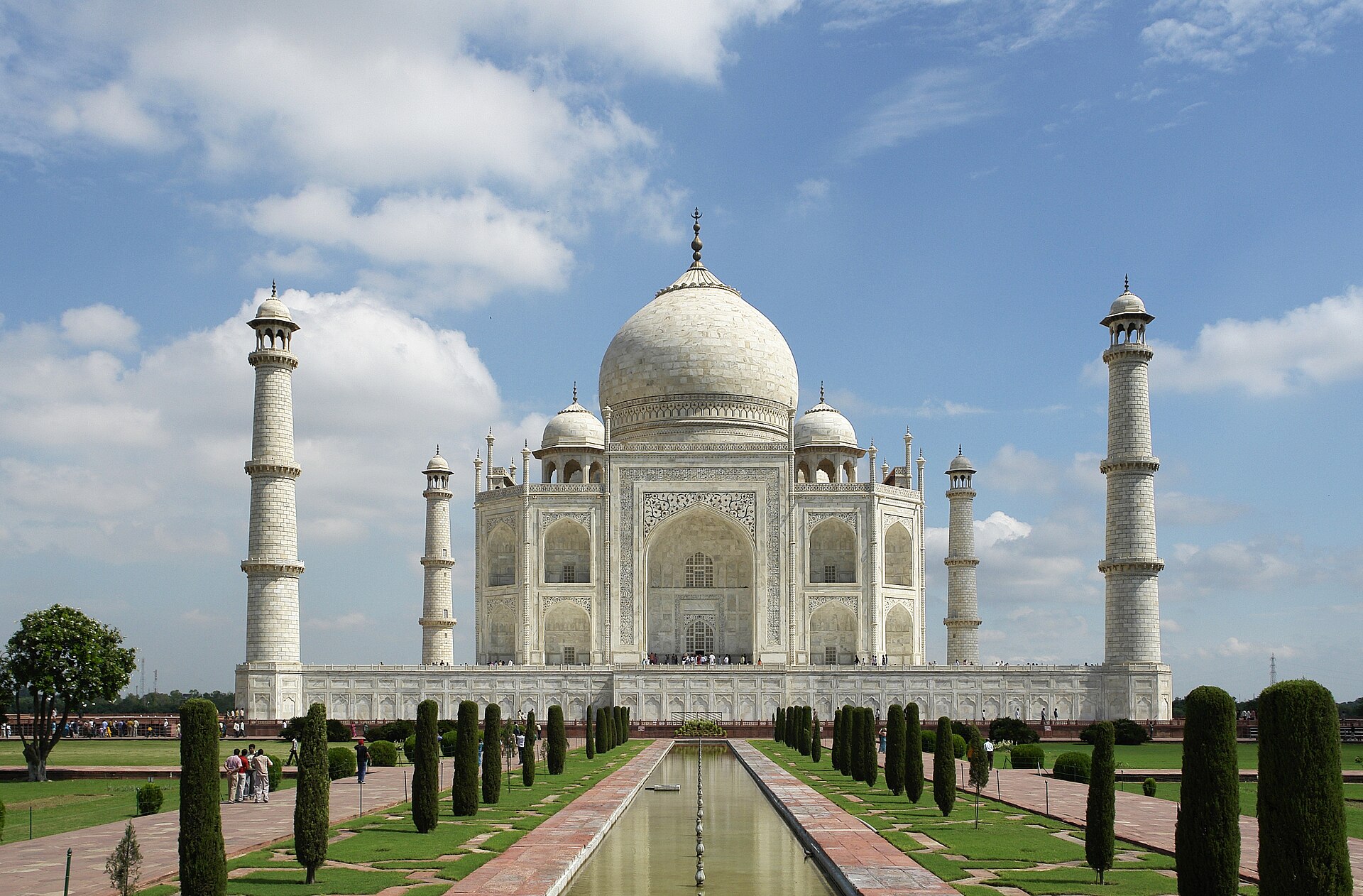
The Taj Mahal is a white marble mausoleum in Agra, India, widely regarded as one of the most beautiful buildings in the world. Built in the seventeenth century by the Mughal emperor Shah Jahan as a tomb for his beloved wife, it is a masterpiece of Mughal architecture and an enduring monument to love and loss.
When Shah Jahan's wife Mumtaz Mahal died in 1631, the grieving emperor resolved to build her a tomb of unmatched beauty. Construction began the following year and the main structure was largely complete within about a decade, with the wider complex taking longer still.
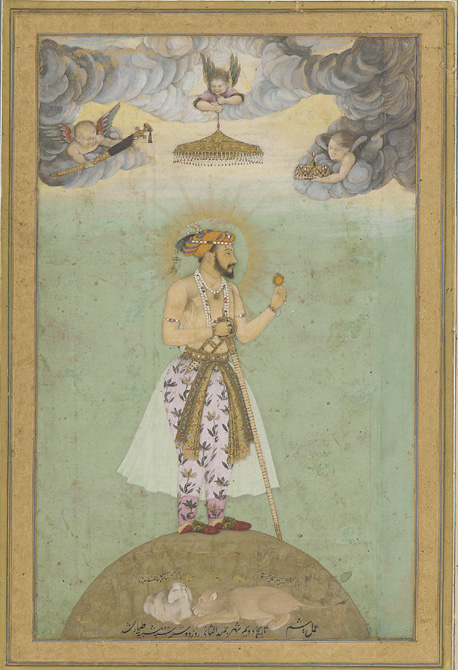
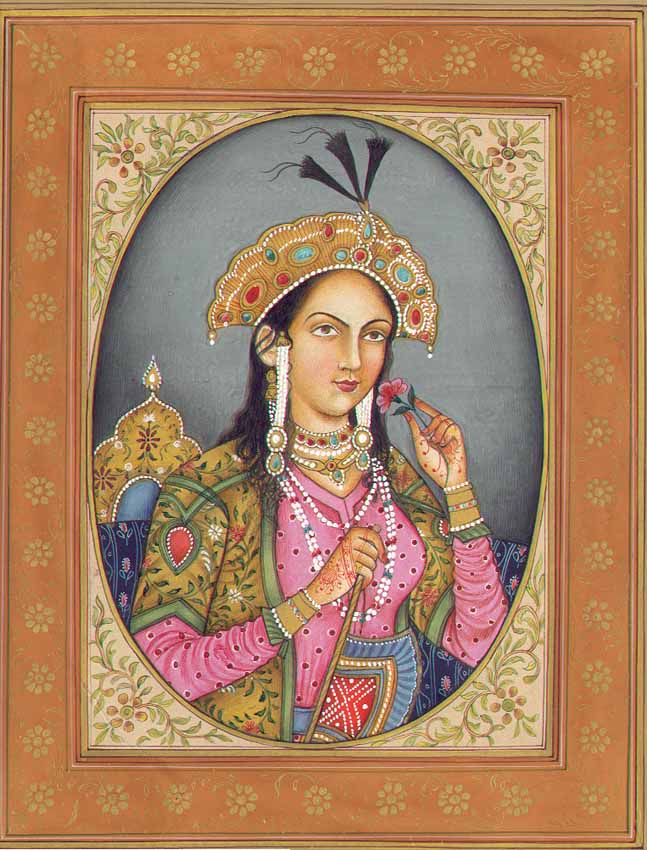
Mumtaz Mahal was Shah Jahan's favourite wife and constant companion, and she died giving birth to their fourteenth child. The depth of the emperor's devotion, and of his grief, is woven into the very purpose of the building, conceived as an eternal expression of his love.
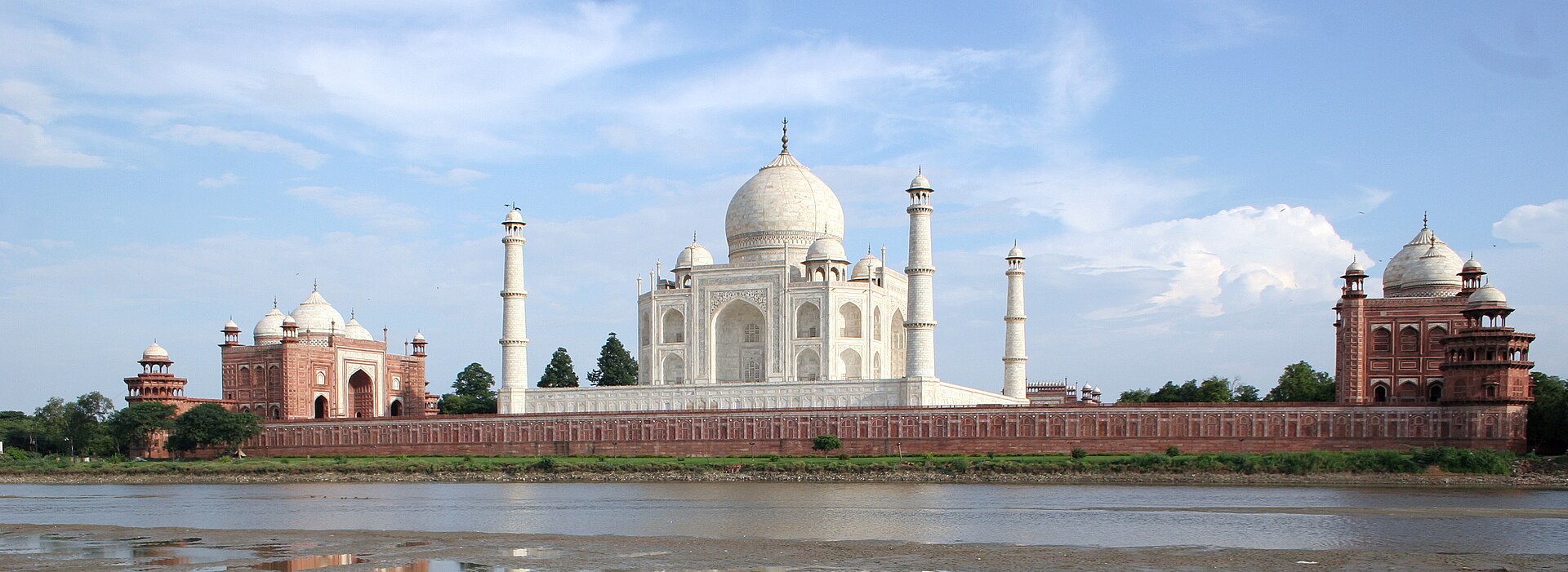
The Taj Mahal is celebrated for its perfect symmetry and its luminous white marble, which seems to change colour with the light of day, glowing pink at dawn and silver under the moon. The central domed tomb is flanked by four slender minarets and set within a vast formal garden divided by reflecting pools, with a mosque and a matching guest house on either side.
The marble is inlaid with intricate floral patterns made of semi-precious stones and carved with verses, blending Persian, Islamic, and Indian artistic traditions into a single harmonious whole. Tens of thousands of workers and artisans, drawn from across the empire and beyond, laboured on this decoration, which Shah Jahan spared no expense to perfect.
Every element of the Taj Mahal carries meaning. The great garden, divided into four parts by watercourses, evokes the gardens of paradise described in Islamic tradition, and the whole complex was conceived as an earthly vision of the heavenly garden where the soul of Mumtaz Mahal would rest.
The long reflecting pool mirrors the tomb, doubling its image and adding to the sense of serene, otherworldly perfection. The careful placement of every building, path, and channel was designed to lead the eye and the spirit toward the glowing white mausoleum at the garden's head.
Today the Taj Mahal is a UNESCO World Heritage Site and one of the most visited monuments on Earth, drawing millions of visitors a year. It faces modern threats, air pollution that yellows its marble and the strain of mass tourism, and great efforts are made to protect and clean it. More than three centuries after it was built, it remains both a triumph of art and architecture and one of the world's most powerful symbols of devotion.
