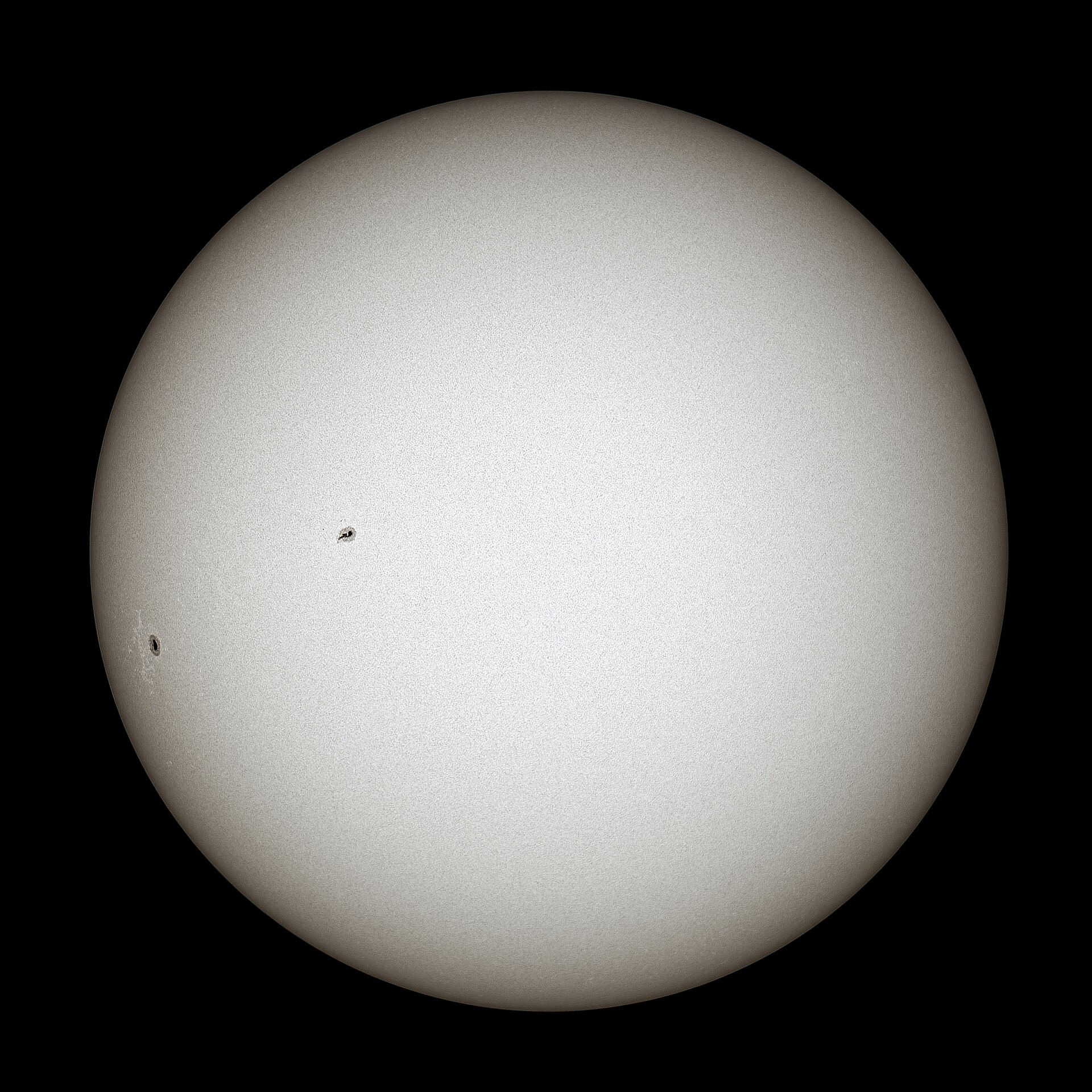
The Sun is the star at the centre of the Solar System, a vast sphere of hot plasma whose gravity holds the planets in their orbits and whose light and heat make Earth habitable. It accounts for about 99.86 percent of the total mass of the Solar System and is, by any human measure, enormous: roughly 1.39 million kilometres across, wide enough to hold more than a million Earths.
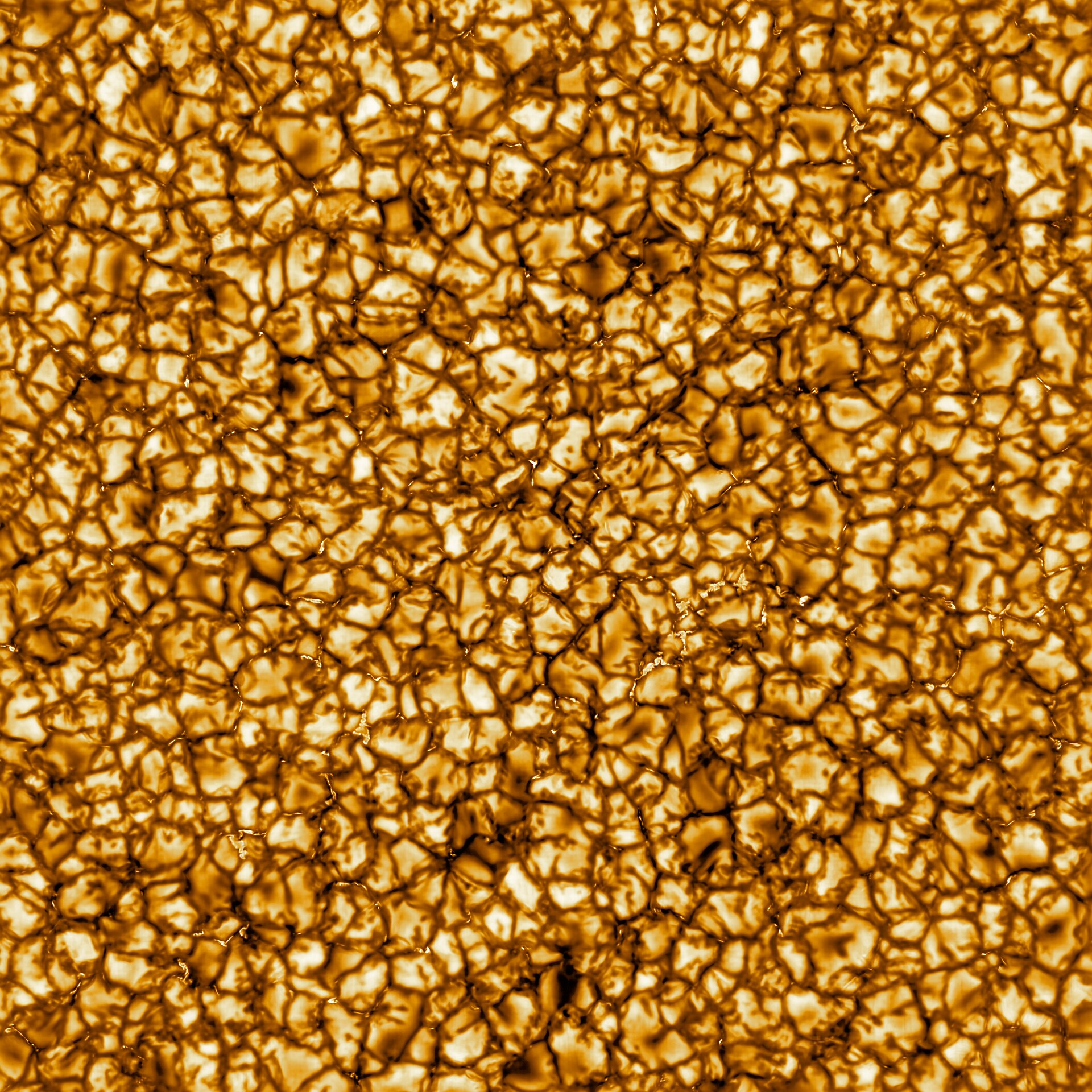
The Sun has no solid surface. It is a graded ball of ionised gas, mostly hydrogen, with about a quarter helium and a trace of heavier elements, held together by its own gravity and held apart by the pressure of the heat within. What we see as the bright disk is the photosphere, the layer from which light escapes into space; below it the gas is opaque, above it lies the Sun's tenuous atmosphere.
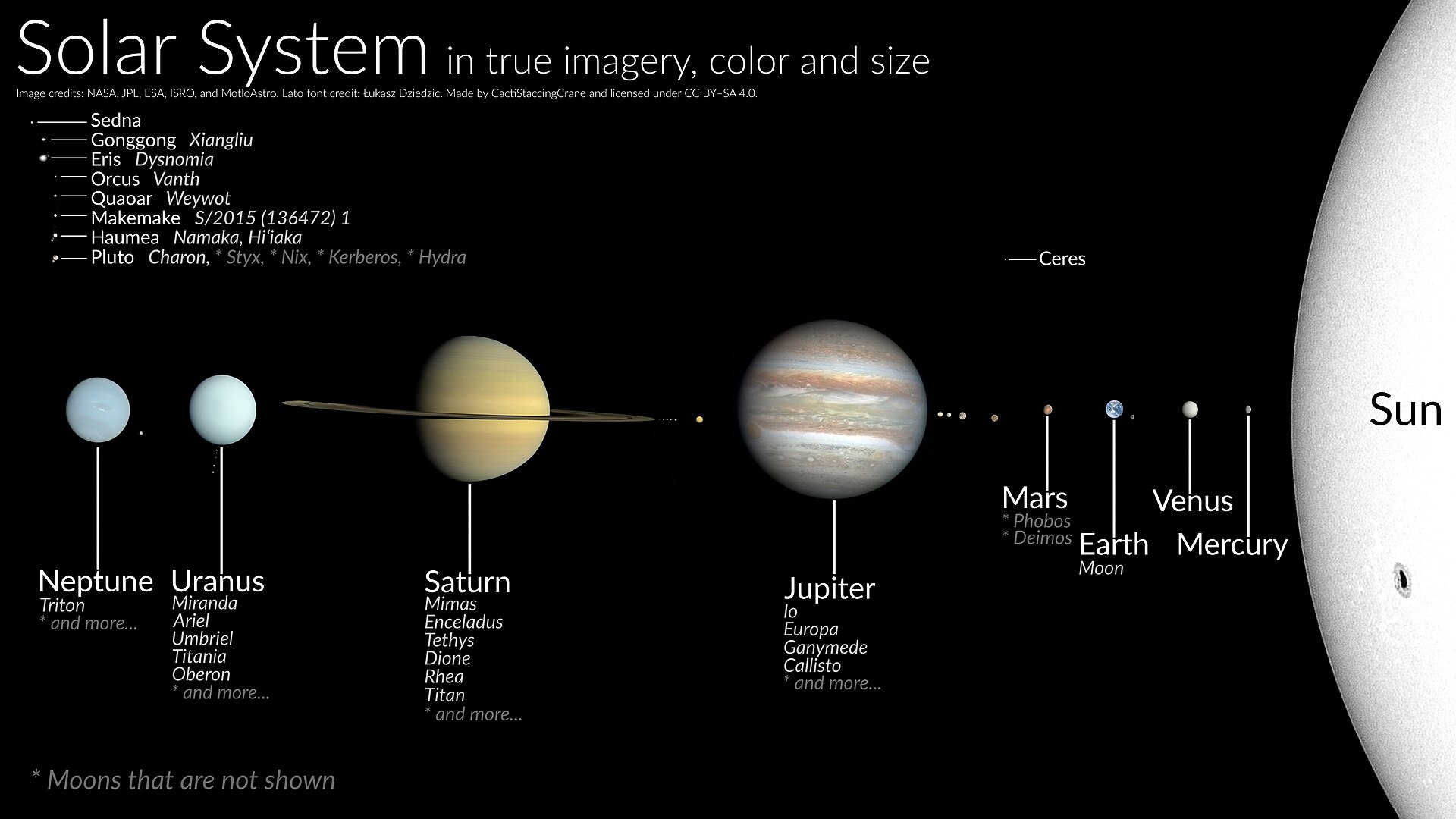
Astronomers classify the Sun as a G-type main-sequence star, an unremarkable yellow dwarf of a kind that is common throughout the galaxy. Yet "unremarkable" is relative: it dwarfs every planet that orbits it, and over a million Earths would fit inside it. There are far larger stars and far smaller ones, but the Sun sits comfortably in the middle of the range.
The Sun shines because of nuclear fusion in its core, where temperatures reach about 15 million degrees Celsius and pressures are crushing. There, hydrogen nuclei are forced together to form helium, converting a small fraction of their mass into energy according to Einstein's relation between mass and energy. Every second the Sun fuses around 600 million tonnes of hydrogen.
The energy released in the core does not escape quickly. It takes tens of thousands of years to work its way out through the dense, opaque interior, bouncing from particle to particle, before finally streaming away from the surface as sunlight. That light then takes just over eight minutes to cross the 150 million kilometres to Earth, meaning the sunshine we feel left the surface only minutes ago but began its journey in the core long before human history.
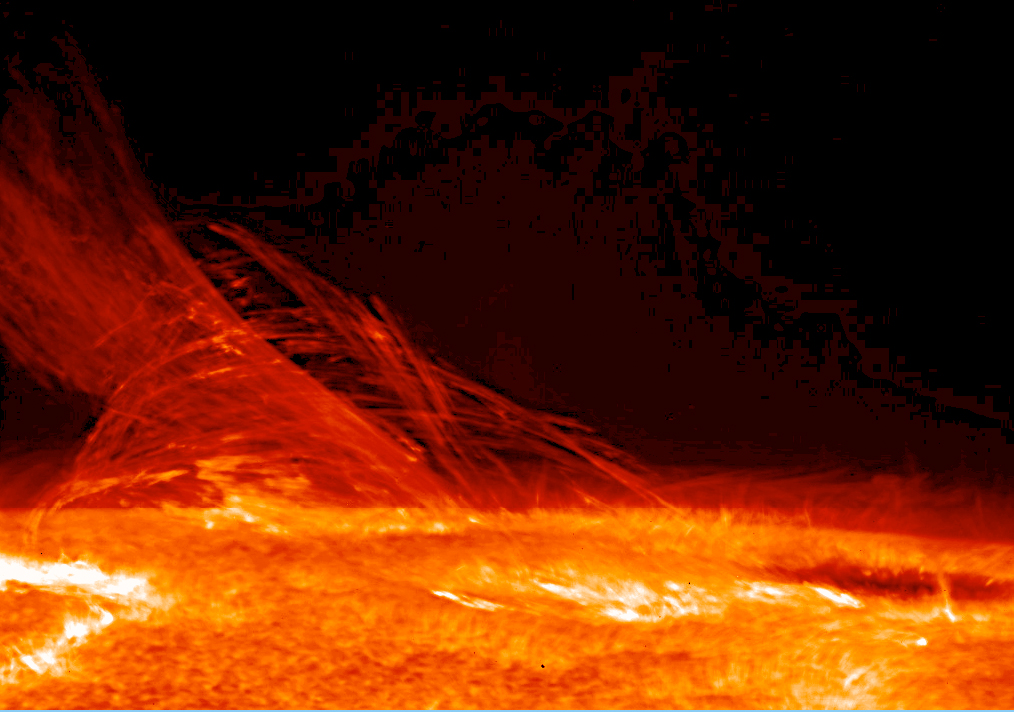
Above the photosphere lie the chromosphere and the corona, the Sun's outermost atmosphere, which paradoxically reaches millions of degrees, far hotter than the surface below, a puzzle physicists are still resolving. The Sun is magnetically active: twisted magnetic fields produce sudden flares and great eruptions of plasma called coronal mass ejections that hurl charged particles across the Solar System.
The Sun's magnetism also creates dark, cooler patches on its surface called sunspots, which come and go on a roughly eleven-year cycle of waxing and waning activity. When the charged particles from flares and eruptions reach Earth, they light up the auroras near the poles and can disrupt satellites, radio communication, and power grids, making the study of "space weather" increasingly important.
The Sun formed about 4.6 billion years ago from the gravitational collapse of a cloud of gas and dust, and it is now roughly halfway through its stable, hydrogen-burning life. In another five billion years or so it will exhaust the hydrogen in its core, swell into a red giant large enough to engulf the inner planets, and finally shed its outer layers to leave behind a slowly cooling white dwarf. For now, it remains the steady, life-giving anchor of our corner of the galaxy.
