The steady state theory was a model of the universe, popular in the mid twentieth century, which held that the universe has always looked roughly the same and has no beginning or end. It was a serious scientific rival to the Big Bang, but the evidence ultimately debunked it.
The steady state theory pictured a cosmos with no birth and no death, the same in all places and at all times. The universe, on this view, had always existed and would exist forever, ever changing in detail but unchanging in its overall character. It was a vision of cosmic permanence.
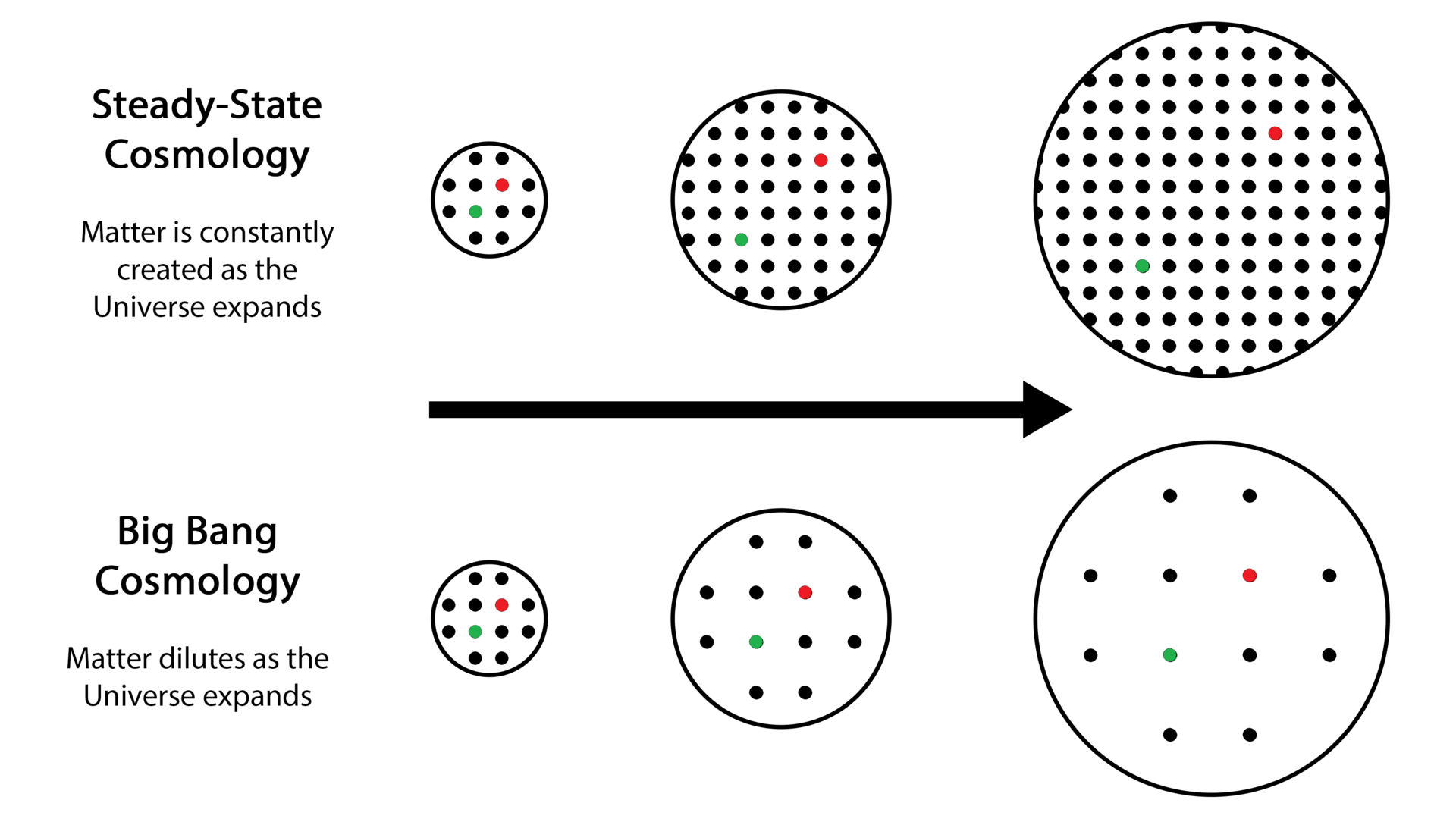
There was an obvious problem: the universe was known to be expanding, which should thin it out over time. The theory's answer, proposed in 1948 by Fred Hoyle and others, was that new matter is continuously created, very slowly, in the gaps as space expands, so the universe keeps a constant average density forever.
Part of the theory's appeal was philosophical. By having no beginning, it avoided the awkward question of what came "before," and it extended the idea that the universe looks the same everywhere to include all times as well. To some scientists, an eternal, unchanging cosmos seemed more elegant than one with a fiery origin.
The steady state theory was no fringe idea. For a couple of decades it was a serious, respected rival to the Big Bang, championed by capable scientists. The two models made different predictions about the universe, and which was right could, in principle, be settled by observation, exactly as science should work.
The first cracks came from looking deep into space, which means looking back in time, since light takes ages to reach us. If the universe never changed, distant regions should look just like nearby ones. Instead, astronomers found that the early universe was different, more crowded with active galaxies, a sign of change over time.
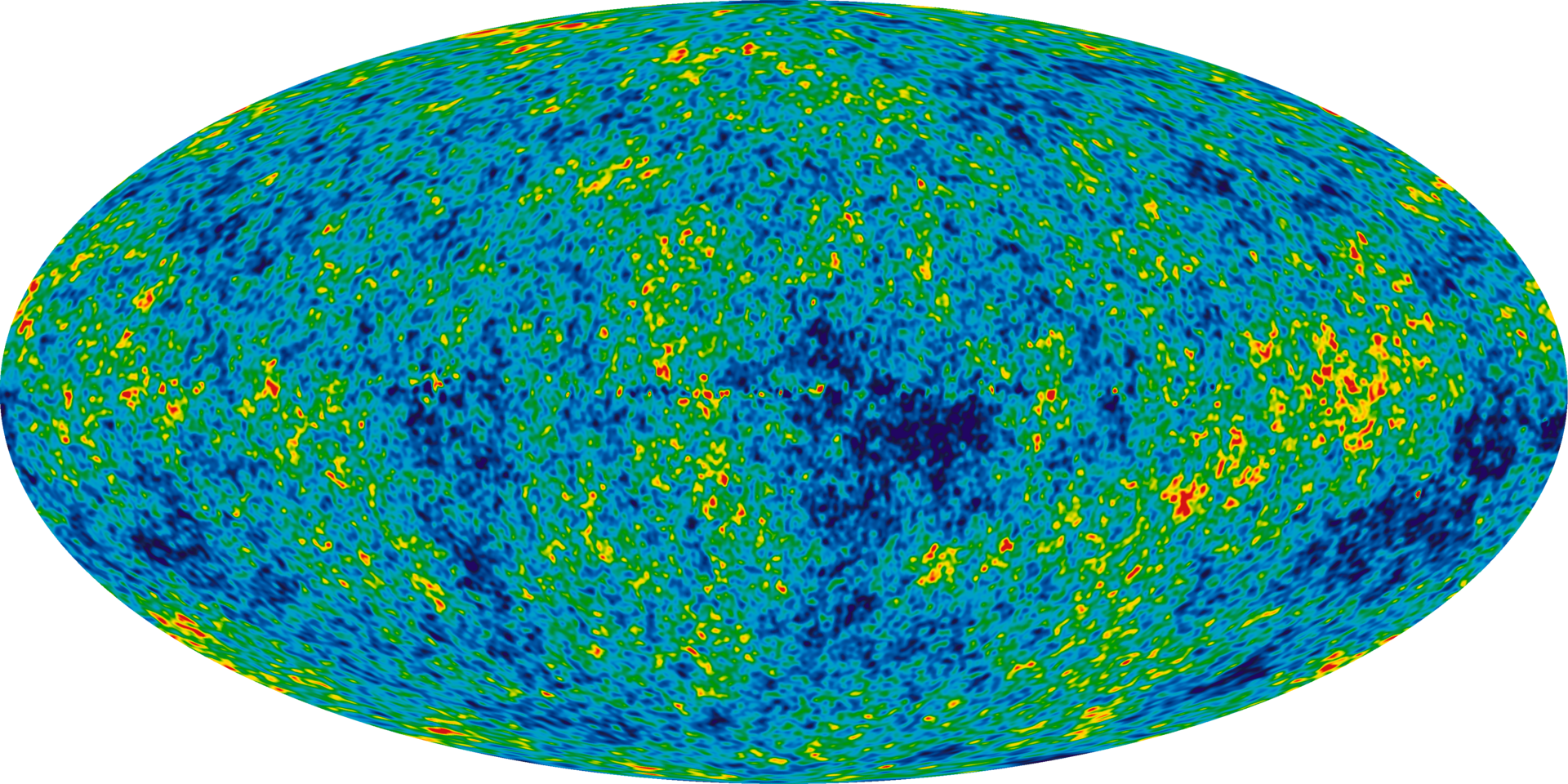
The decisive blow came in 1965 with the discovery of the cosmic microwave background, a faint glow of radiation filling all of space. This was exactly the leftover heat predicted by the Big Bang, the relic of a hot, dense early universe. The steady state theory had no way to explain it.
Faced with the cosmic microwave background and the evidence of a changing universe, the steady state theory could not survive. The Big Bang explained the observations naturally, while the steady state model could only strain to accommodate them. The scientific community accepted the Big Bang as the model of cosmic history.
The steady state theory is now firmly debunked, but the rivalry was scientifically valuable. The competition between the two models sharpened both ideas and drove the search for decisive evidence. Ironically, it was the steady state champion Fred Hoyle who coined the name "Big Bang," meaning it dismissively, for the very theory that would defeat his own.
