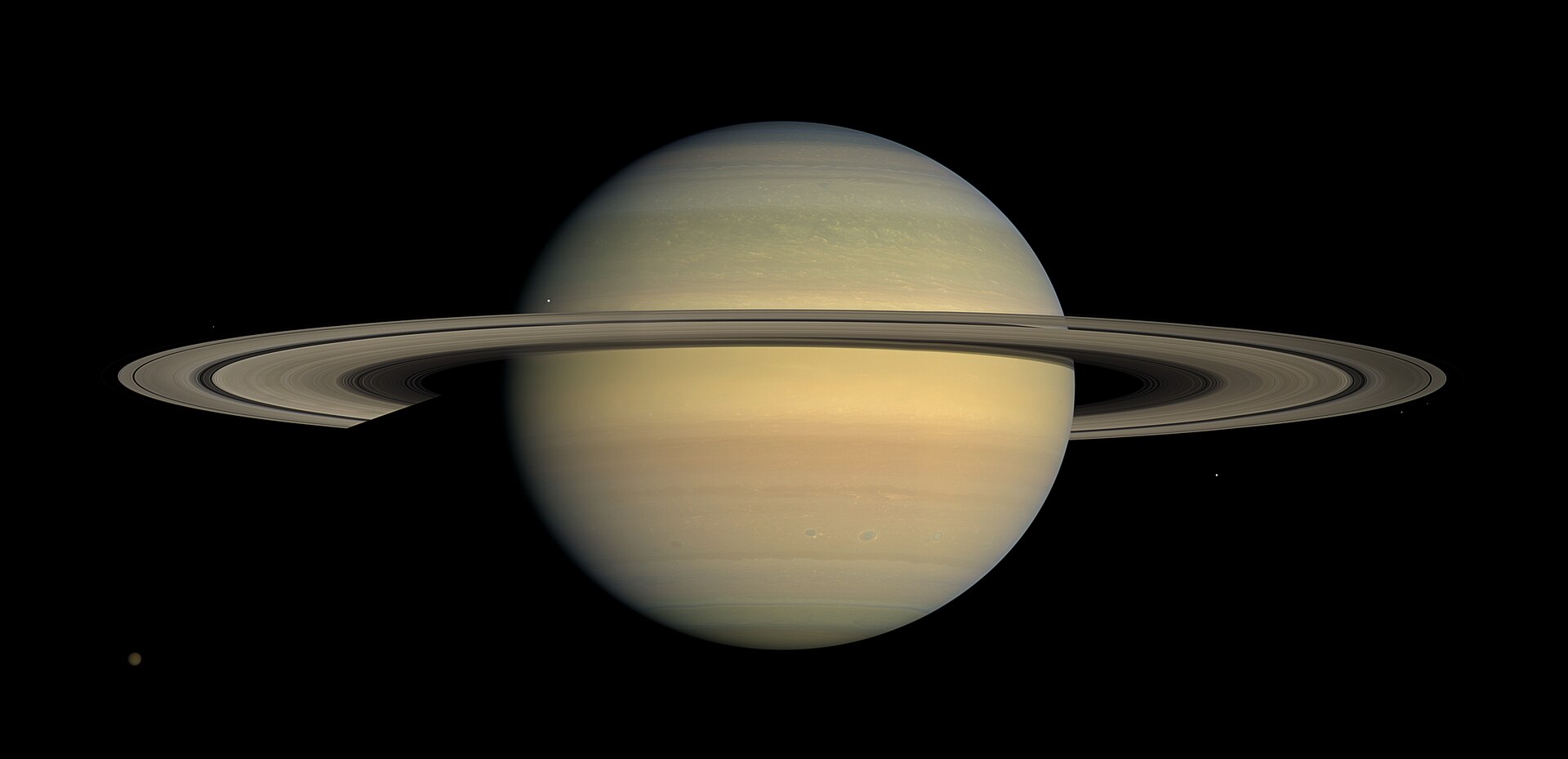
Saturn is the sixth planet from the Sun and the second largest in the Solar System, famous above all for its magnificent rings. A giant ball of gas encircled by a shimmering halo of ice and rock, it is one of the most beautiful sights in the night sky and a world of remarkable extremes.
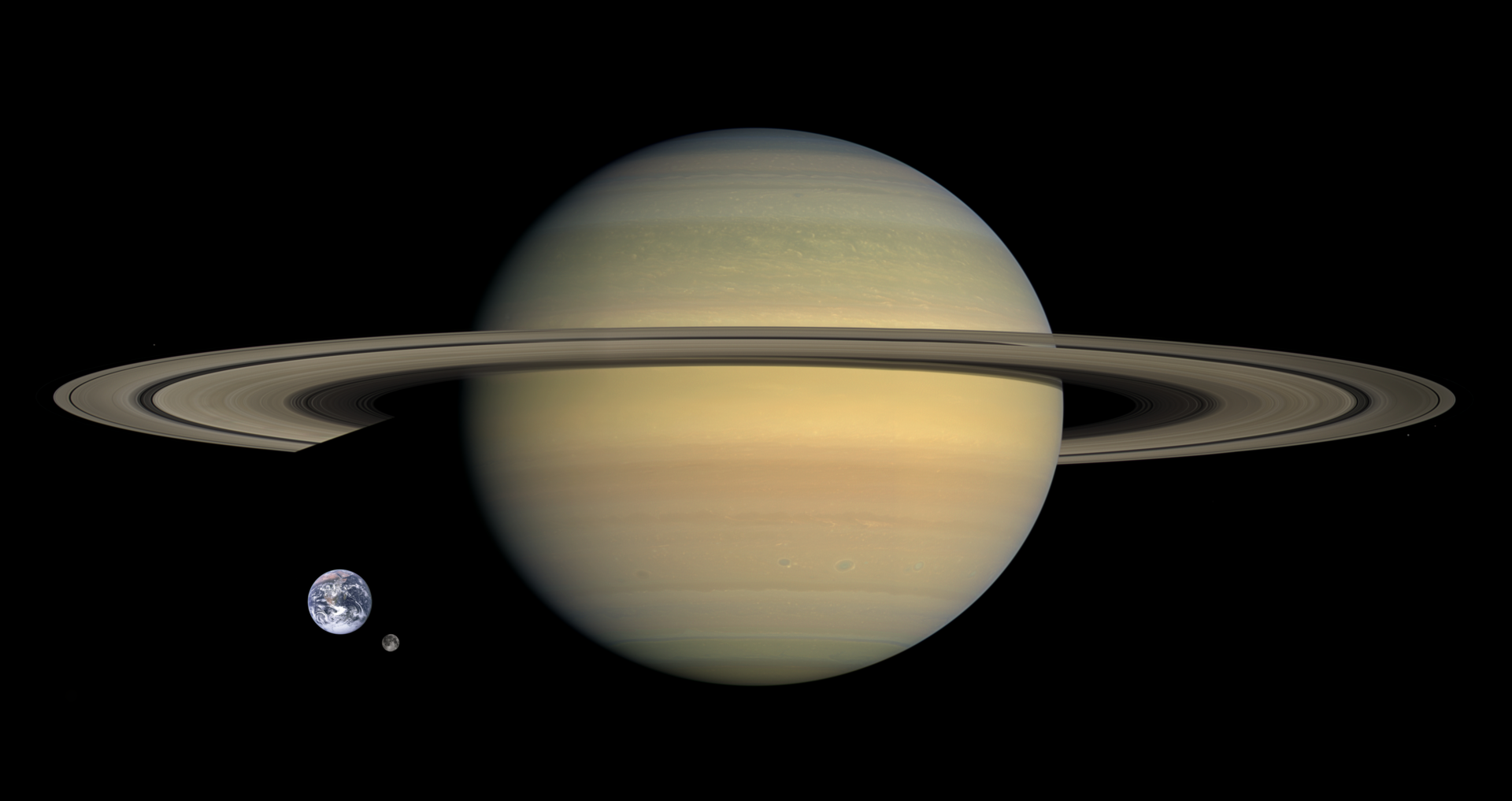
Saturn is a gas giant, made up mostly of hydrogen and helium with no solid surface to stand on. It is enormous, more than nine times the width of Earth, yet so low in density that, were there an ocean large enough, Saturn would float in it.
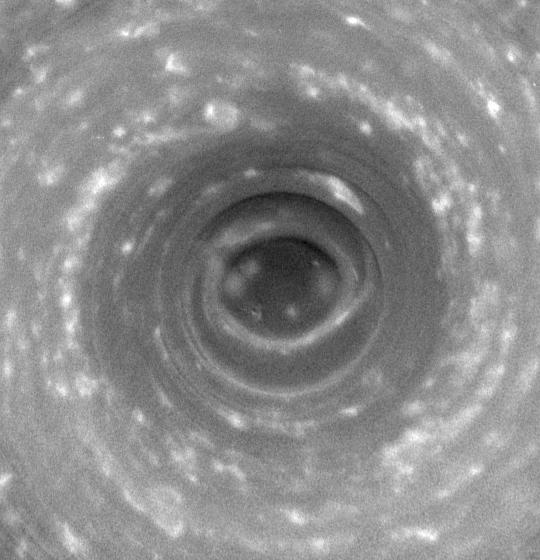
Saturn's rapid spin, completing a day in only about ten and a half hours, flattens the planet noticeably at the poles and helps drive ferocious winds and long-lived storms in its banded atmosphere. At its north pole sits a bizarre, persistent six-sided cloud pattern with a swirling vortex at its centre.
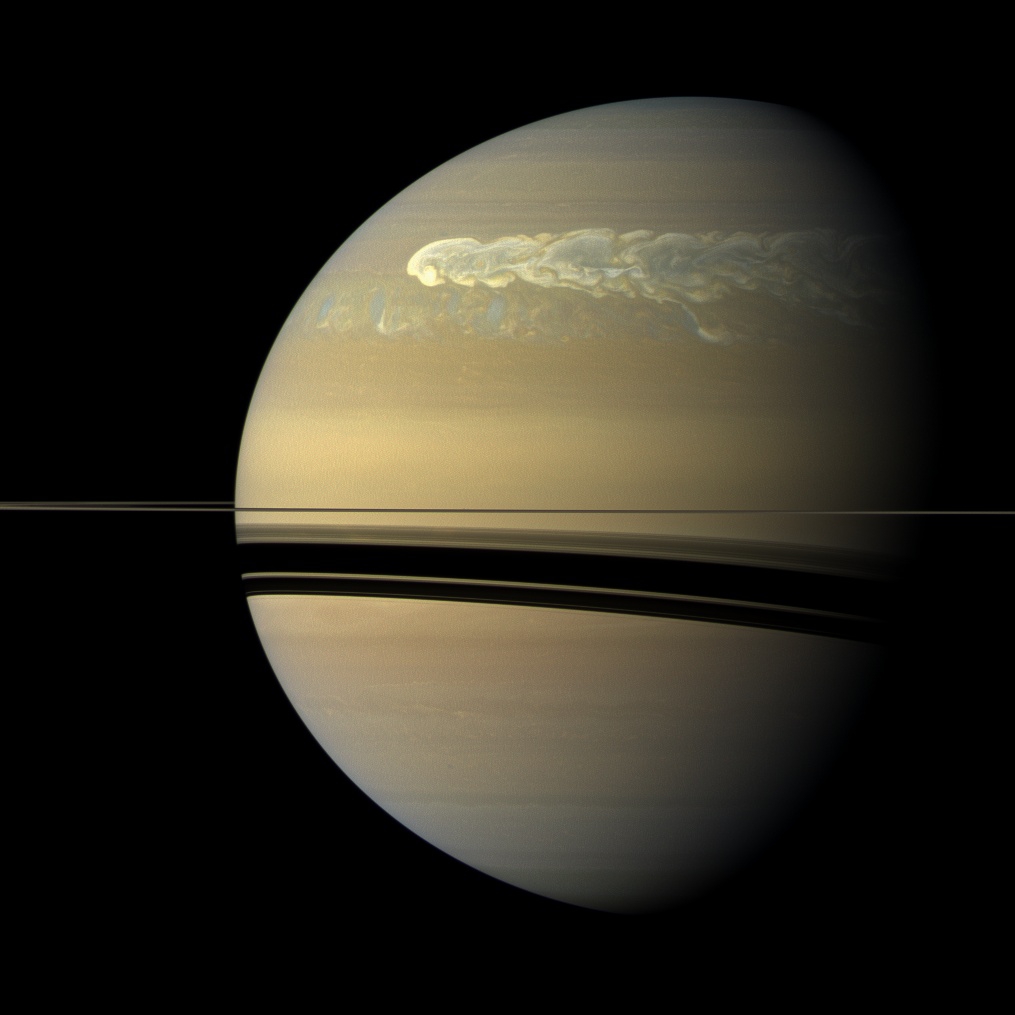
Every few decades a giant storm erupts in Saturn's atmosphere and grows until it wraps right around the planet, a "Great White Spot" visible even from Earth. One such storm in 2011 encircled the whole world, a band of churning cloud large enough to swallow the Earth several times over.
Saturn's rings are the most spectacular in the Solar System, spanning hundreds of thousands of kilometres yet, in most places, only tens of metres thick. They are made of countless pieces of ice and rock, ranging from tiny grains to chunks the size of houses, all orbiting the planet. Though they look solid from afar, they are mostly empty space.
How and when the rings formed is still debated, and they may be surprisingly young in cosmic terms, perhaps far younger than the planet itself. Measurements suggest the rings are slowly raining down into Saturn and may, in the distant future, disappear entirely, meaning we are lucky to see them in their full glory.
Saturn is orbited by a vast family of moons, more than any other planet, ranging from tiny moonlets within the rings to giant Titan, larger than the planet Mercury. Titan is wrapped in a thick orange atmosphere and has lakes and rivers of liquid methane, while the small moon Enceladus jets plumes of water from a hidden ocean beneath its icy crust. These ocean moons are among the most promising places to search for life beyond Earth.
Much of what we know about Saturn comes from the Cassini spacecraft, which orbited the planet for thirteen years, studying its rings, atmosphere, and moons in extraordinary detail before plunging into Saturn itself in 2017. Even to the naked eye Saturn is a bright point in the sky, but through even a small telescope its rings spring into view, a sight that has thrilled stargazers ever since Galileo first glimpsed them four centuries ago.
