
Quantum mechanics is the most successful physical theory ever devised, predicting the behavior of atoms, light, and subatomic particles with breathtaking accuracy. Yet what the theory actually tells us about the nature of reality remains deeply contested, with several rival interpretations and no agreement among physicists on which, if any, is correct.
There is no dispute whatsoever about the equations or their predictions. Quantum mechanics has passed every experimental test for a century, often to many decimal places, and it underpins modern electronics, lasers, chemistry, and the emerging field of quantum computing. The contest is not over what the theory predicts, but over what it means.
In quantum theory, a particle can exist in a blur of multiple possibilities at once, described by a mathematical object called the wavefunction, until it is measured, at which point a single definite outcome appears. What exactly counts as a measurement, and what becomes of all the other possibilities at that instant, is the heart of the mystery.
The puzzle is captured by Erwin Schrödinger's famous thought experiment, in which a cat in a sealed box is, by a strict reading of the theory, somehow both alive and dead until the box is opened and a definite outcome is observed. Schrödinger devised the scenario precisely to highlight how strange the theory becomes when applied to everyday objects.
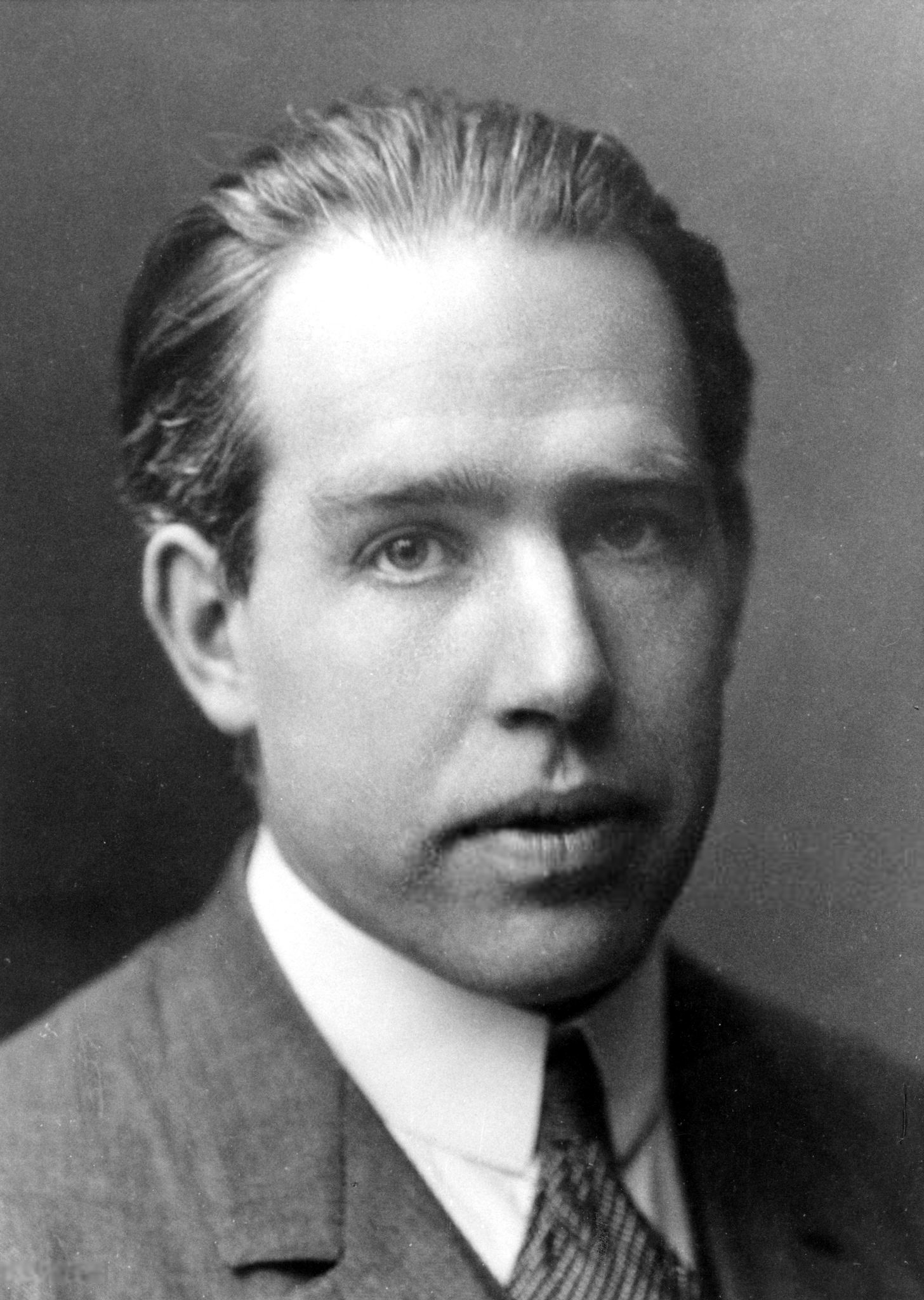
The oldest and long dominant interpretation, associated above all with Niels Bohr, treats the wavefunction as a tool for predicting measurements and declines to say much about what is "really" happening in between. On this view, it is close to meaningless to ask what the particle is doing when no one is looking.
Other interpretations paint strikingly different pictures of the same equations. The many worlds interpretation proposes that all outcomes really happen, each in its own branching universe. Other approaches add hidden variables that restore a definite reality, or treat the wavefunction's collapse as a genuine physical process.
Because every interpretation fits the same experimental results exactly, no measurement can currently distinguish them. Choosing between them comes down to judgments about simplicity, elegance, and what one is willing to believe about reality, which is why, a century on, the meaning of quantum mechanics remains a genuinely open and contested question.
