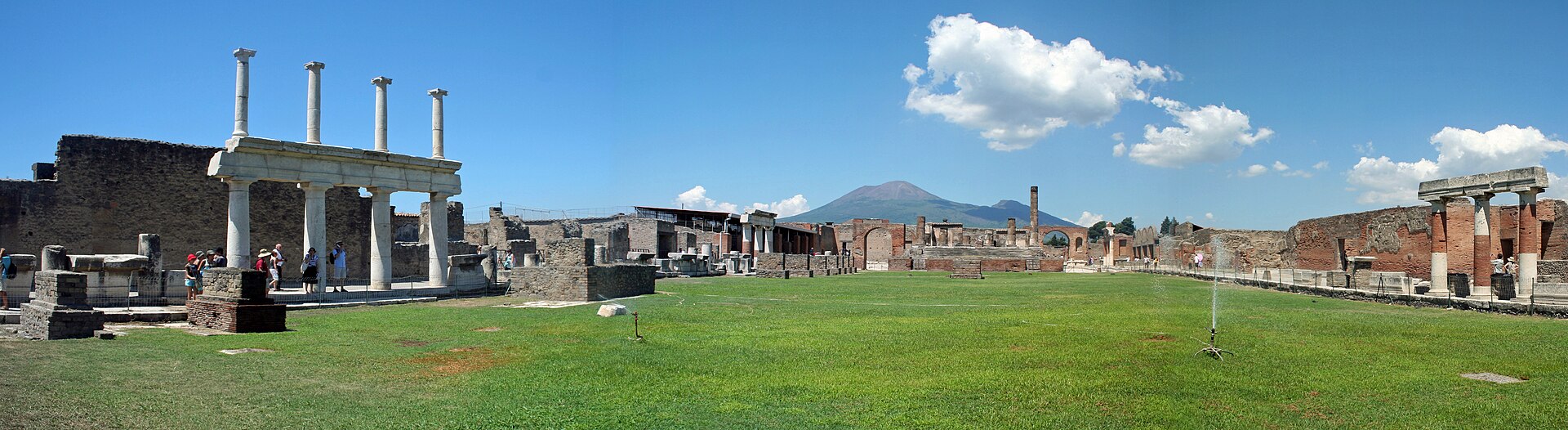
Pompeii was a prosperous Roman city near modern Naples that was buried under volcanic ash when Mount Vesuvius erupted in 79 AD. Frozen in time by the disaster, it is one of the most remarkable archaeological sites in the world, offering an unmatched window into daily life in the ancient Roman world.
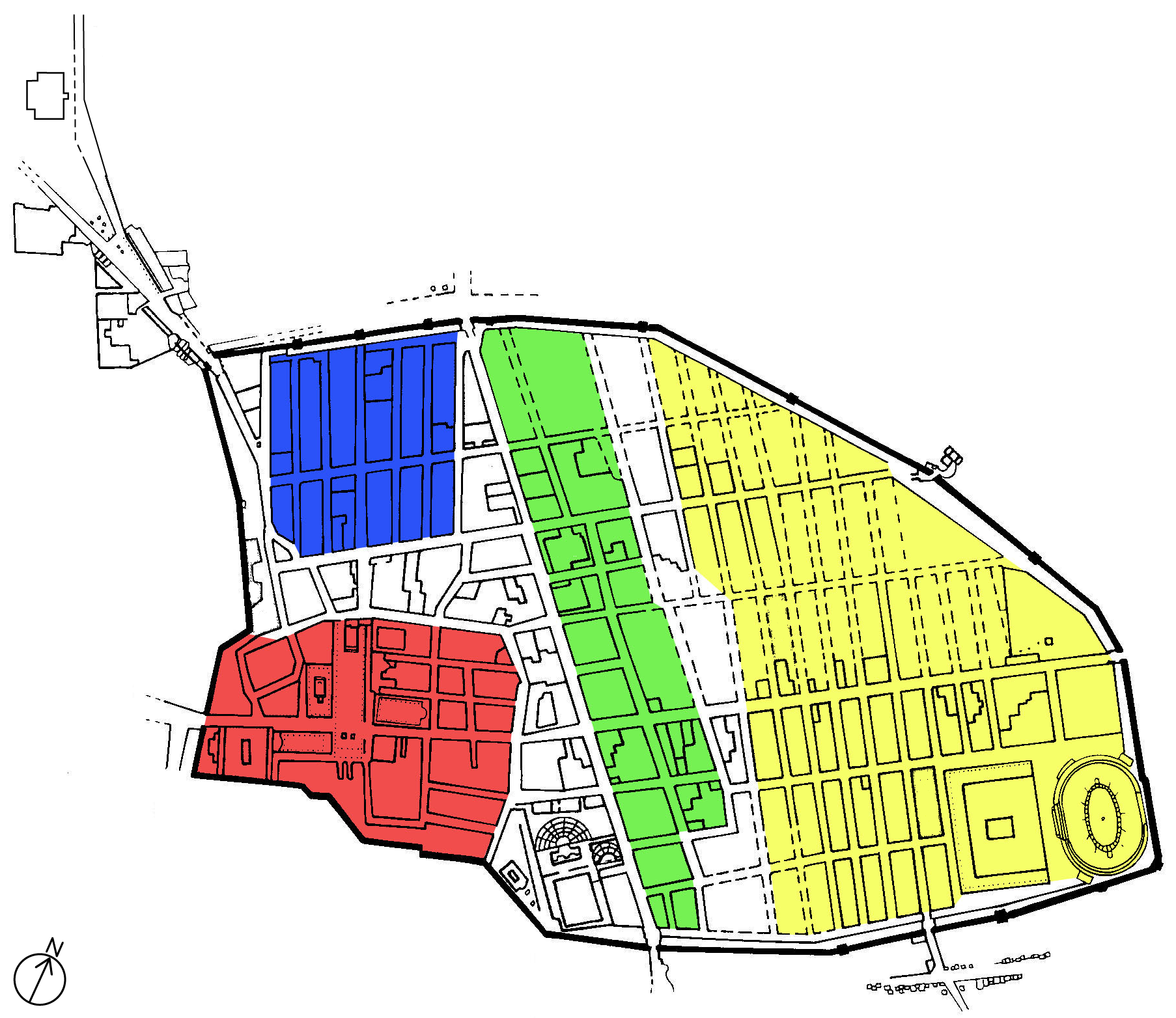
For centuries Pompeii flourished as a bustling town of perhaps fifteen to twenty thousand people. It had grand houses, shops, bakeries, taverns, public baths, temples, a forum, and a large amphitheatre. Its position near the sea and on trade routes made it wealthy, and its streets bustled with merchants, craftsmen, slaves, and citizens going about ordinary life.
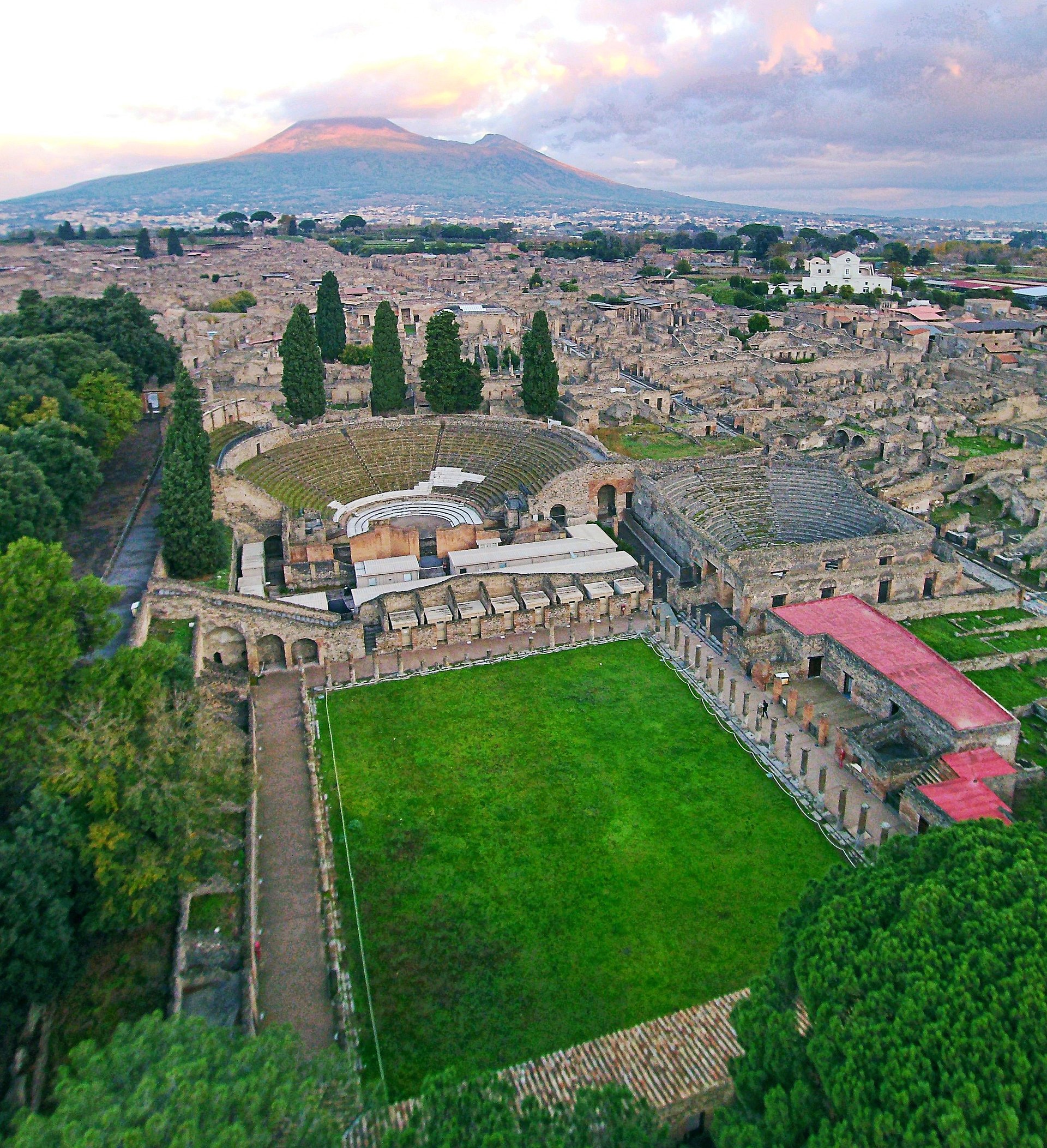
The people of Pompeii lived beneath Mount Vesuvius without knowing it was a volcano, for it had not erupted in living memory. A powerful earthquake struck the region in 62 AD, damaging the city, but it was rebuilt. The deeper danger went unrecognized, and the town carried on in the shadow of a mountain that was quietly building toward catastrophe.
Over two days in 79 AD, Vesuvius erupted with tremendous force. First it rained pumice and ash, collapsing roofs and burying the streets. Then came the deadliest phase: searing surges of hot gas and debris, called pyroclastic flows, that swept down the mountain. Those who had not already fled were killed almost instantly, and the city vanished under metres of volcanic material.
The same ash that destroyed Pompeii also preserved it with extraordinary completeness. Buildings stood largely intact, their walls still bright with frescoes, their floors laid with mosaics. Furniture, tools, jars of food, and even loaves of bread survived beneath the debris, sealing a single day of Roman life beneath the surface for nearly two thousand years.
Most hauntingly, the bodies of victims left hollow spaces in the hardened ash as they decayed. In the nineteenth century, archaeologists realized they could pour plaster into these voids, capturing the exact final poses of the dead, some shielding their faces, others holding loved ones. These casts are among the most moving objects from the ancient world.
Because so much survived, Pompeii reveals Roman daily life in vivid detail. Election slogans and crude jokes are painted on walls, shops still bear their counters, and homes show how families of different ranks lived. The city has taught historians an enormous amount about Roman food, religion, trade, art, and the texture of ordinary existence.
Pompeii lay forgotten until it was rediscovered in the eighteenth century, and serious excavation began in the 1700s and has continued ever since. Early digs were crude treasure hunts, but methods grew more careful over time. Even today, large parts of the city remain unexcavated, and new discoveries continue to make headlines.
A UNESCO World Heritage Site visited by millions, Pompeii is both a treasure of the ancient world and a sobering reminder of the power of nature. It shaped European art and imagination after its rediscovery and remains an irreplaceable record of a single Roman city, caught forever in its final hour.
