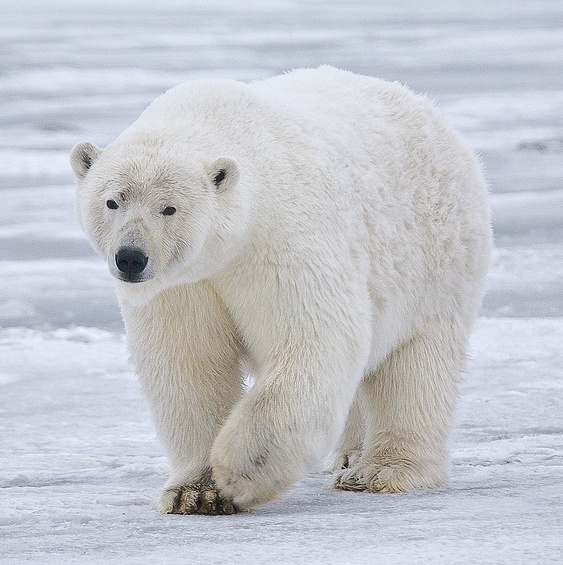
The polar bear is the largest land carnivore on Earth and the undisputed master of the Arctic. Superbly adapted to one of the planet's harshest environments, it spends much of its life on the sea ice, hunting seals across the frozen top of the world, and it has become the living symbol of a warming planet.
Everything about the polar bear is shaped for survival in extreme cold. Beneath its thick fur lies a layer of fat up to ten centimetres deep that insulates it and keeps it warm in icy water. Its fur, which appears white or cream, is in fact made of translucent hollow hairs that scatter light, and the skin beneath is black to soak up the sun's warmth.
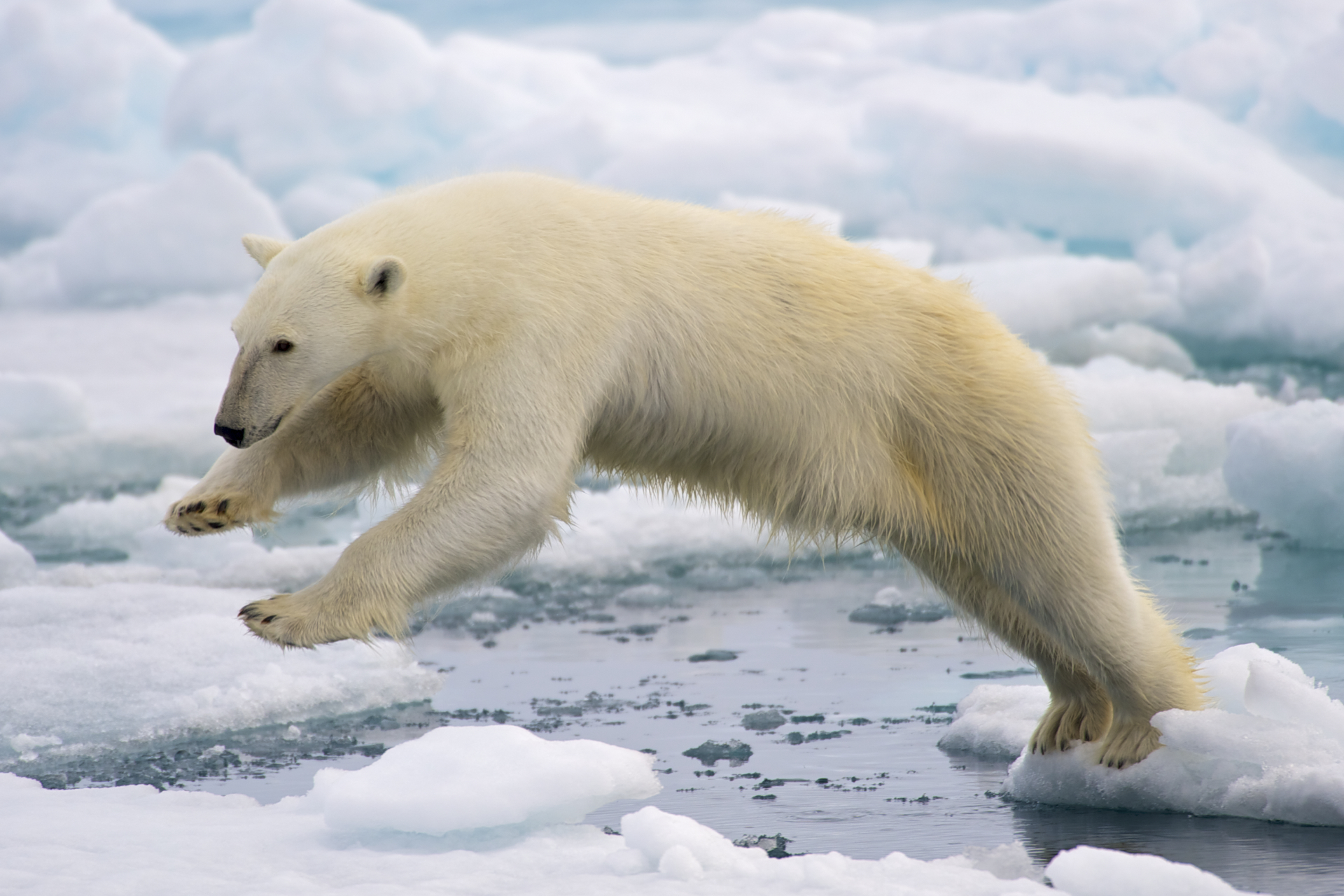
Large, furry paws spread the bear's weight on thin ice and act as paddles when it swims, which it does powerfully and over long distances, sometimes for days at a time between ice floes. A polar bear can cover enormous ranges across the ice in search of food, guided by an extraordinary sense of smell that can detect a seal from kilometres away.
The polar bear is a formidable predator, and seals are its main prey. It hunts them most often by waiting, with great patience, beside a hole in the ice where a seal must surface to breathe, then striking with astonishing speed and power. This way of life ties the polar bear utterly to the sea ice, which it needs as a platform to reach its food. On land, away from the ice, it finds far less to eat.
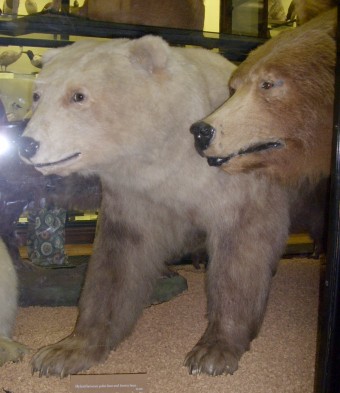
The polar bear evolved from the brown bear relatively recently, and the two are so closely related that they can still interbreed, producing fertile "grolar" or "pizzly" bear hybrids. As a warming climate brings the two species into contact more often, such hybrids have begun to appear in the wild, a curious sign of a changing Arctic.
Pregnant females dig dens in the snow, where they give birth in the depths of winter to tiny, helpless cubs, usually twins. The mother nurses them in the shelter of the den while living off her fat reserves, and in spring she leads them out onto the ice to learn to hunt. The bond between mother and cubs lasts about two years.
The polar bear's fate is bound up with the sea ice, and that ice is melting. As the Arctic warms faster than almost anywhere on Earth, the ice forms later and breaks up earlier each year, shortening the time bears have to hunt and forcing them to fast for longer.
This makes the polar bear one of the most visible casualties of climate change, and its survival has become closely tied to the future of the Arctic ice itself. As the great white bear of the north, it has come to stand, in the public mind, for everything that is at stake in a warming world.
