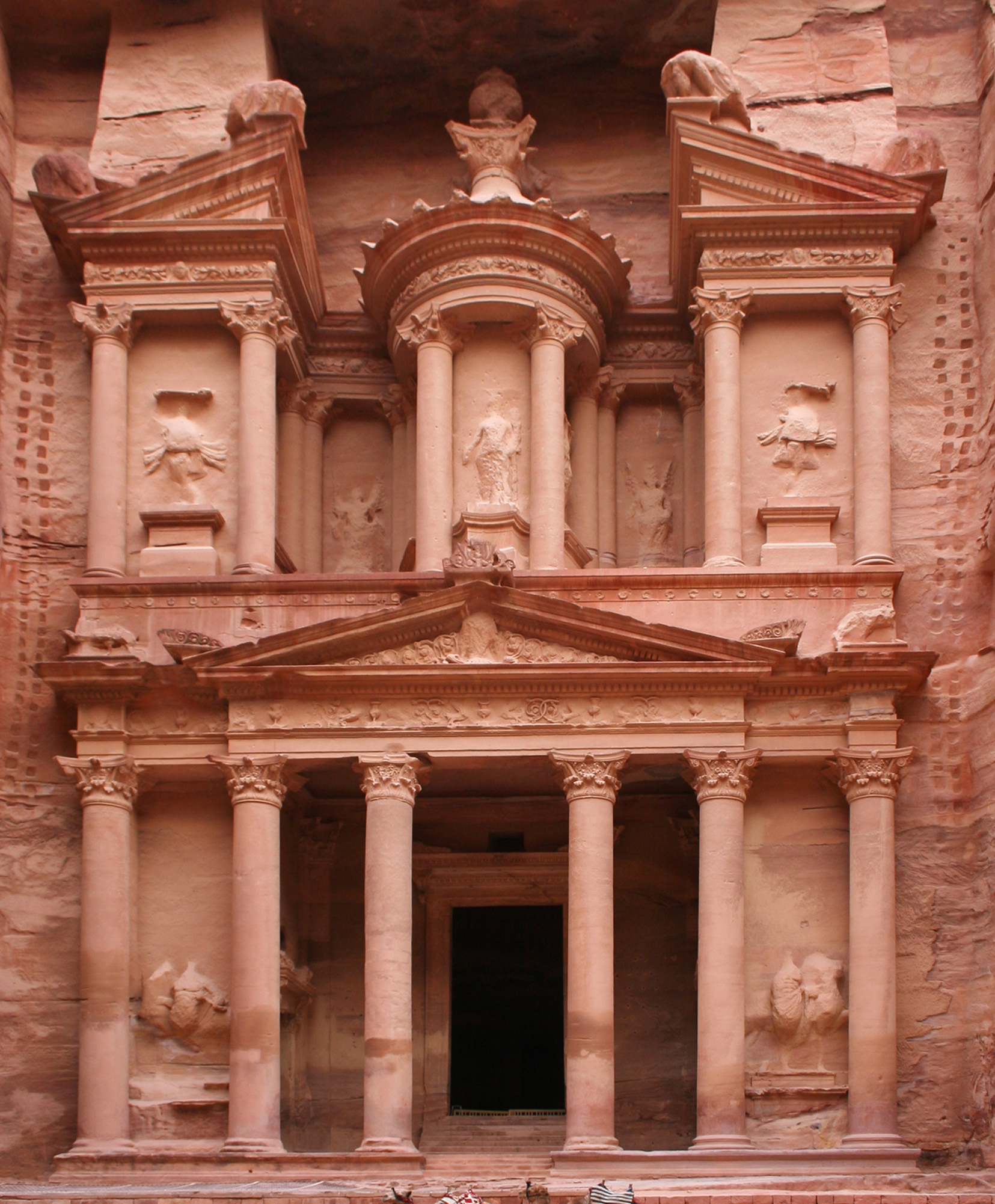
Petra is an ancient city in southern Jordan, famous for its monumental buildings carved directly into rose-coloured sandstone cliffs. Once the thriving capital of the Nabataean kingdom, it was lost to the wider world for centuries and is now one of the most evocative archaeological sites on Earth, often called the "Rose City" for the colour of its rock.
What makes Petra extraordinary is that its grandest structures are not built but carved, cut into the living rock of the canyon walls. The most famous is Al-Khazneh, "the Treasury," an ornate facade over 40 metres high revealed dramatically at the end of a narrow gorge called the Siq.
Beyond the Treasury lie temples, tombs, a great theatre, and the towering monastery of Al-Deir, scattered across a wide landscape of cliffs and valleys that together made up a city of perhaps tens of thousands of people at its height.
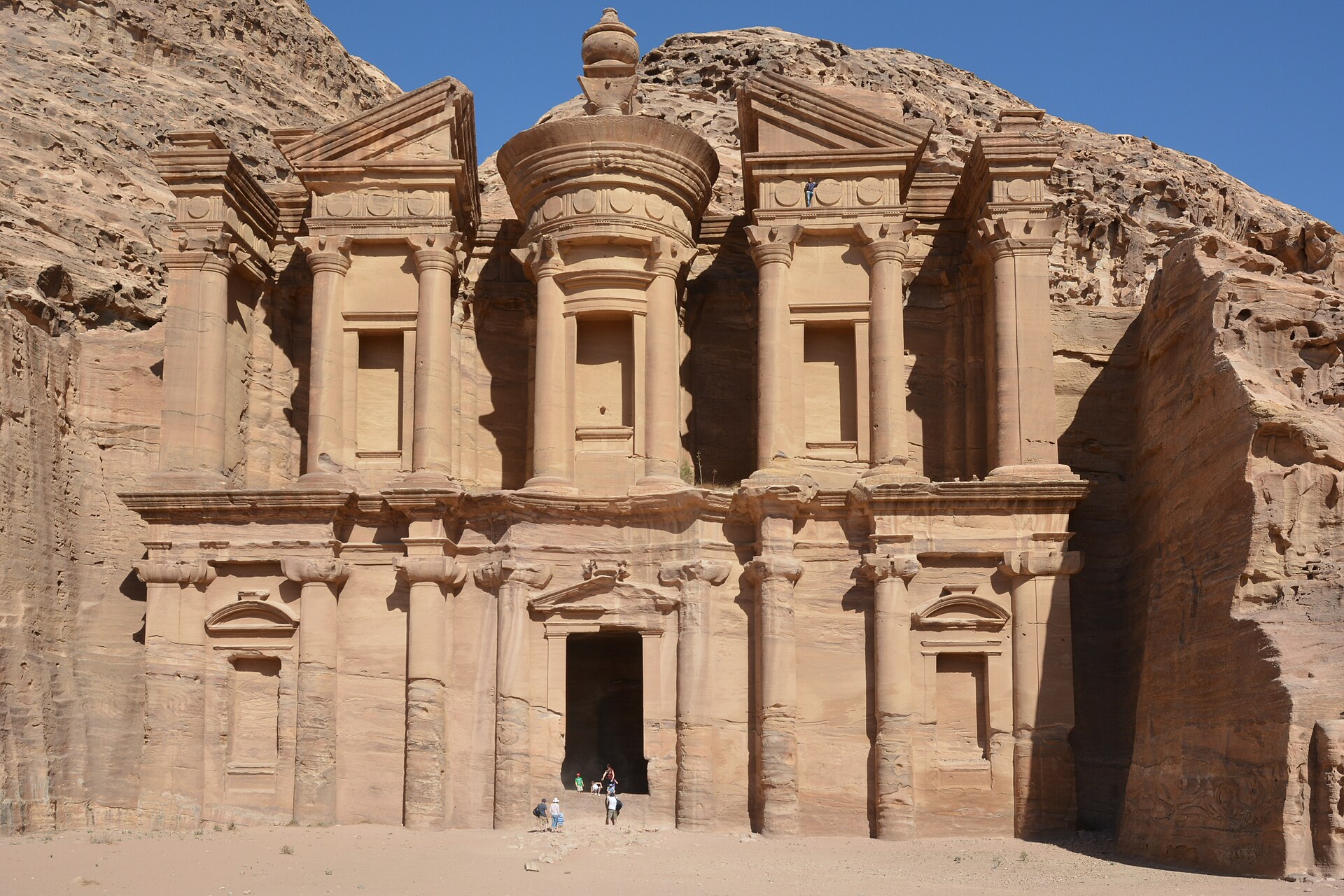
The cliffs around Petra are honeycombed with carved tombs and facades, their styles blending influences from across the ancient world. Many were burial places for the Nabataean elite, their grand fronts a display of wealth and status cut permanently into the rock.
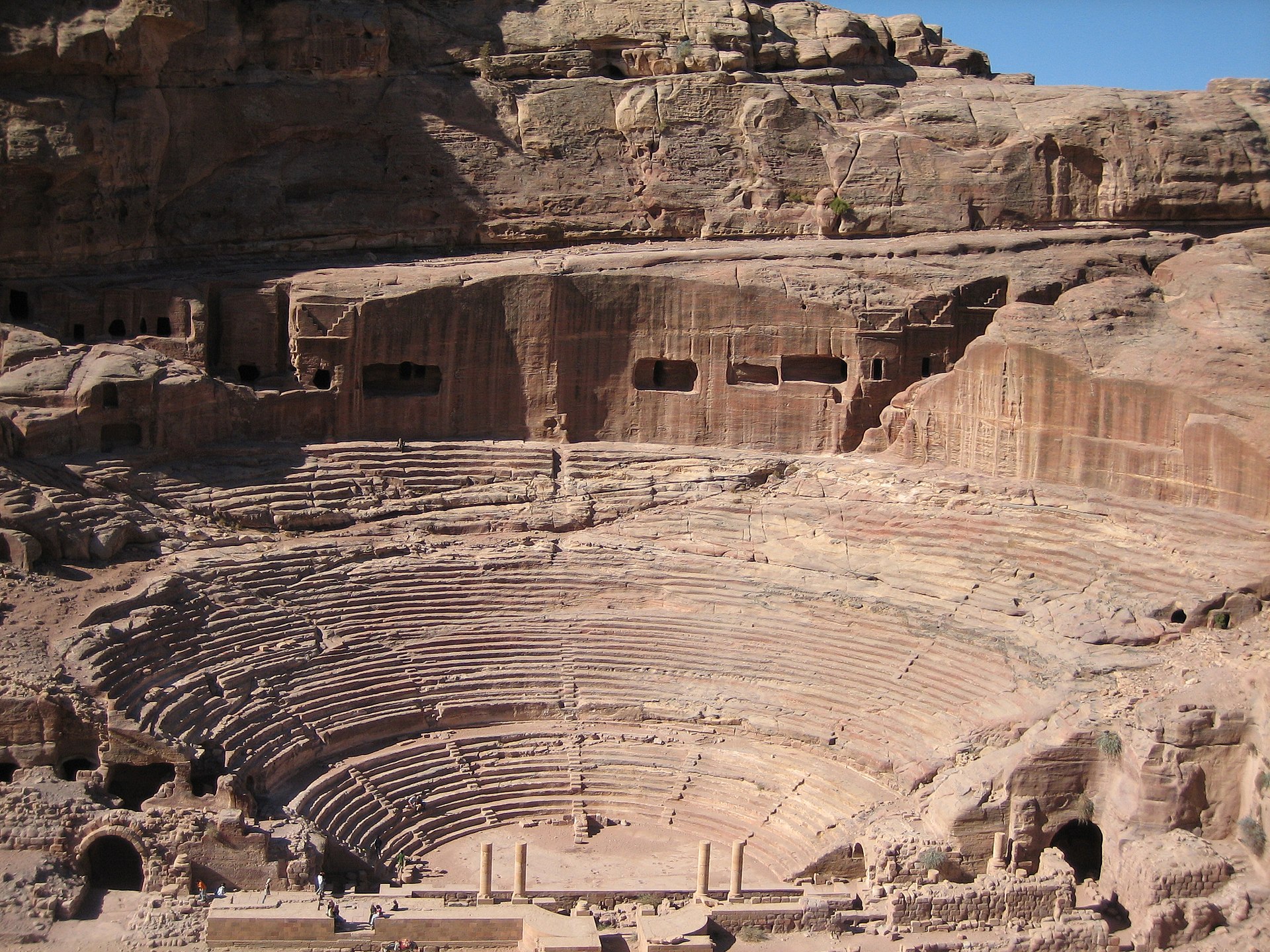
Petra's wealth and survival in an arid land rested on a remarkable mastery of water. The Nabataeans built an elaborate system of dams, channels, cisterns, and pipes to capture and store the rare desert rains and the water of seasonal floods, supplying the city and turning a harsh canyon into a viable capital. This control of water, as much as their trade, underpinned their power.
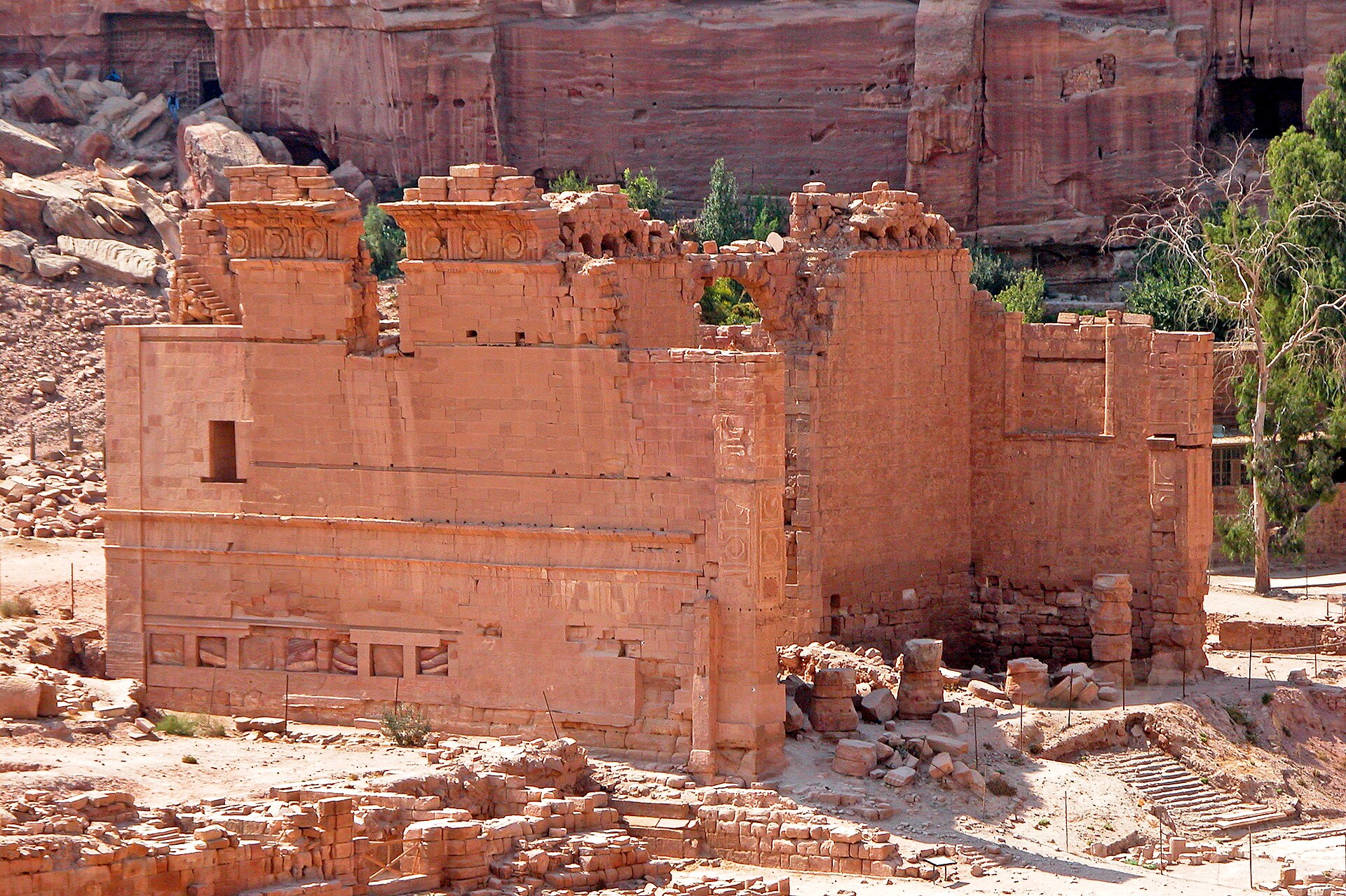
Petra grew rich because of where it stood. The Nabataeans controlled key caravan routes carrying frankincense, myrrh, spices, and other precious goods between Arabia, Egypt, and the Mediterranean world, and Petra became a wealthy hub where these routes met. Its blend of architectural styles reflects this role as a meeting place of cultures.
Petra's fortunes faded as trade routes shifted and the region passed under Roman and later control, and a series of earthquakes damaged the city and its water systems. It was eventually abandoned to all but local Bedouin, and remained unknown to the outside world until the Swiss explorer Johann Ludwig Burckhardt reached it in 1812.
Today Petra is a UNESCO World Heritage Site, one of the New Seven Wonders of the World, and Jordan's most treasured monument. It draws visitors from around the globe who walk the Siq to see the Treasury emerge from the rock, just as travellers have done for two thousand years.
