How and when the first people reached the Americas is a genuinely contested question. That humans came from Asia is clear, but the timing and the routes they took are the subject of vigorous and ongoing scientific debate.
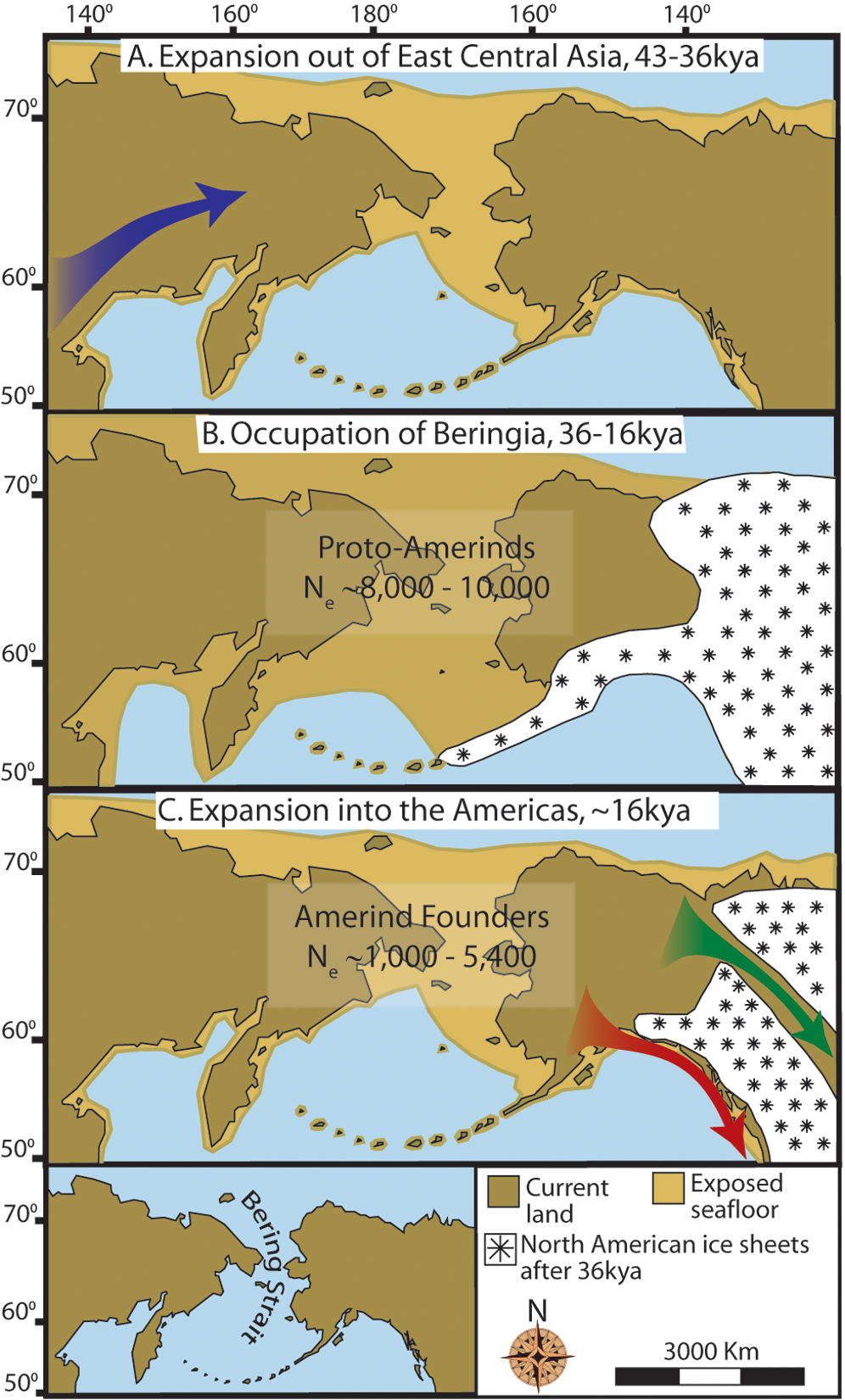
The first Americans descended from peoples of Asia who crossed into the continent during the last ice age, when lower sea levels exposed a land bridge, called Beringia, where the Bering Strait now lies. From there their descendants spread across two vast continents, all the way to the southern tip of South America.
The Americas were the last great landmasses to be settled by humans, long after Africa, Asia, Europe, and Australia. Once people arrived, they spread with remarkable speed and adapted to an enormous range of environments, from arctic tundra to tropical rainforest, building diverse cultures across the hemisphere.
During the ice age, so much water was locked up in ice sheets that sea levels fell and Beringia emerged as a broad, grassy plain linking Siberia to Alaska. Ice age hunters following game could have walked across it. But the timing of when this was possible, and when people actually crossed, is much debated.
For much of the twentieth century, scientists held that the first Americans arrived around 13,000 years ago and were associated with a distinctive toolmaking style known as Clovis. This "Clovis first" model long dominated, picturing big game hunters spreading rapidly south through an ice free corridor.
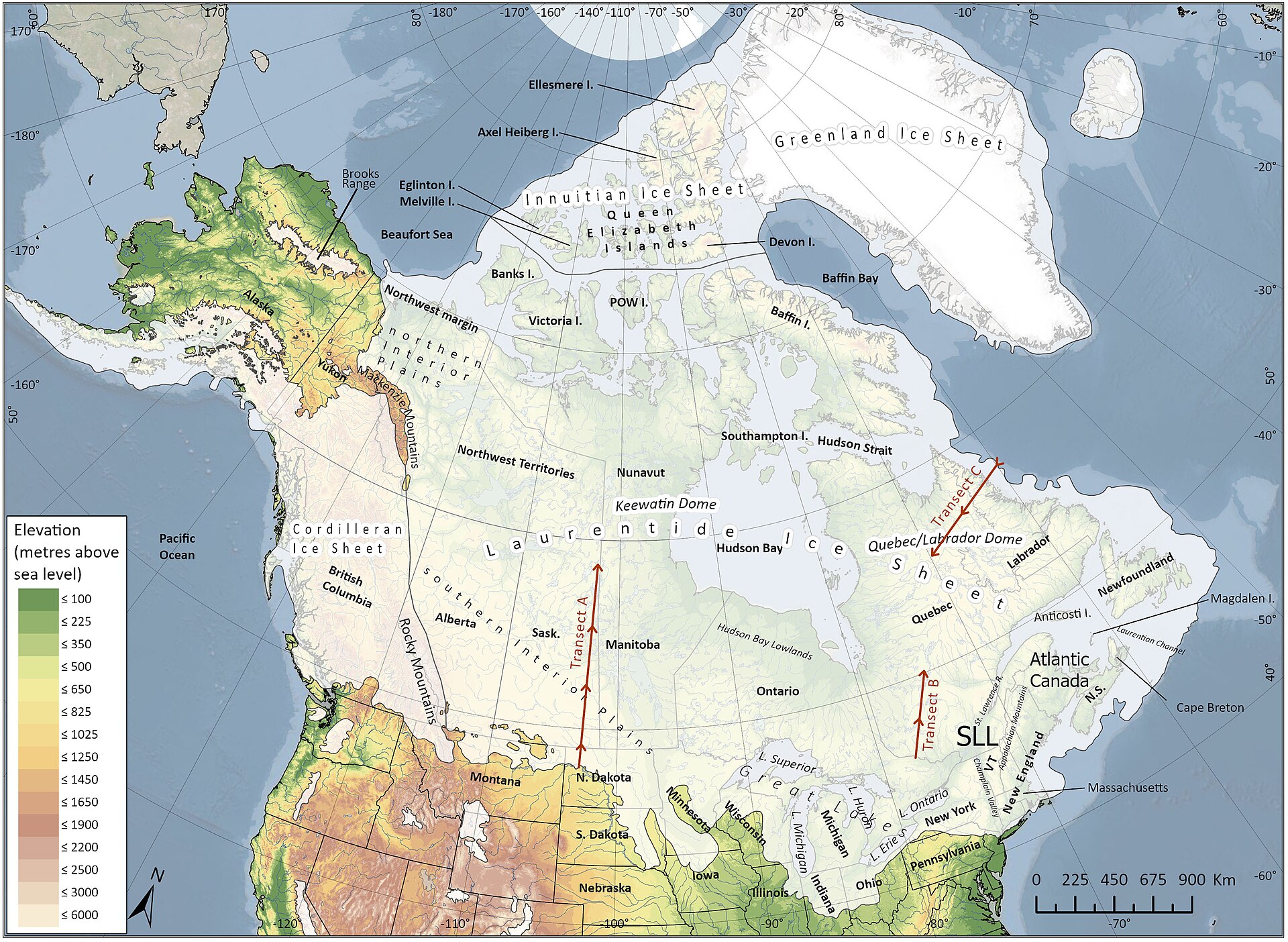
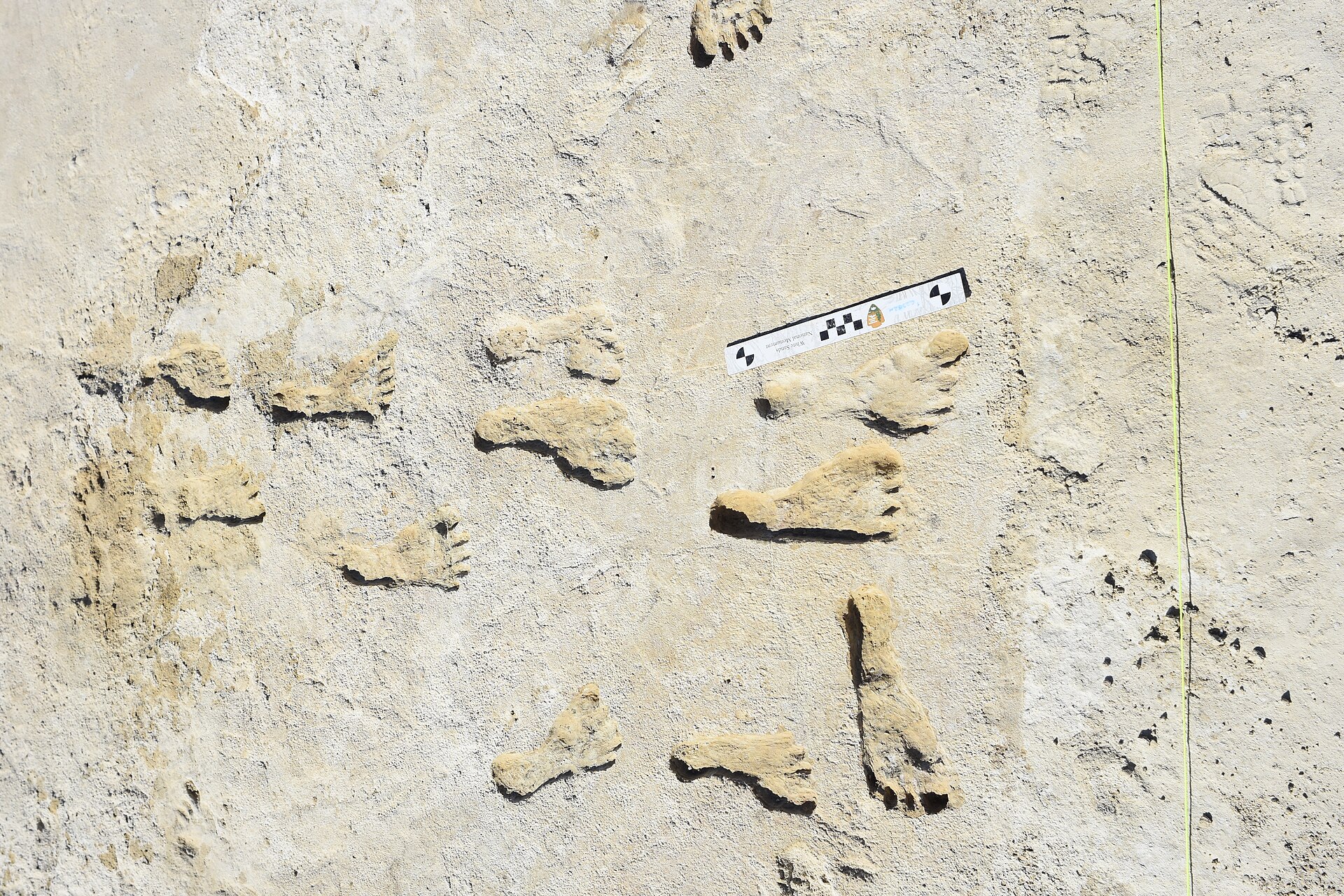
A growing number of older sites, however, have challenged this picture. Discoveries of human traces, including footprints that may date back more than 20,000 years, suggest people arrived far earlier than the Clovis model allows, before the ice sheets would have permitted an easy inland route south.
If people arrived before the inland corridor opened, how did they travel south? One leading idea is that early migrants moved down the Pacific coast by boat, hopping along shorelines rich in food, rather than walking through the continent's icy interior. The land route, the coastal route, or both, are all debated.
The debate is fierce partly because the evidence is so fragmentary. Old sites are rare and hard to date precisely, coastal routes are now drowned beneath risen seas, and a single new find can overturn established views. Genetics, archaeology, and geology must be pieced together from scattered, ambiguous clues.
The broad outline, an Asian origin and a spread across the hemisphere, is firmly established. But the timing of arrival, the routes taken, and how many waves of migration there were remain genuinely open. How the Americas were first peopled is one of archaeology's most actively debated questions.
