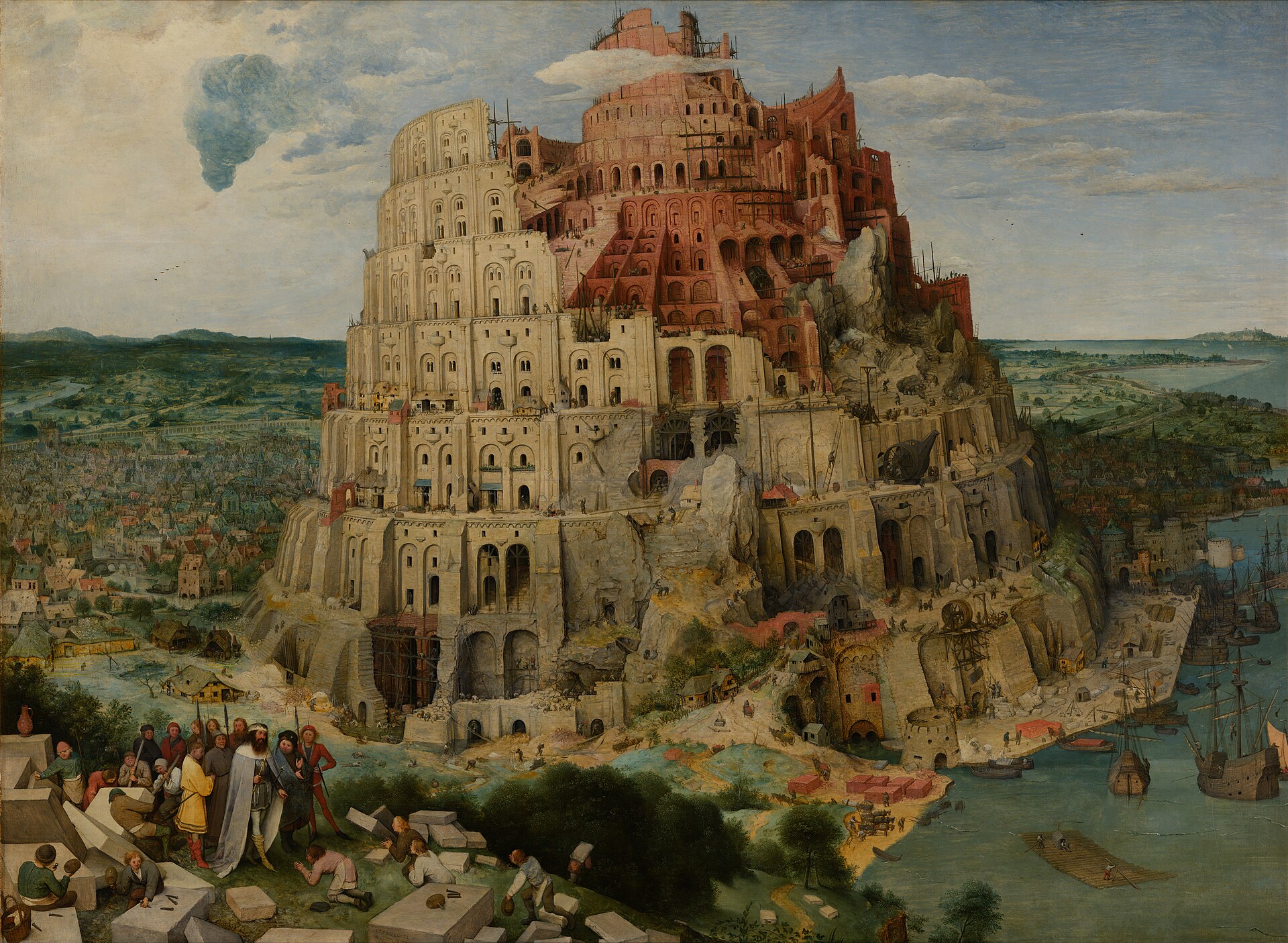
How human language first arose is one of the hardest questions in science. That we alone among animals possess full language is clear; when, how, and why it emerged is genuinely contested, partly because spoken words leave no fossils.
Many animals communicate, but human language is different in kind. It is open ended, able to express an infinite range of new ideas by combining a finite set of words according to grammar. With it we can speak of the past and future, the abstract and the imaginary, in a way no animal call can.
This capacity underlies almost everything that makes us human: culture, technology, cooperation, law, story, and abstract thought. Understanding how language began is therefore central to understanding how we became the species we are, which is why the question draws in linguists, biologists, archaeologists, and psychologists alike.
Speaking requires a specially adapted body: a flexible tongue, a low voice box, and fine control of breath, along with brain regions devoted to language. At some point in our evolution these features arose, and tracing when and how they developed is one route into the mystery of language's origin.
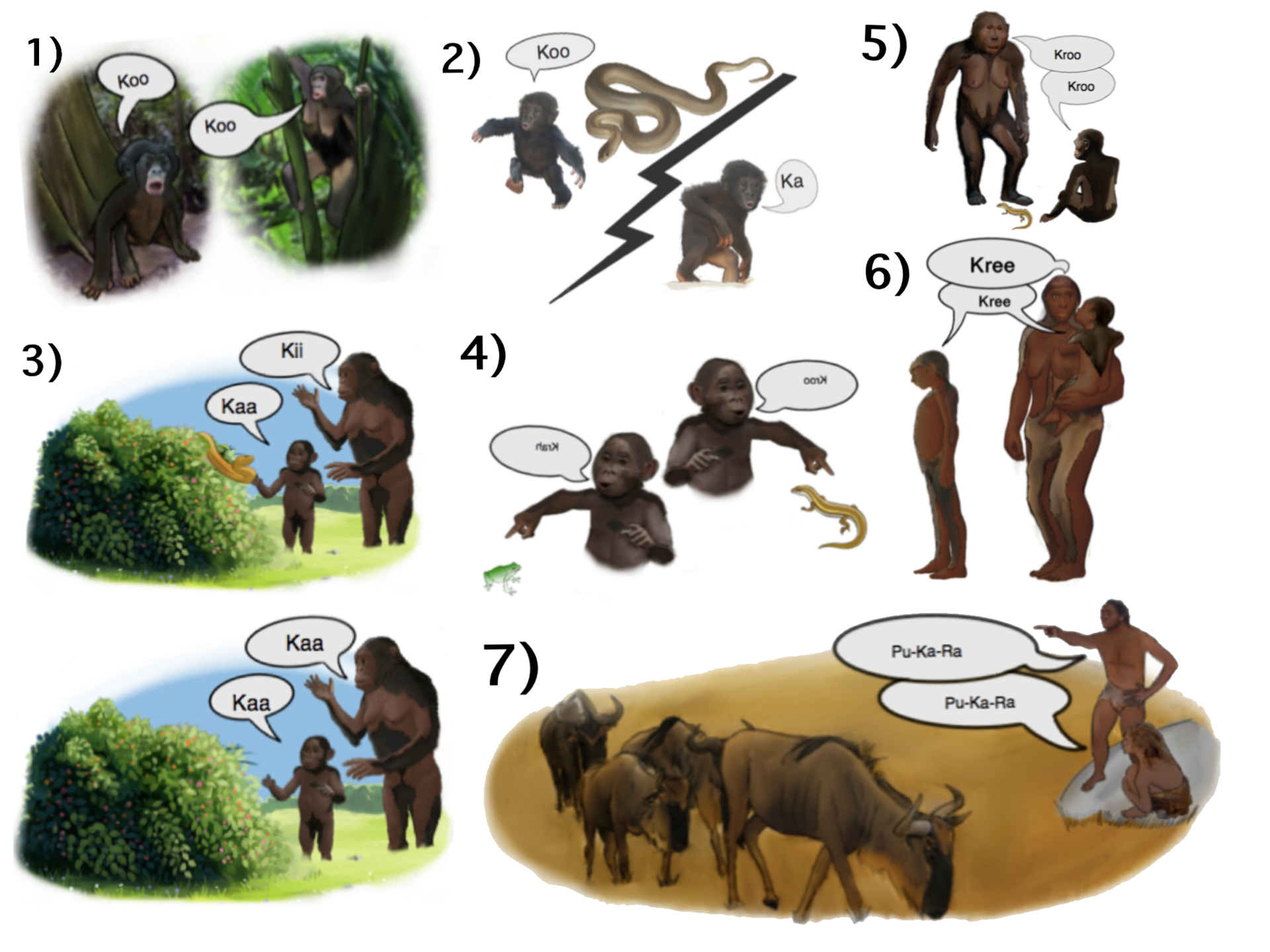
One major view holds that language emerged gradually, evolving over hundreds of thousands of years from simpler forms of communication. On this account, our ancestors slowly built up larger vocabularies and more complex grammar, step by step, with each small improvement offering a survival advantage.
A rival view argues that language appeared relatively suddenly, perhaps through a single key genetic or cognitive change in our recent ancestors that unlocked the capacity for grammar. On this account, the leap to full language was swift, a threshold crossed rather than a slow climb.
Scholars also debate where language began. Some argue it grew out of gesture, with the hands leading and speech following later. Others hold that vocal calls came first. The truth may involve both, with gesture and voice intertwined from the start, but the question remains open.
There is debate, too, over what language was originally for. Was it mainly a tool for cooperation and coordinating work, for social bonding and gossip that held groups together, or for thinking itself, a way of organizing the mind? Each idea captures part of language's role, and which came first is unclear.
The central difficulty is the lack of direct evidence. Speech does not fossilize, and writing appeared only a few thousand years ago, long after language was fully developed. Researchers must piece together clues from anatomy, genetics, the brain, child development, and the communication of other animals. With no way to observe the first words, the origin of language remains one of science's great open questions.
