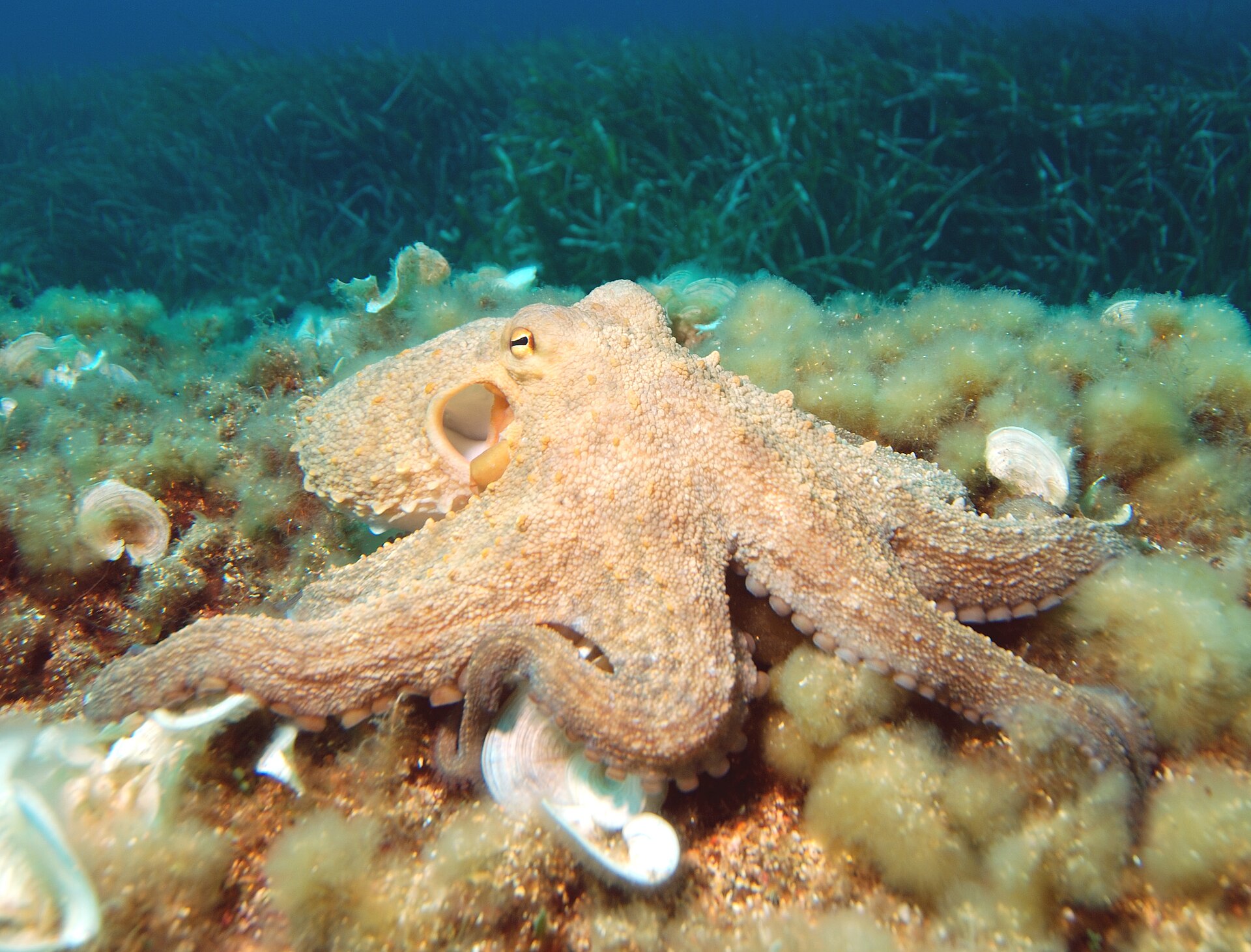
The octopus is a soft-bodied marine animal with eight arms, a bulbous head, and a level of intelligence unmatched among invertebrates. A member of the cephalopod class alongside squid and cuttlefish, it has fascinated biologists and the public alike as a creature whose mind evolved on a path entirely separate from our own.
An octopus has no internal or external skeleton, so it can squeeze its entire body through any gap larger than its beak, the only hard part of its anatomy. It has three hearts, blue copper-based blood, and a brain that wraps around its throat, but much of its nervous system is distributed into its arms, each of which can taste, touch, and act with a degree of independence.
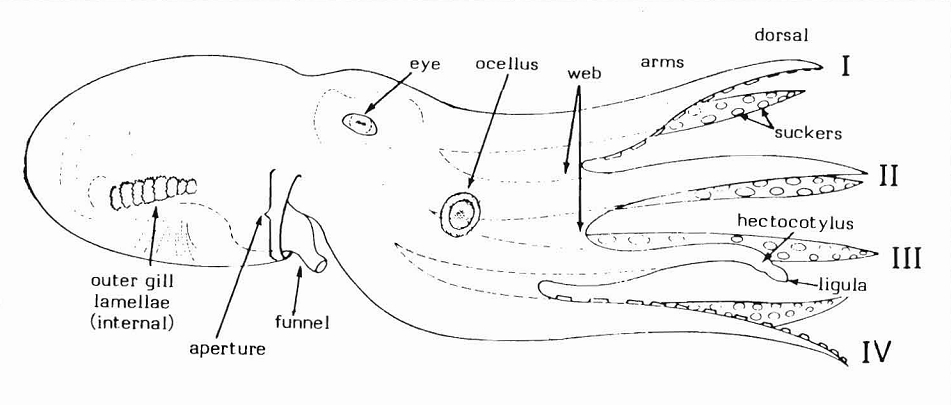
The undersides of the arms are lined with rows of sensitive, dexterous suckers used to grip, explore, and manipulate objects, and to taste whatever they touch. With no rigid skeleton to work against, the arms can bend in any direction at any point, giving the animal an almost limitless range of movement that engineers studying soft robotics now try to imitate.
Octopuses are among the finest camouflage artists in nature. Special pigment-filled cells in their skin, called chromatophores, let them change colour in an instant, while muscles can pucker the skin into bumps and ridges to mimic rock, coral, or seaweed. They use this not only to vanish from predators but to communicate and to ambush prey. When disguise fails, an octopus can jet away with a burst of water and release a cloud of ink to cover its escape.
Around 300 species are known, ranging from animals barely a few centimetres long to the giant Pacific octopus, the largest of all, which can span more than four metres across its arms and weigh as much as a person. They inhabit every ocean, from sunlit tropical reefs to the cold, dark abyss.
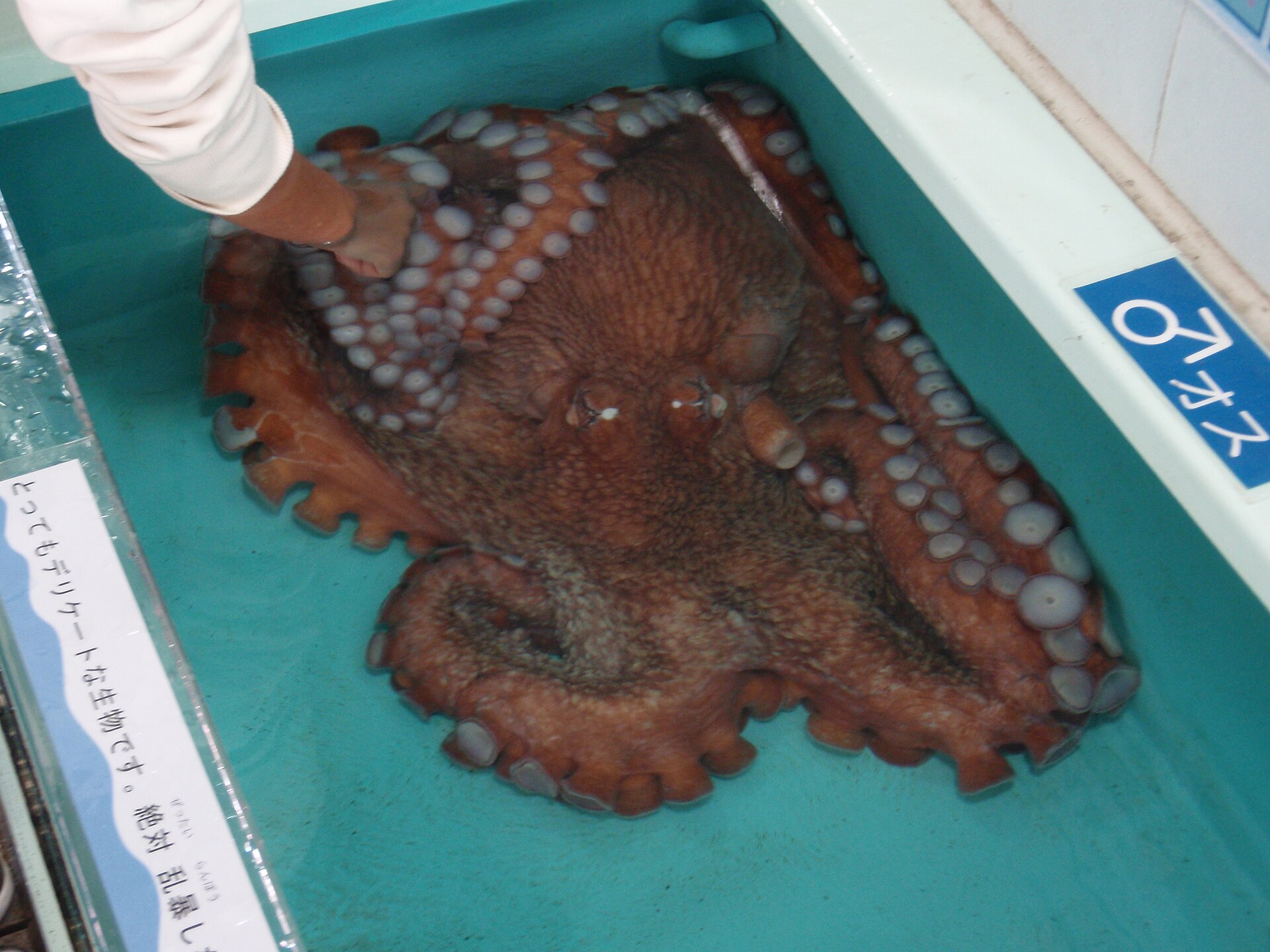
The octopus is remarkably intelligent. In laboratories they solve puzzles, open jars, navigate mazes, use coconut shells and rocks as tools and shelter, and recognise individual human keepers. This intelligence is all the more striking because it arose independently from that of vertebrates: the last common ancestor of humans and octopuses was a simple worm-like creature more than 500 million years ago. The octopus is, in a real sense, the closest thing to an alien intelligence we can study on Earth.
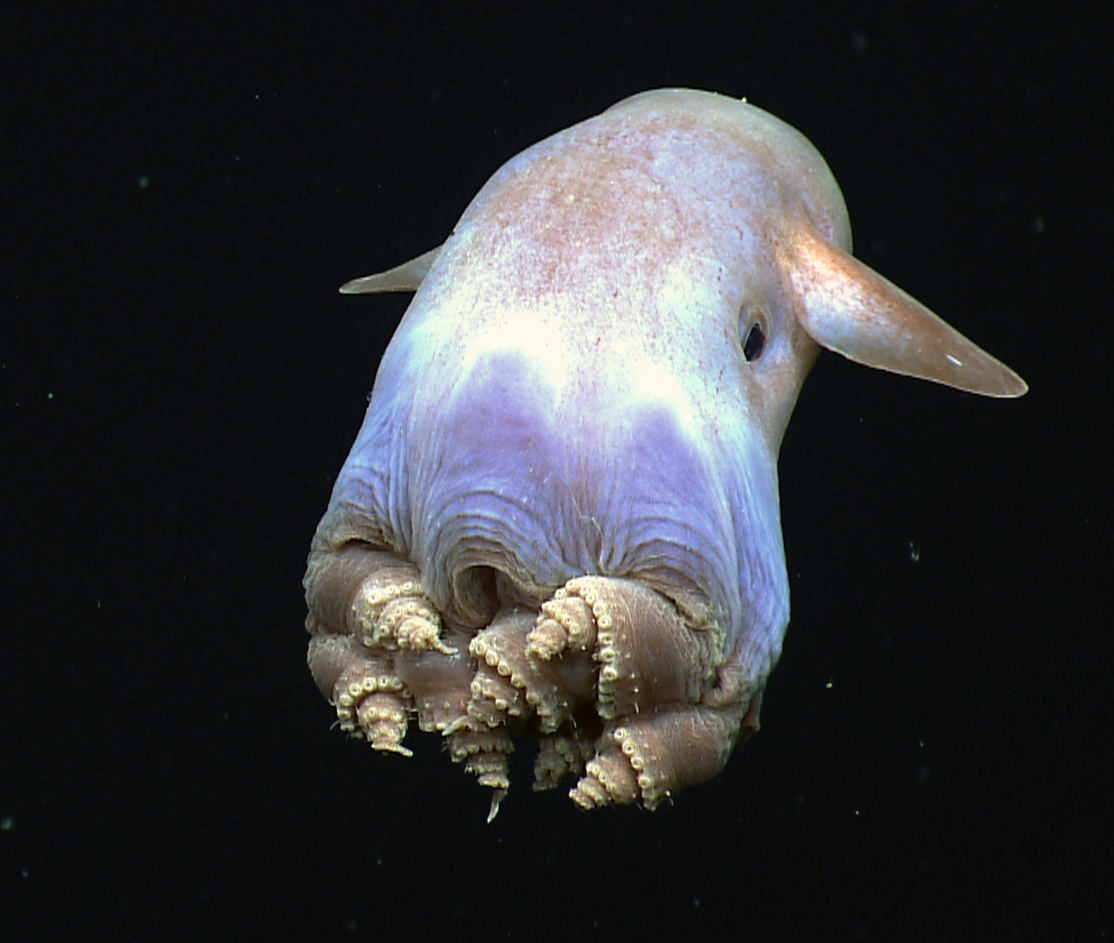
Cephalopods take an astonishing variety of forms throughout the ocean. Among the strangest are the finned "dumbo" octopuses, which flap ear-like fins to drift through the cold darkness thousands of metres down, far below the reach of sunlight.
For all their sophistication, octopuses live fast and die young; most species survive only one to two years. They are typically solitary, and their lives end with reproduction: a female lays tens of thousands of eggs, guards them without eating until they hatch, and then dies, while males die not long after mating. A brilliant mind, it turns out, is housed in a remarkably brief life.
