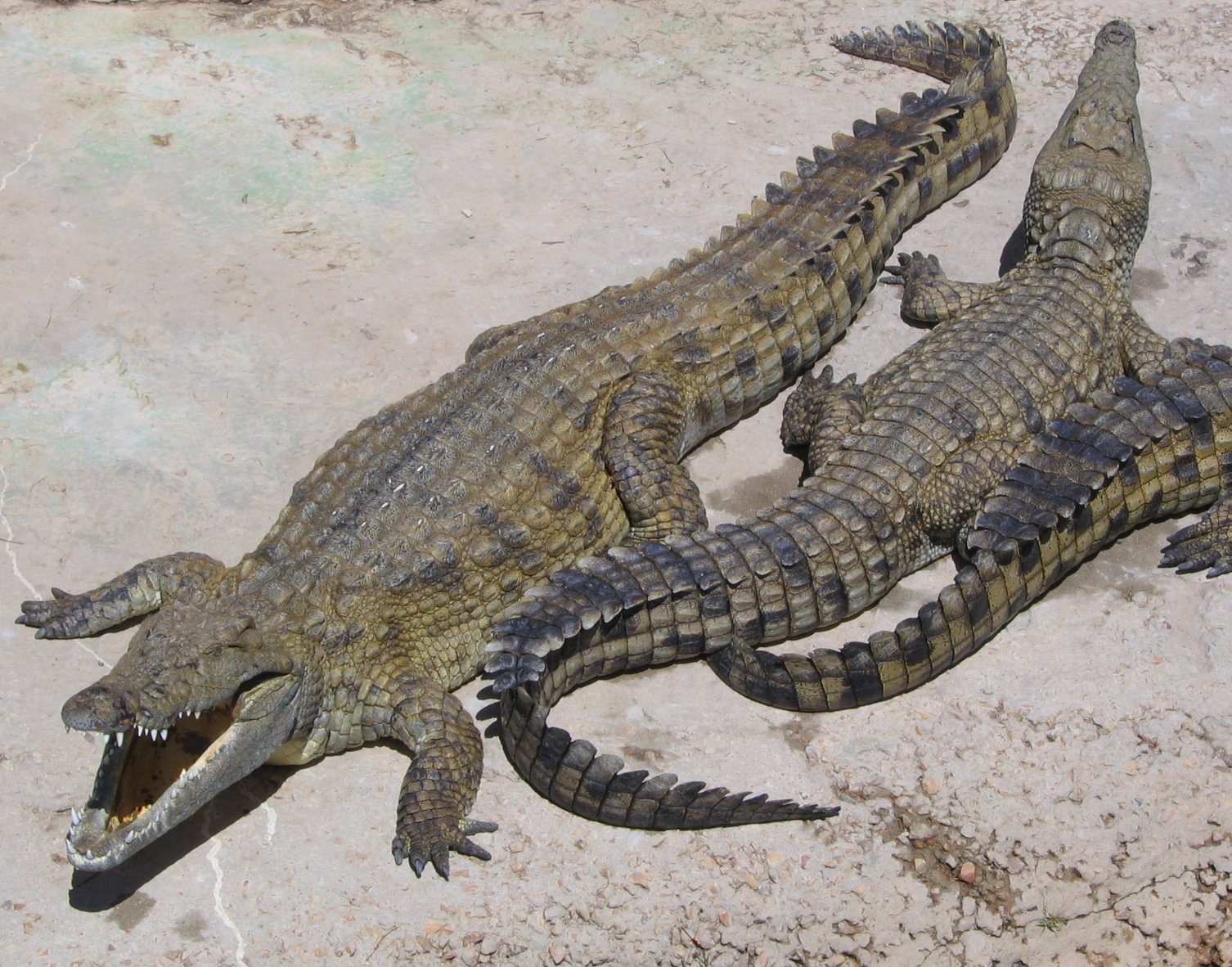
The Nile crocodile is a large reptile found across much of Africa and the continent's largest freshwater predator. An ambush hunter that has changed little in form over millions of years, it is a living relic of the age of dinosaurs and one of the most formidable animals in the rivers, lakes, and swamps where it lives.
Crocodiles belong to a lineage far older than the dinosaurs, and their body plan has proven so effective that it has scarcely needed to change. The Nile crocodile is powerfully built, with armoured skin, a long muscular tail for swimming, and jaws lined with conical teeth. It can grow to five metres or more and weigh several hundred kilograms.
The crocodile's eyes, ears, and nostrils sit on top of its head, so it can lie almost completely submerged, watching and waiting, with only these features above the surface. This lets it approach the water's edge unseen and explains why prey often has no warning until it is too late.
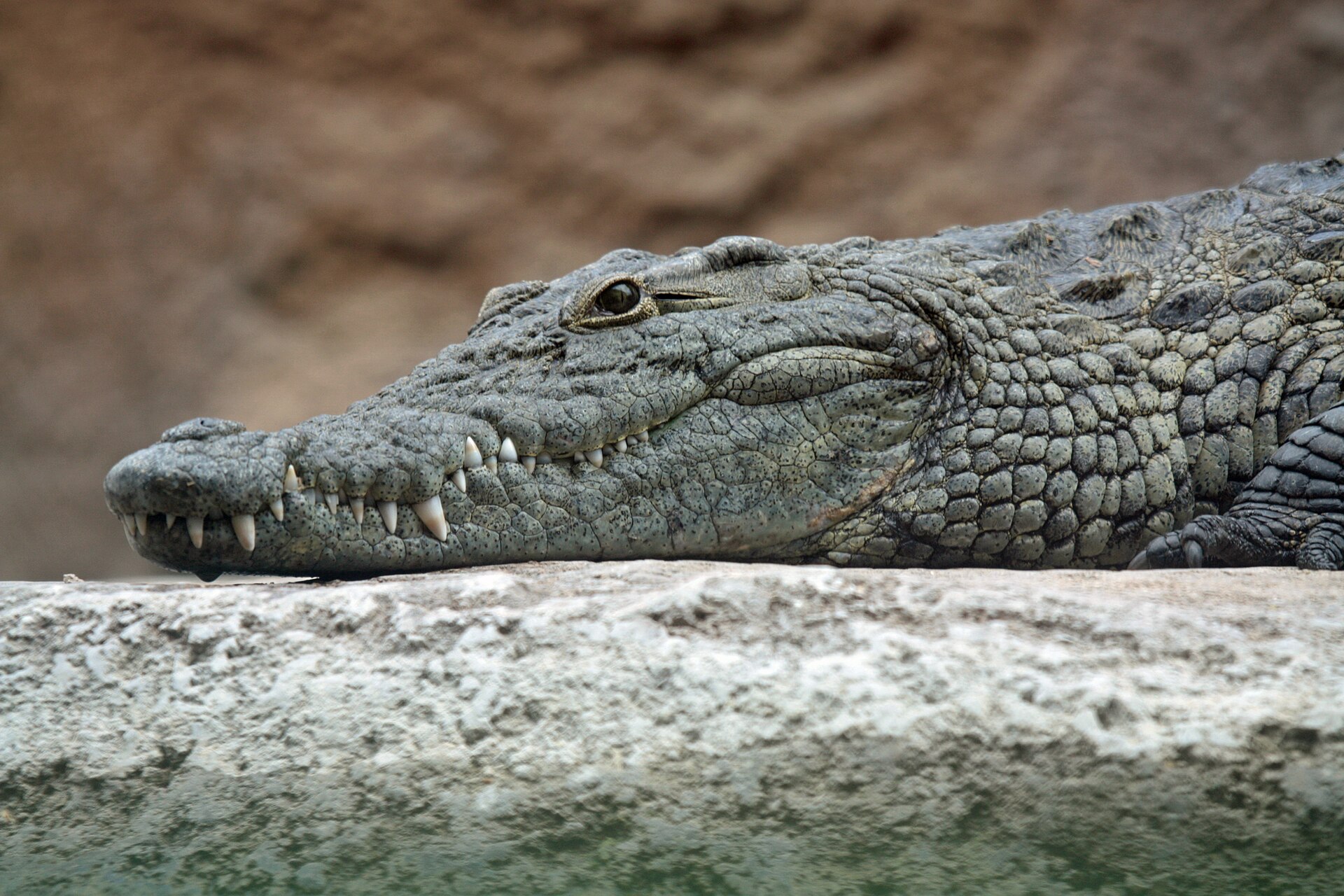
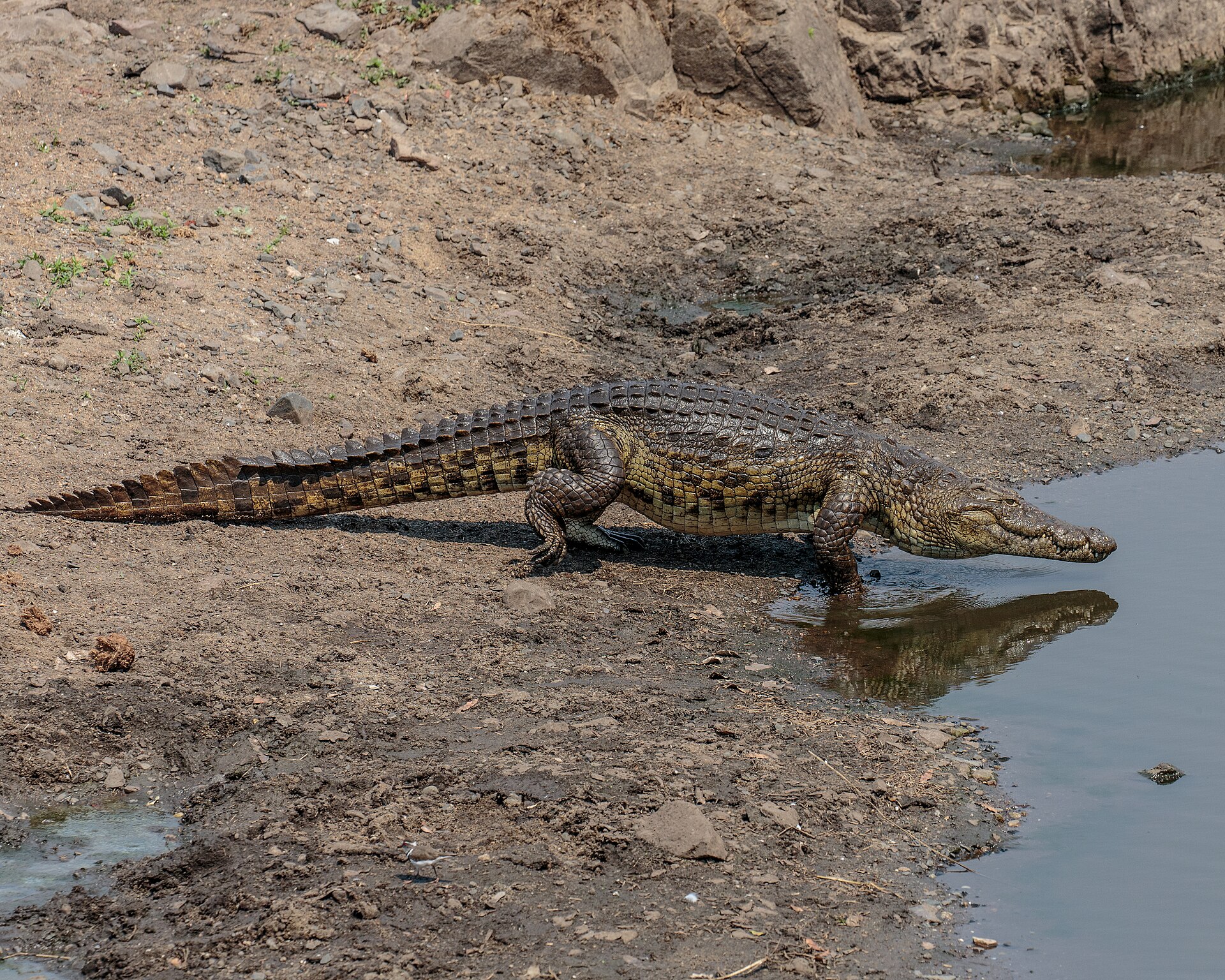
The Nile crocodile is a patient and devastating hunter. It lurks motionless near the water's edge, then explodes into action to seize prey that comes to drink, gripping it in immensely powerful jaws and dragging it underwater to drown. Its bite is among the strongest of any animal, though the muscles that open the jaws are weak, which is why a crocodile's mouth can be held shut by hand.
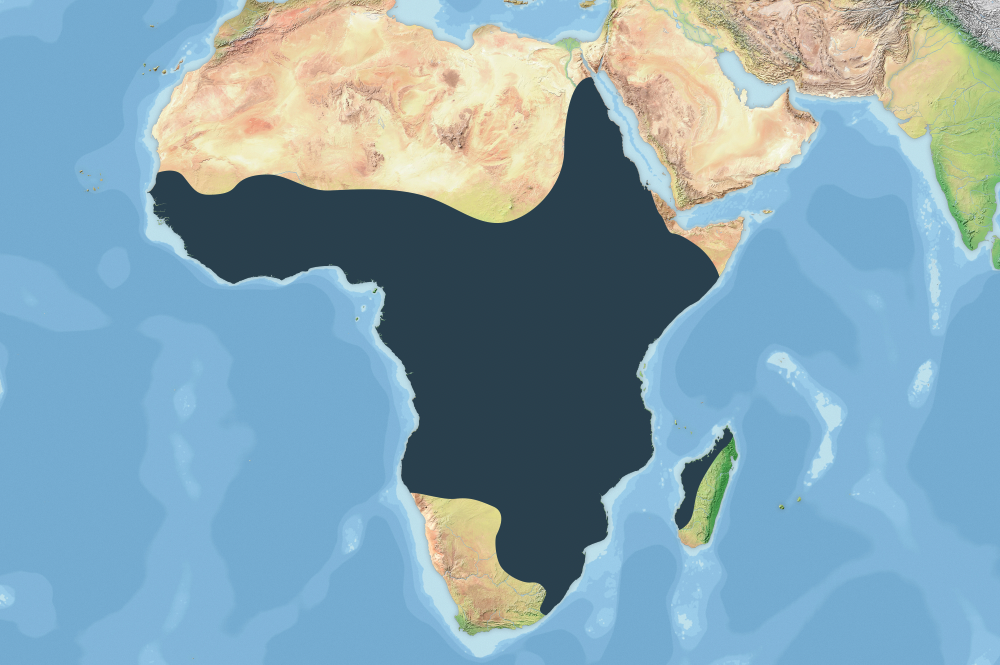
The Nile crocodile is found across much of Africa, in rivers, lakes, and wetlands from the south up through the centre of the continent. At the great river crossings of the African plains, crocodiles gather to ambush migrating herds of wildebeest and zebra, one of nature's most dramatic predatory spectacles.
For all its fearsome reputation, the Nile crocodile is an unusually attentive parent for a reptile. The female lays her eggs in a nest dug into a riverbank and guards them fiercely for months. When the young are ready to hatch they call from inside the eggs, and the mother carefully digs them out and may even carry the tiny hatchlings to the water gently in her mouth, then watch over them for a time.
Like many reptiles, the Nile crocodile has no sex chromosomes; instead, the temperature at which the eggs are incubated determines whether the hatchlings are male or female. This quirk ties the next generation directly to the climate of the nest, and means a warming world could, in principle, skew the balance of the sexes.
The Nile crocodile is responsible for many attacks on people each year, more than almost any other wild animal, and it is both feared and respected across Africa. Yet it is also a vital part of its ecosystems, and like crocodiles everywhere it was once hunted heavily for its skin. Protection has allowed populations to recover in many areas, leaving the Nile crocodile as a powerful reminder of a world far older than our own.
