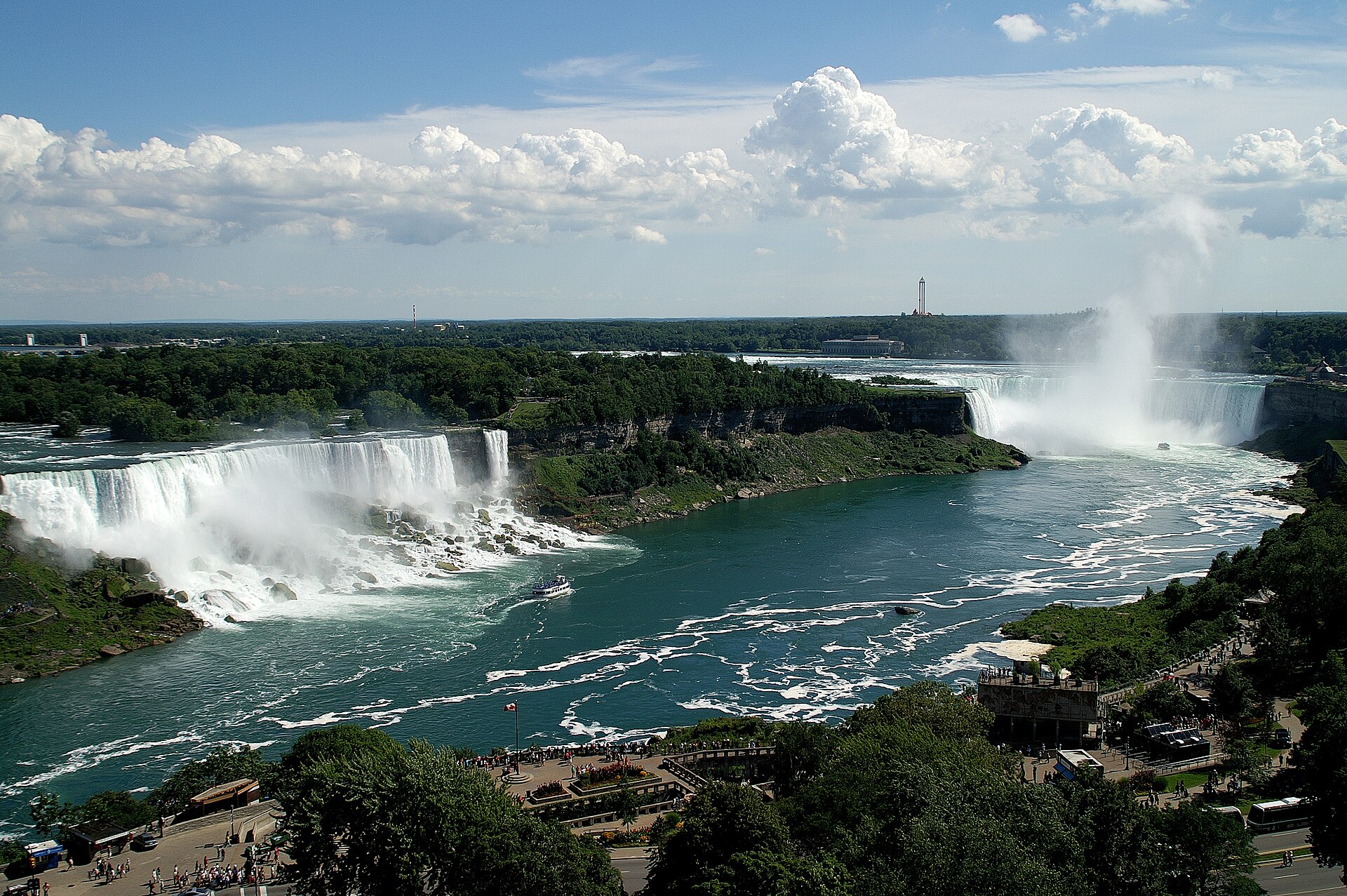
Niagara Falls is a group of three powerful waterfalls on the Niagara River, straddling the border between Canada and the United States. Though not especially tall, the falls are famous the world over for their sheer volume of water and their thundering grandeur, making them one of North America's most visited natural wonders.
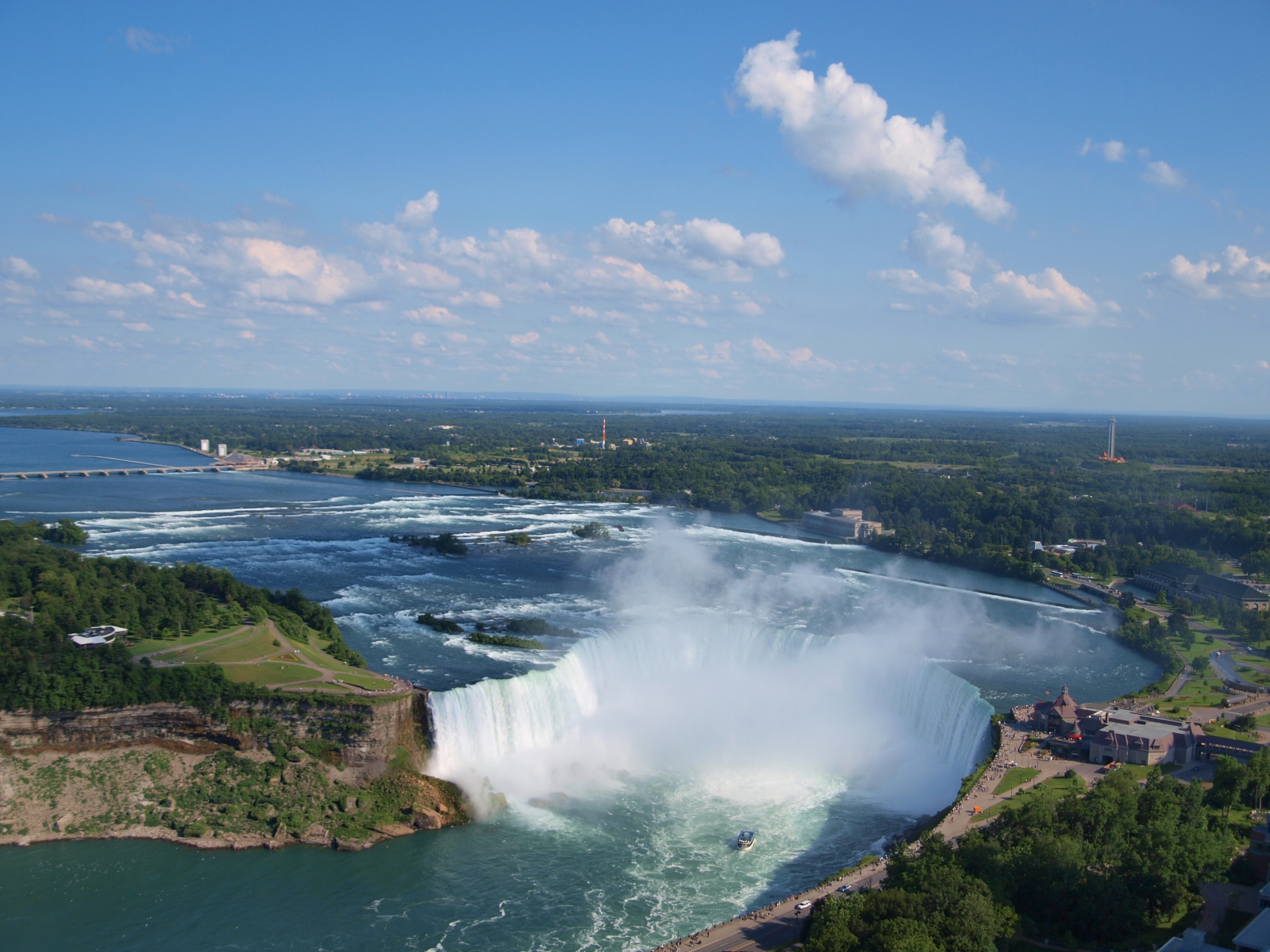
What people call "Niagara Falls" is actually three separate falls. The largest by far is the Horseshoe Falls, a great curving wall of water mostly on the Canadian side.
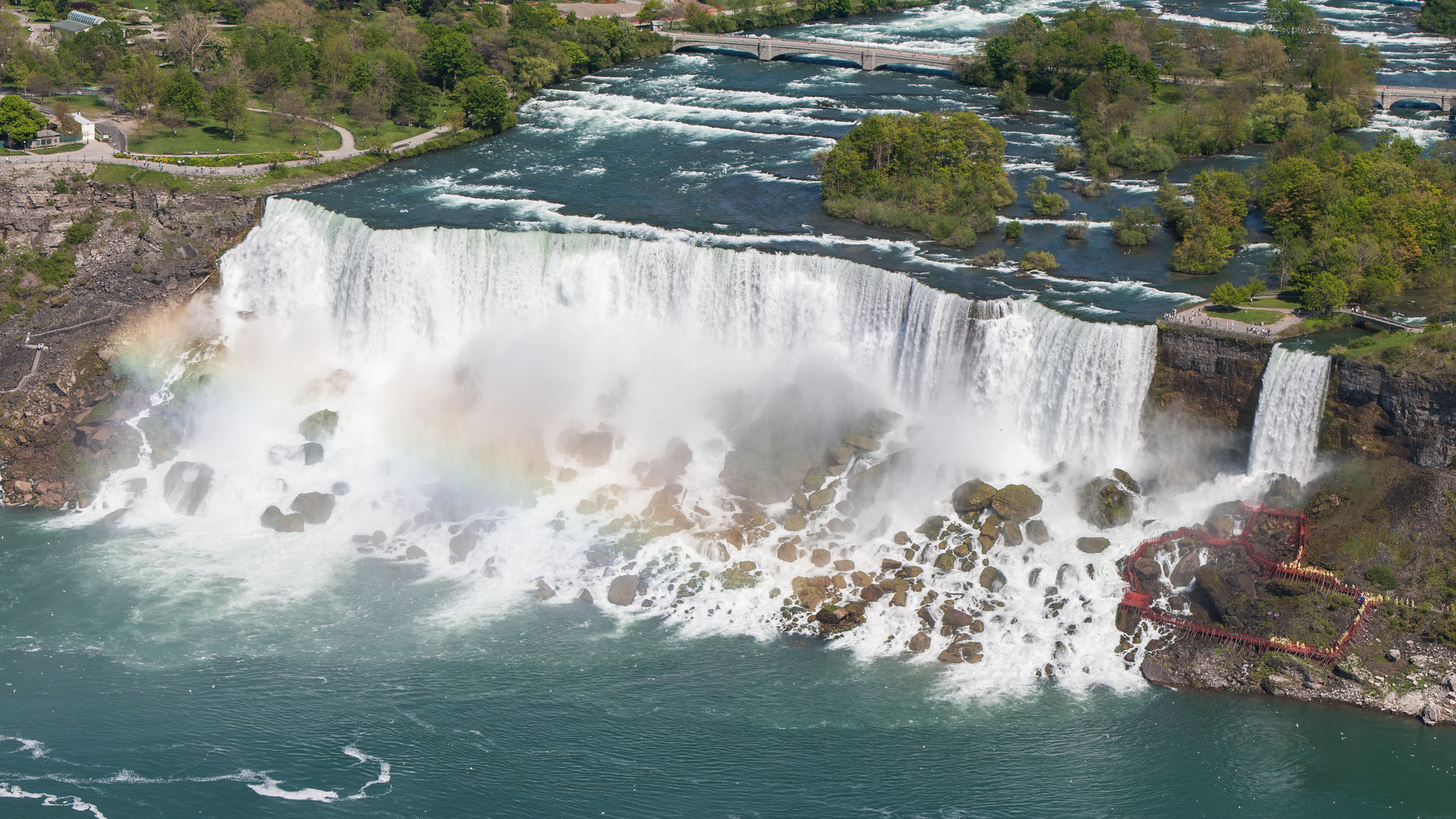
On the United States side lie the American Falls and the small, delicate Bridal Veil Falls, separated from the Horseshoe by islands at the brink. Though smaller, the American Falls is itself a broad cascade, its base piled with great blocks of fallen rock that give it a craggier look than its smooth Canadian neighbour.
Together the three falls carry an immense flow, well over two thousand cubic metres of water every second at peak times, which is why they are valued not only for their beauty but as a major source of hydroelectric power. The combined weight and speed of that water is what produces the famous thunder and the perpetual cloud of mist.
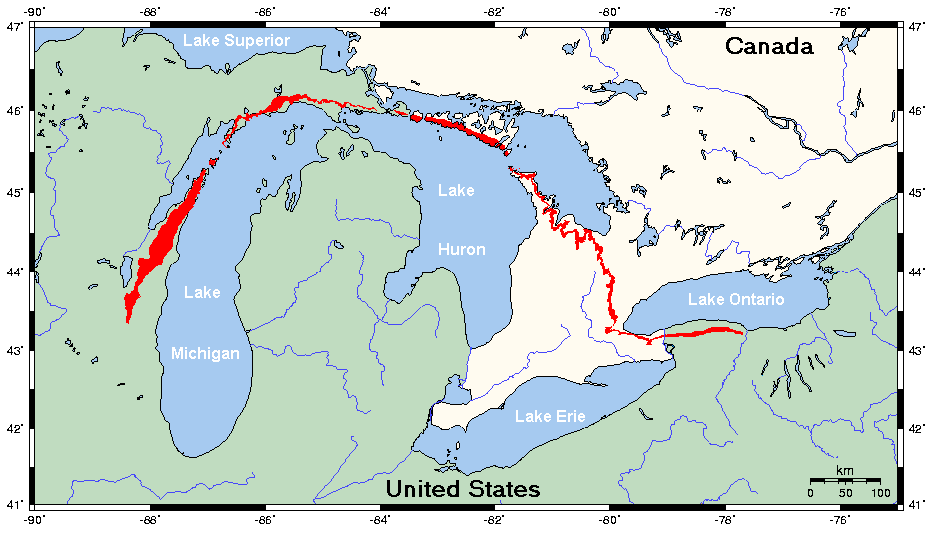
The falls are a product of the last Ice Age. As the great glaciers retreated some twelve thousand years ago, they left behind the Great Lakes and the Niagara River draining between them, where the water plunges over the edge of the Niagara Escarpment, a long ridge of hard rock.
Because the rock at the lip is harder than the softer layers beneath, the falls steadily erode their base and collapse backward, so that over thousands of years the falls have slowly migrated upstream, and continue to do so today. The falls now stand many kilometres from where they began, and will keep retreating far into the future.
Niagara Falls has long drawn crowds, honeymooners, and daredevils. People have gone over the falls in barrels, walked tightropes across the gorge, and performed countless stunts in pursuit of fame, some surviving and some not. Boat tours that carry visitors into the misty base of the Horseshoe Falls have run for well over a century.
The same water that thrills visitors also generates enormous amounts of electricity, and for over a century engineers and conservationists have balanced the demands of power generation against the need to keep the falls flowing and beautiful. Today the flow is carefully managed, with more water diverted for power at night and in the off-season, so that one of the continent's great natural spectacles can be both harnessed and preserved.
