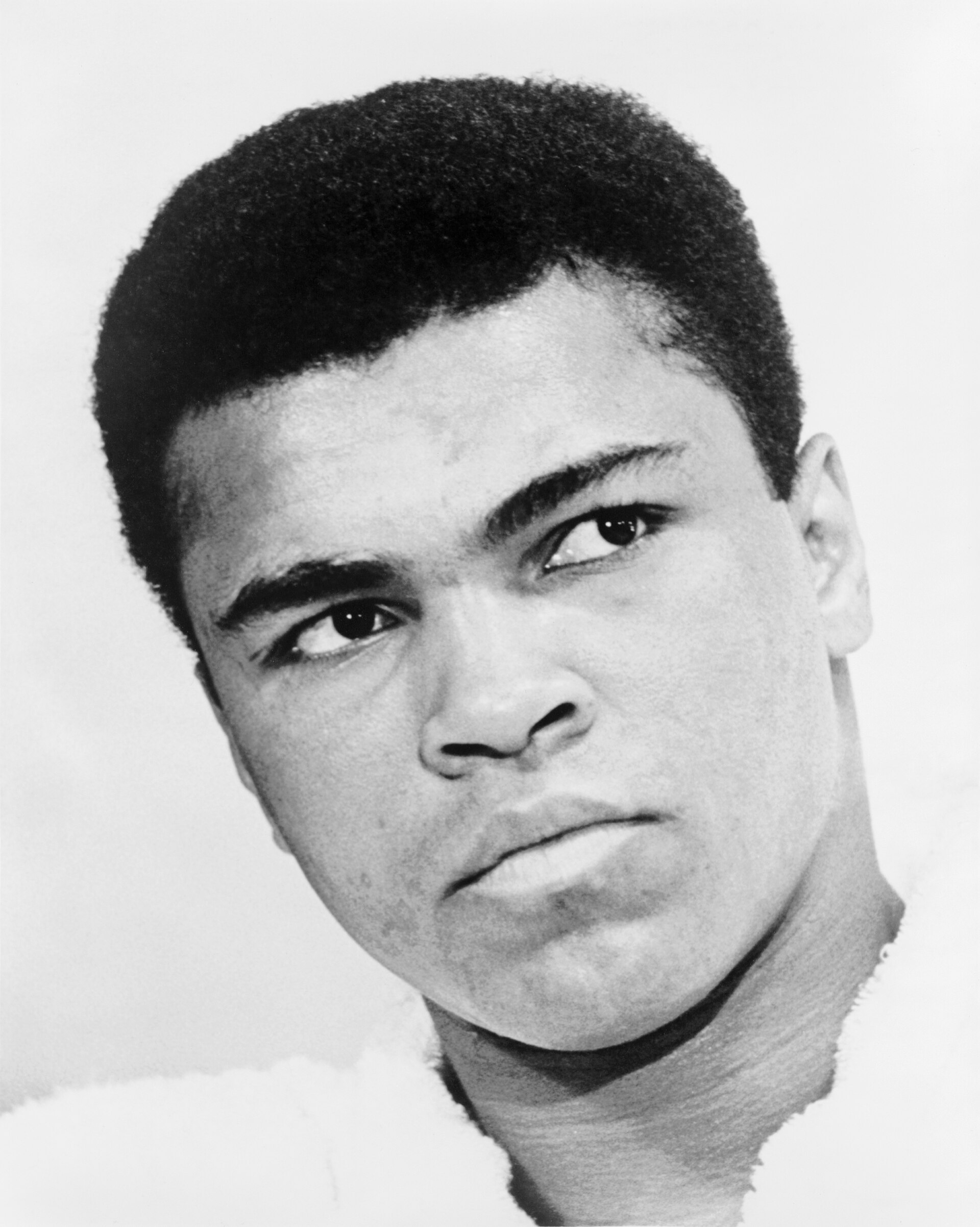
Muhammad Ali (1942 to 2016) was an American boxer and one of the most famous and influential sportspeople of the twentieth century. A three time world heavyweight champion, he was as celebrated for his charisma and convictions outside the ring as for his brilliance inside it.
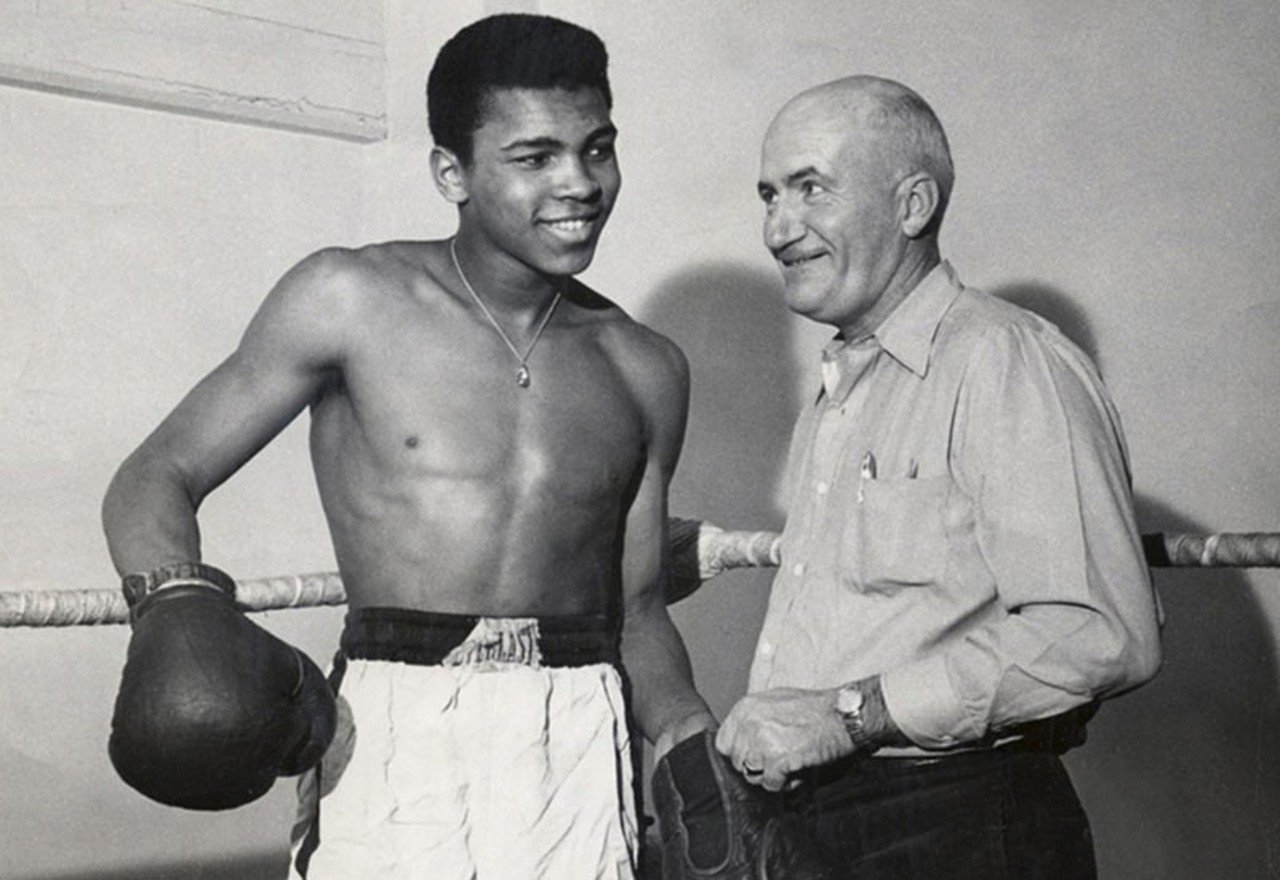
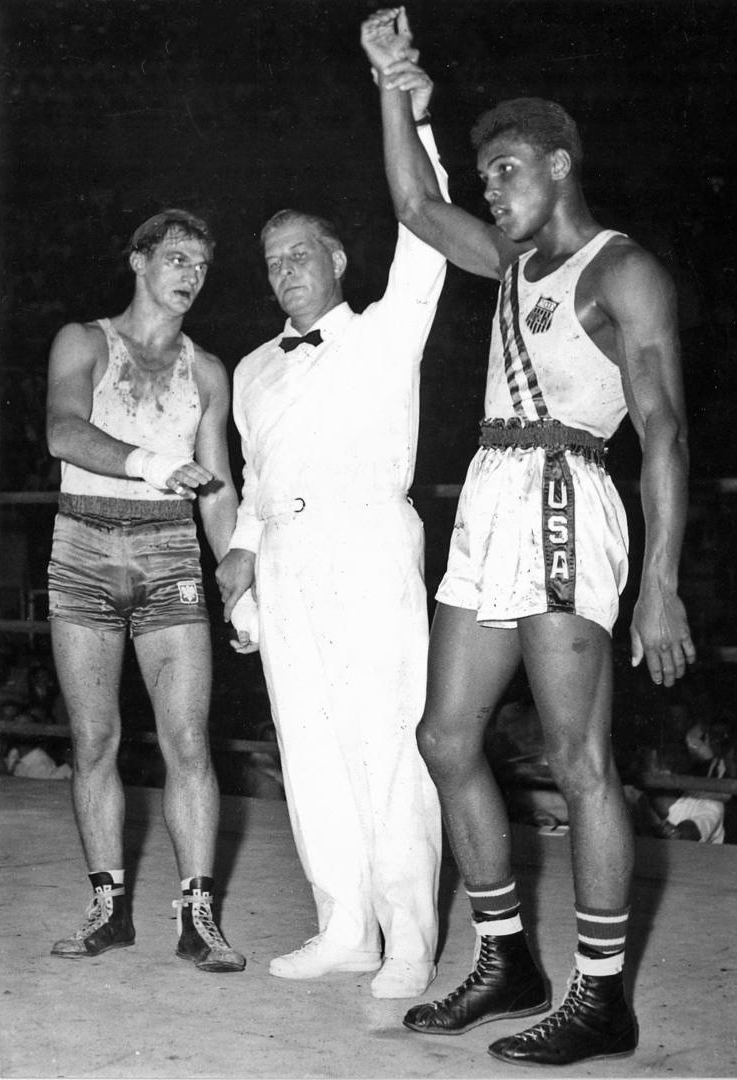
Born Cassius Clay in Louisville, Kentucky, he took up boxing as a boy after his bicycle was stolen and he vowed to learn to fight. He proved a natural, rising quickly through the amateur ranks and winning a gold medal at the 1960 Rome Olympics, announcing a prodigious talent to the world.
In 1964, the brash young Clay challenged the fearsome champion Sonny Liston, whom almost everyone expected to win easily. Defying the odds, Clay won, becoming heavyweight champion of the world and proclaiming, with characteristic confidence, that he was "the greatest." It was the first of many times he would astonish the world.
Ali fought unlike any heavyweight before him: fast, graceful, and elusive, dancing around opponents and dropping his hands in defiance of all advice. He famously promised to "float like a butterfly, sting like a bee." His combination of speed, skill, and showmanship redefined what a heavyweight could be.
Ali was far more than an athlete. He converted to Islam and changed his name from Cassius Clay, a decision that drew anger and incomprehension from much of the public. Outspoken on race and justice in a turbulent era, he became a powerful and divisive figure far beyond the world of sport.
In 1967, at the height of his powers, Ali refused to be drafted into the Vietnam War on religious and moral grounds, declaring he had no quarrel with the enemy. He was stripped of his title, barred from boxing for over three years, and faced prison, sacrificing his career in his prime for his beliefs.
Ali returned to the ring and fought a series of legendary bouts that are among the most famous in boxing history, including the Rumble in the Jungle, where he reclaimed the title, and the brutal Thrilla in Manila. Through courage, cunning, and sheer will, he cemented his place as a legend of the sport.
Ali transcended boxing to become one of the most recognized people on the planet, admired around the world for his charisma, his wit, and his willingness to stand by his convictions. He was as much a cultural and political figure as a sporting one, a symbol of pride, defiance, and conscience.
In later life Ali was diagnosed with Parkinson's disease, likely linked to his years in the ring, yet he remained a beloved global figure and humanitarian. When he lit the Olympic flame in 1996, his trembling hands moved the world. Few athletes have ever transcended their sport so completely, or been so widely loved.
