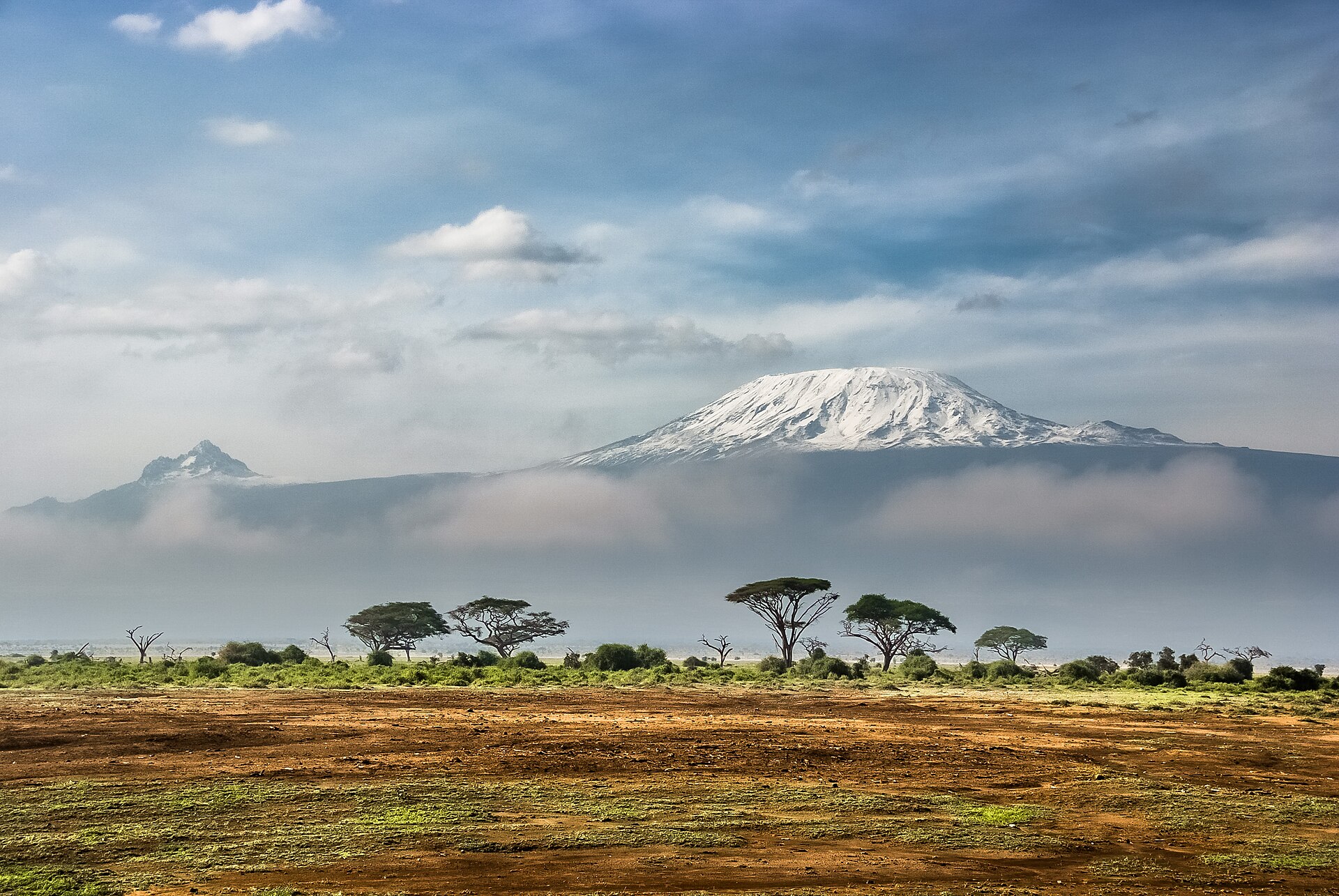
Mount Kilimanjaro in Tanzania is the highest mountain in Africa and the tallest free-standing mountain in the world, rising about 5,895 metres above the surrounding plains. A dormant volcano crowned, for now, with glaciers near the equator, it is one of the continent's great natural icons and a magnet for climbers from across the globe.
Unlike peaks that rise as part of a mountain range, Kilimanjaro stands on its own, soaring almost five kilometres straight up from the flat East African savanna, which is what makes it appear so impossibly tall and gives rise to its famous, solitary silhouette.
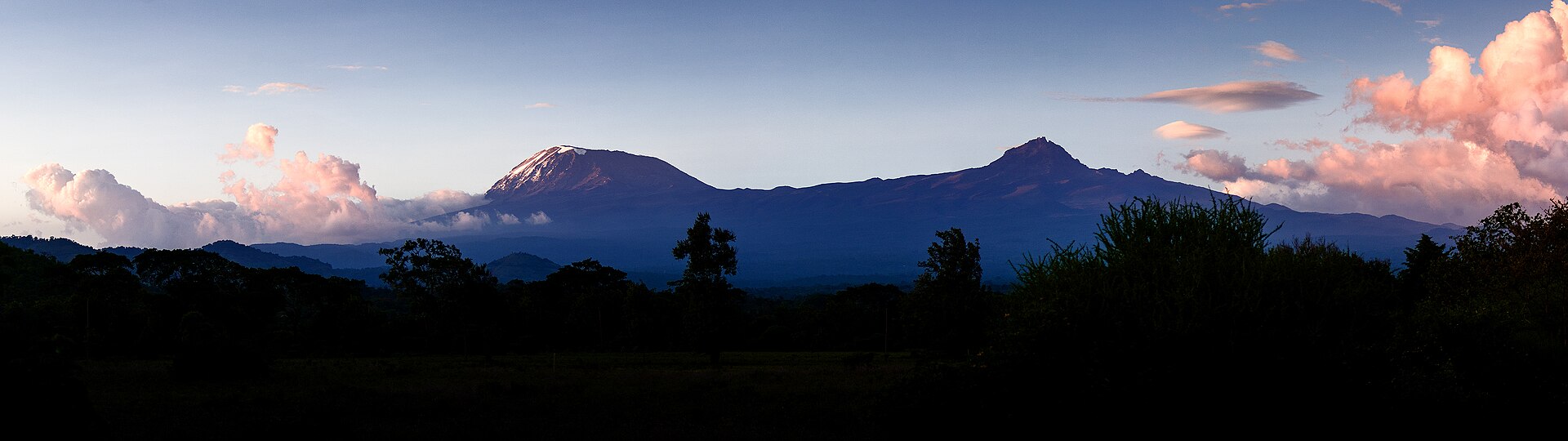
The mountain is made up of three volcanic cones: Kibo, the highest and the one bearing the summit; Mawenzi; and the eroded Shira. Kibo is dormant rather than extinct, and could in principle erupt again, though it has not done so in recorded history. Mawenzi, by contrast, is older and deeply eroded into a craggy, jagged peak.
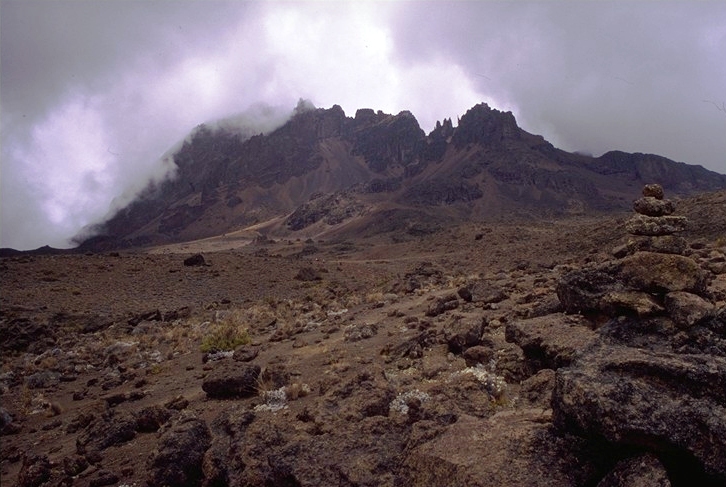
To climb Kilimanjaro is to pass through a remarkable series of ecological zones, almost as if travelling from the equator to the poles. Climbers start in cultivated farmland and lush rainforest on the lower slopes, then cross open heath and moorland, a high alpine desert, and finally the frozen, near-airless summit. This stacking of climate zones, from tropical to arctic, on a single mountain makes Kilimanjaro a living lesson in how temperature and life change with altitude.
Kilimanjaro's iconic summit glaciers, immortalised in literature and photography, are disappearing. They have retreated dramatically over the past century, and scientists expect the ice that has crowned the mountain for thousands of years could vanish within decades.
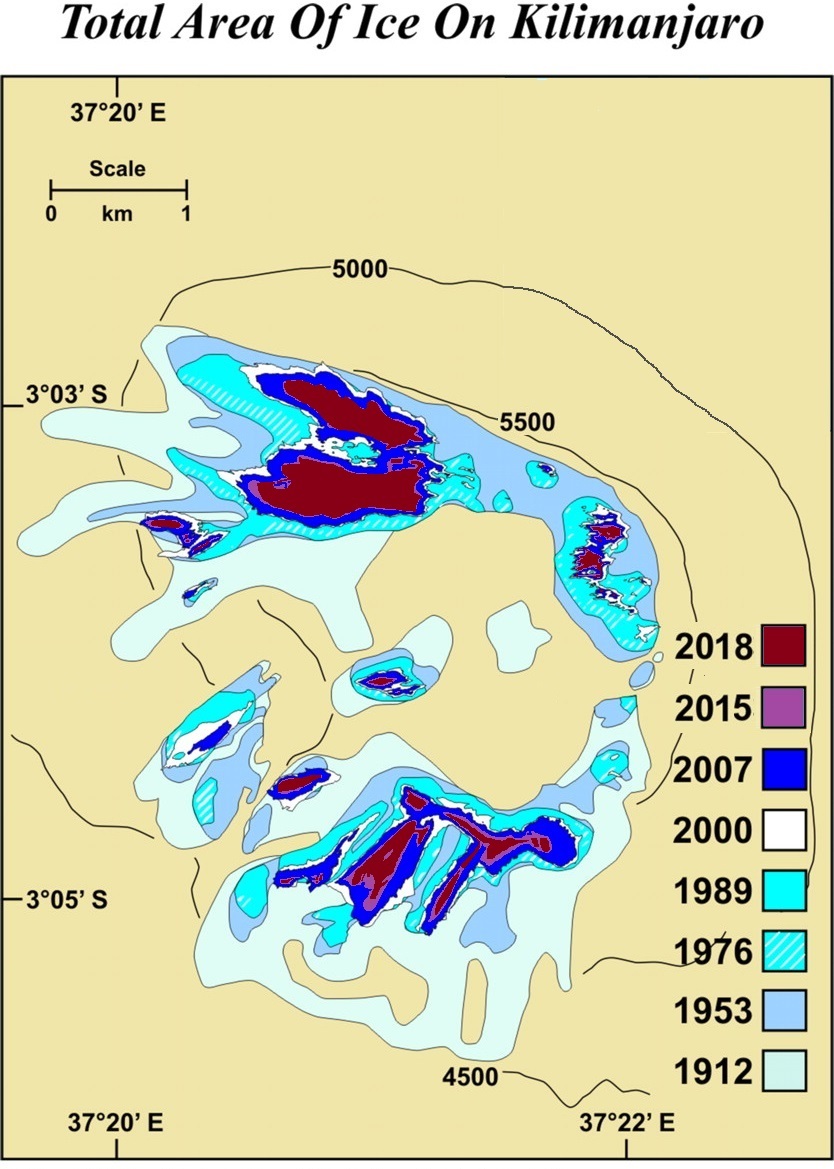
The loss of the ice is driven by a combination of factors, including changes in climate and local conditions, and it has made Kilimanjaro a vivid emblem of a warming world. Photographs taken decades apart show how much of the white crown has melted away, a change visible to anyone who has climbed it twice across a lifetime.
Unusually for such a high mountain, Kilimanjaro can be climbed without technical mountaineering skills or ropes; it is essentially a long, demanding walk to the top. Tens of thousands of people attempt it each year, though the thin air at altitude makes the summit a serious challenge, and many turn back with altitude sickness.
The mountain and the national park around it are protected as a UNESCO World Heritage Site and are central to Tanzania's tourism and identity. Guides and porters from the surrounding communities make the climb possible for visitors, and the mountain supports a significant part of the regional economy.
