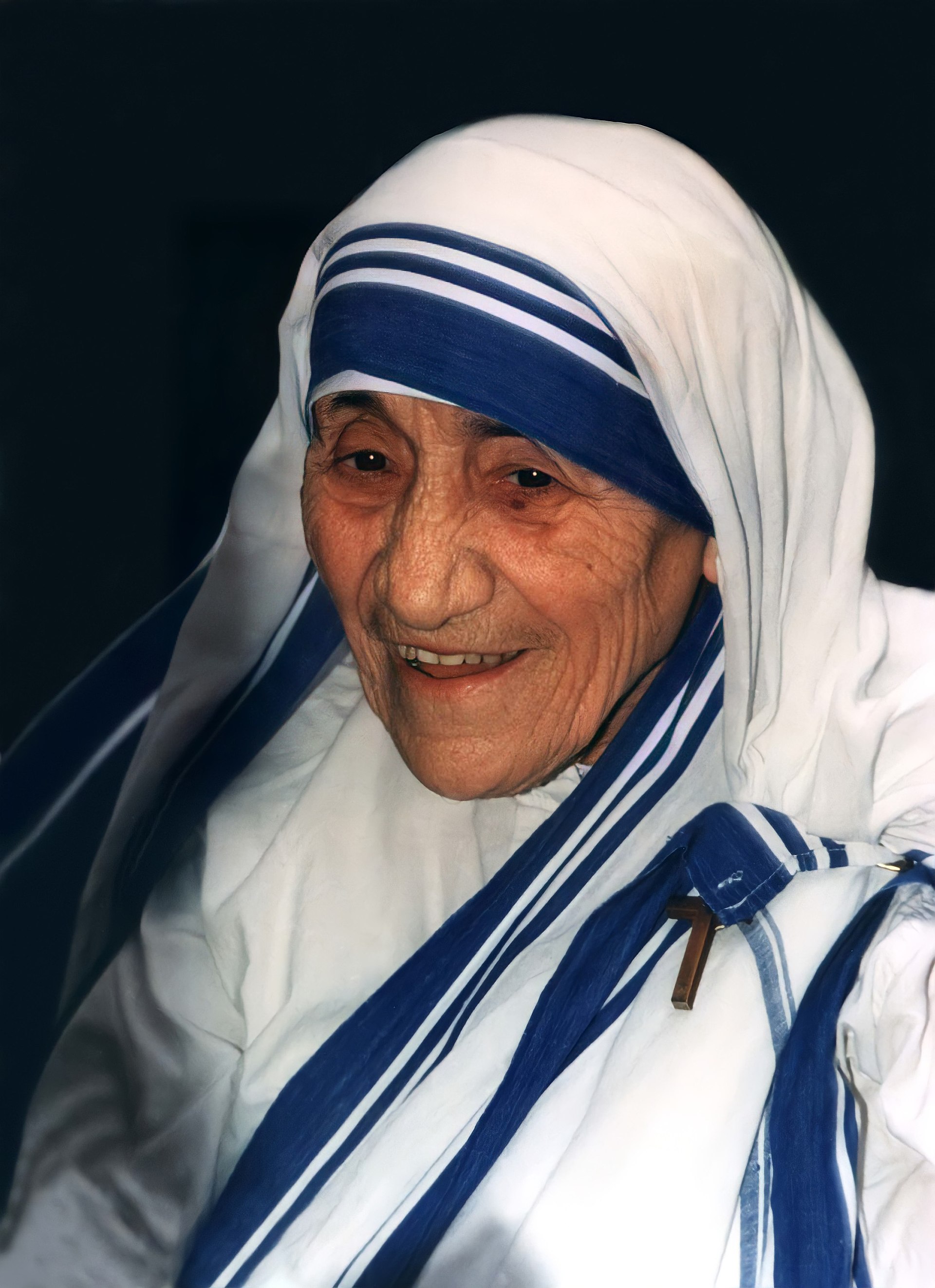
Mother Teresa (1910 to 1997) was a Catholic nun who devoted her life to caring for the poorest and the dying in India and around the world. Honoured with the Nobel Peace Prize and later declared a saint, she became one of the most famous humanitarians of the twentieth century.
Born in what is now North Macedonia, she felt a religious calling as a young woman and became a nun, taking the name Teresa. She moved to India to teach at a convent school, and for years lived a relatively comfortable religious life before a profound change set her on a very different path.
In 1946 Mother Teresa felt a powerful second calling, what she described as a "call within a call," to leave the convent and live among the poorest of the poor in the slums of Calcutta. She gave up the security of convent life to share the conditions of those she served, a radical and difficult step.
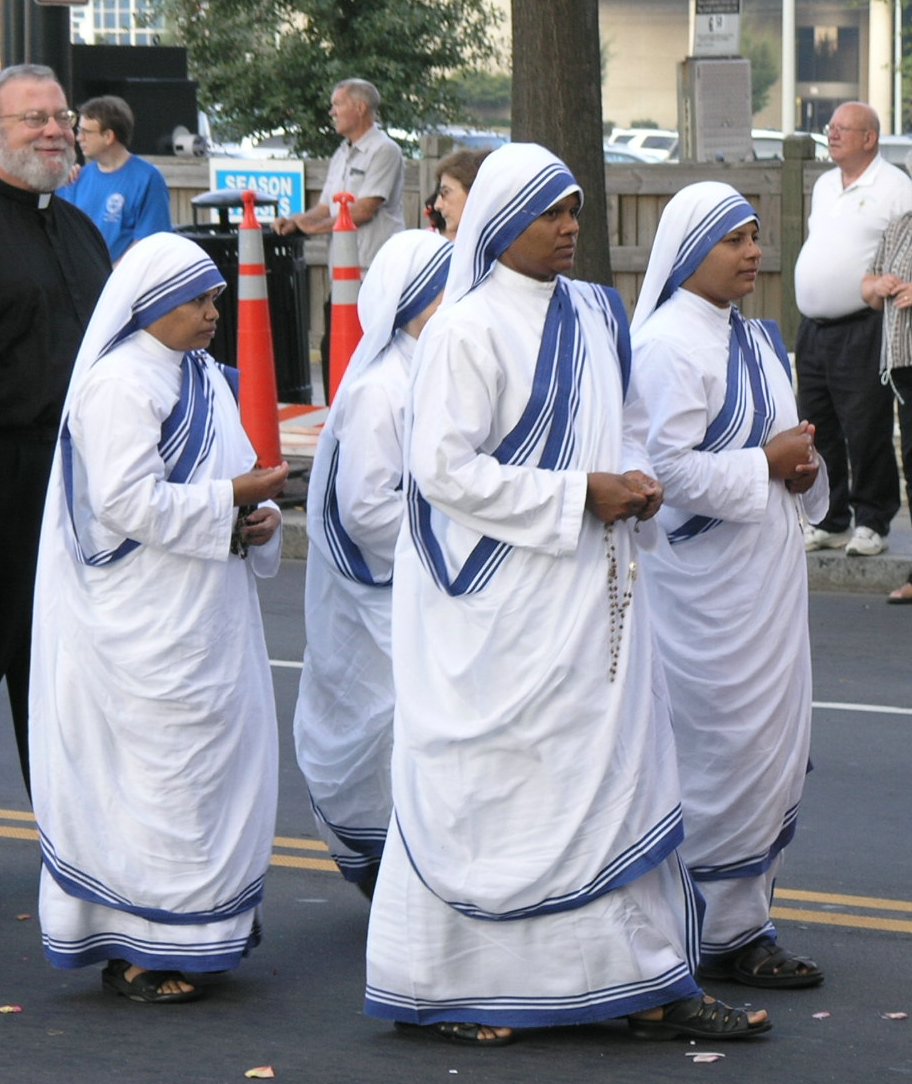
In 1950 she founded the Missionaries of Charity, a religious order devoted to caring for the hungry, the sick, the orphaned, and above all the dying whom others had abandoned. Its members, in their simple white and blue bordered saris, took vows to give wholehearted service to the poorest of the poor.
Mother Teresa's work focused especially on offering dignity and comfort to those at the very end of life, people found dying in the streets, whom she and her sisters took in so that they might die cared for rather than alone. This care for the dying became the heart of her mission and her fame.
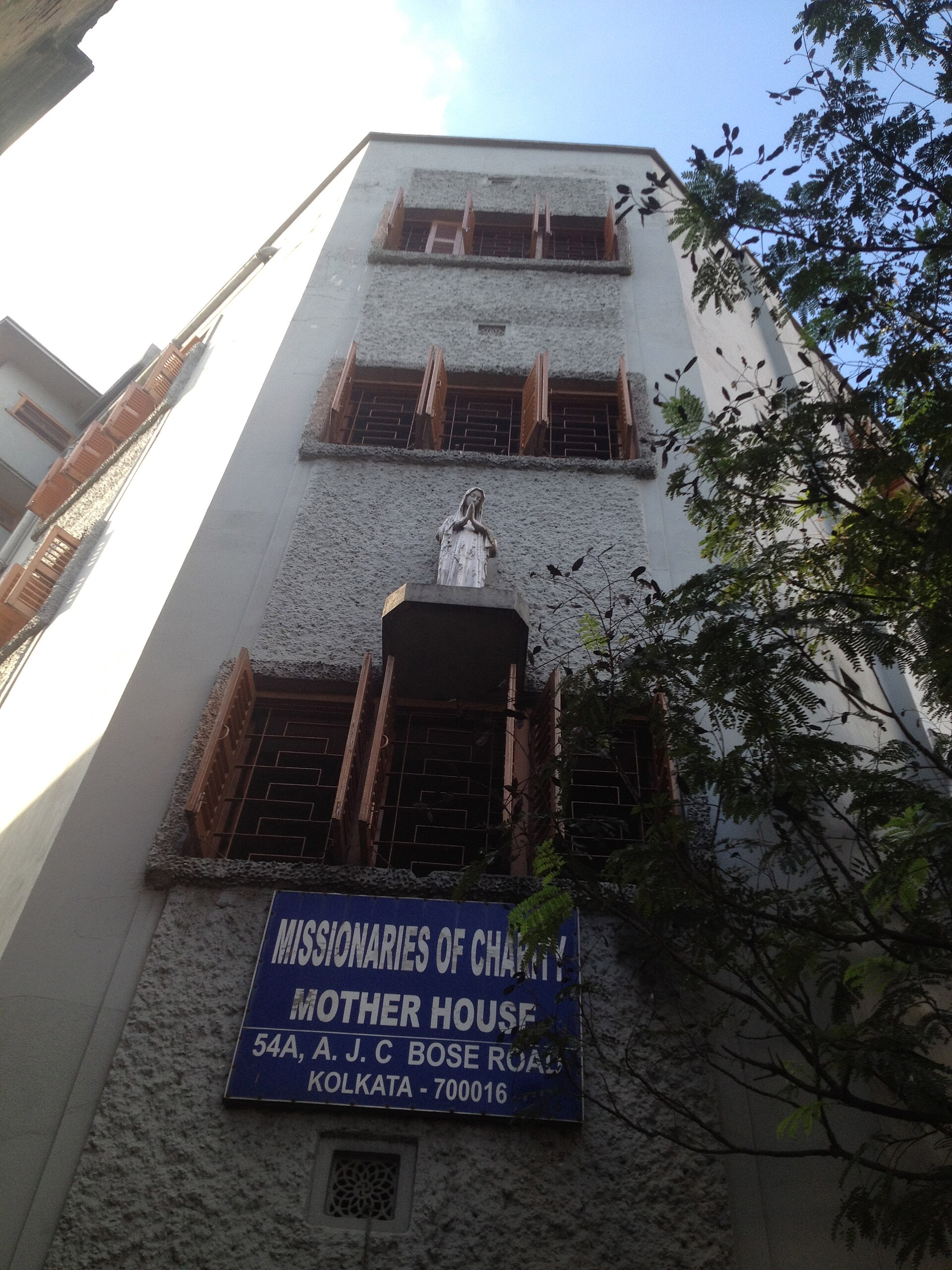
From small beginnings, her order grew into a worldwide movement, opening homes, hospices, orphanages, and clinics across many countries. What had begun with one nun in the slums of Calcutta became a global network of charity, drawing thousands of followers committed to serving the poor and the suffering.
In 1979 Mother Teresa was awarded the Nobel Peace Prize, which brought her global fame and a platform to spread her message of compassion. She accepted it, she said, in the name of the poor, and used her renown to draw attention and resources to the work of caring for the world's most destitute.
Mother Teresa became a global symbol of selfless charity, though her methods, her views, and the conditions in her homes also drew criticism. Some questioned the quality of medical care she provided or her stance on social issues. Her legacy, like her life, has been the subject of admiration and debate alike.
After her death in 1997, Mother Teresa was canonized by the Catholic Church as Saint Teresa of Calcutta, recognized as a saint. Whatever the debates around her, her decades of work among the destitute, and the worldwide order she founded and that continues her mission, left a profound mark and continue to inspire.
