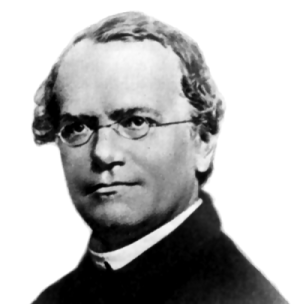
Mendelian inheritance is the set of principles describing how traits are passed from parents to offspring through discrete units we now call genes. Discovered by Gregor Mendel in the nineteenth century, it is the foundation of the science of genetics.
Mendel's key insight was that inherited traits are carried by separate, particle like factors, rather than by some blending of the parents' characteristics. Each parent passes on one version of each factor, and these units stay intact from generation to generation, ready to reappear even after seeming to vanish.
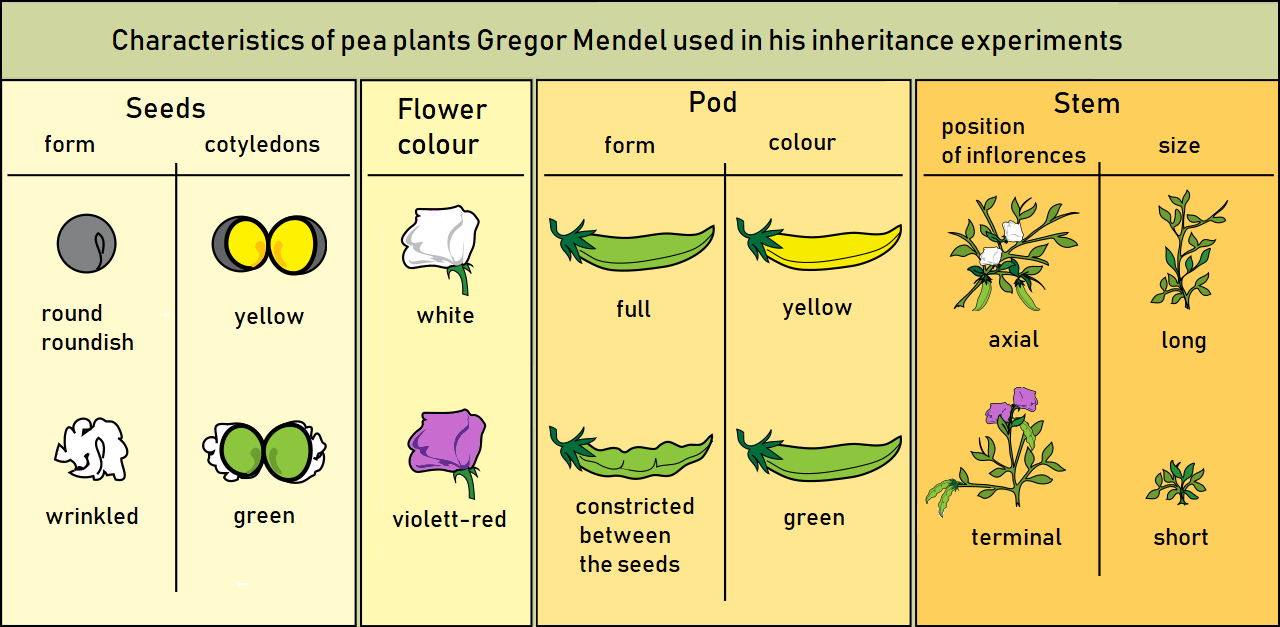
Working in a monastery garden in the 1860s, the friar Gregor Mendel carefully bred thousands of pea plants, tracking simple traits such as flower colour, seed shape, and height across generations. By counting the offspring precisely, something earlier breeders had not done, he uncovered the hidden mathematical rules of inheritance.
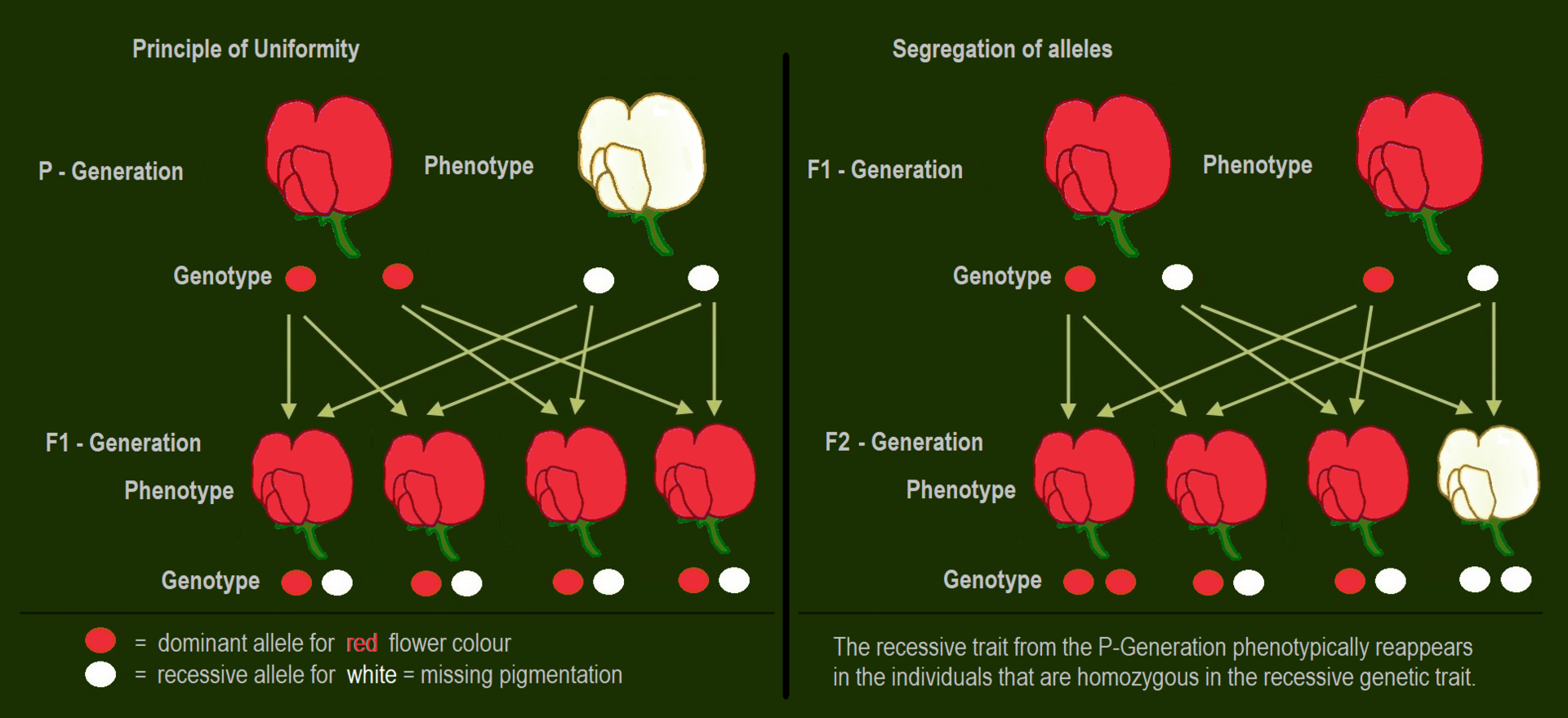
Mendel found that some versions of a trait, which he called dominant, mask the effect of others, called recessive. A plant could carry a hidden recessive factor without showing it, then pass it on so the trait reappeared in a later generation. This explained how traits could skip a generation, a long standing puzzle.
When Mendel crossed plants, the traits appeared in consistent numerical ratios, such as three offspring showing the dominant trait for every one showing the recessive. These clean ratios were the fingerprint of his particle theory of inheritance, and they could be predicted in advance, a hallmark of real science.
Mendel published his results in 1866, but their importance went unrecognized in his lifetime, and he died unknown to science. Only around 1900 did several scientists, working independently, rediscover his work and realize that this obscure monk had laid the foundations of an entire field.
Mendel's abstract "factors" were later connected to physical reality. They are genes, carried on thread like structures called chromosomes inside the cell, and made of the molecule DNA. The shuffling of chromosomes when reproductive cells form is exactly what produces Mendel's ratios.
Real inheritance is often more complex than Mendel's tidy peas. Many traits, such as human height or skin colour, are shaped by many genes acting together, and by the environment as well. Yet Mendel's laws remain the essential starting point from which all of this complexity is understood.
Mendelian inheritance underpins everything from agriculture, where it guides the breeding of crops and livestock, to medicine, where it explains how genetic diseases pass through families. A simple set of rules deduced from garden peas became the foundation of one of the most powerful sciences of the modern age.
