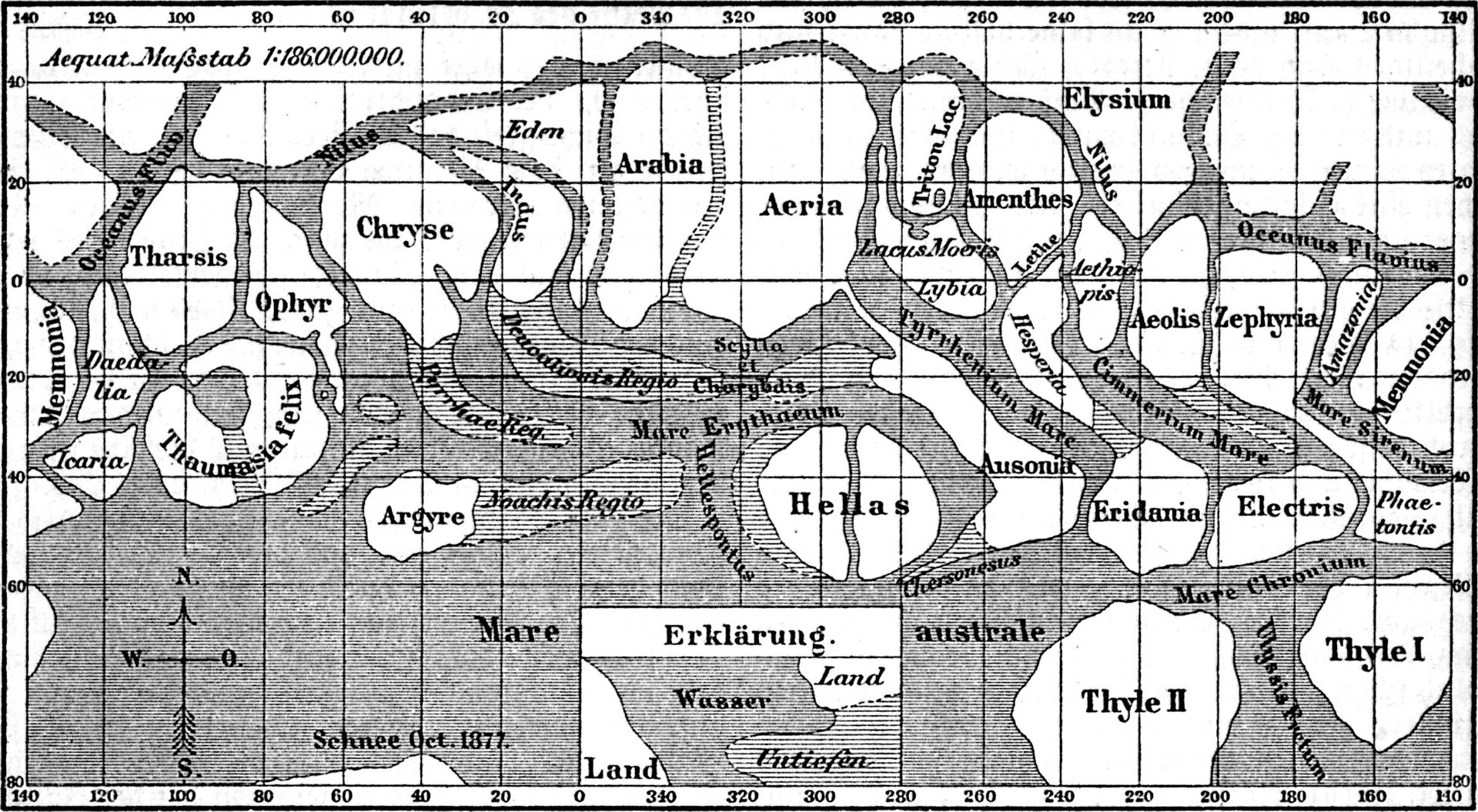
The Martian canals were a network of fine, straight lines that some astronomers in the late nineteenth and early twentieth centuries believed they could see crisscrossing the surface of Mars. To a few observers the lines seemed to be the work of a dying civilization, but they turned out not to exist at all.
In 1877, the Italian astronomer Giovanni Schiaparelli reported seeing channels on Mars, which he called canali. The word can mean natural channels, but in English it was widely read as artificial canals, a small translation slip with large consequences. Schiaparelli carefully charted the features across the Martian surface.
The American astronomer Percival Lowell seized on the canal interpretation and built an observatory largely to study the lines. He argued that they were a vast irrigation system, engineered by intelligent Martians to carry meltwater from the polar caps across a drying planet, and he popularized the romantic notion of a dying Martian civilization in widely read books.
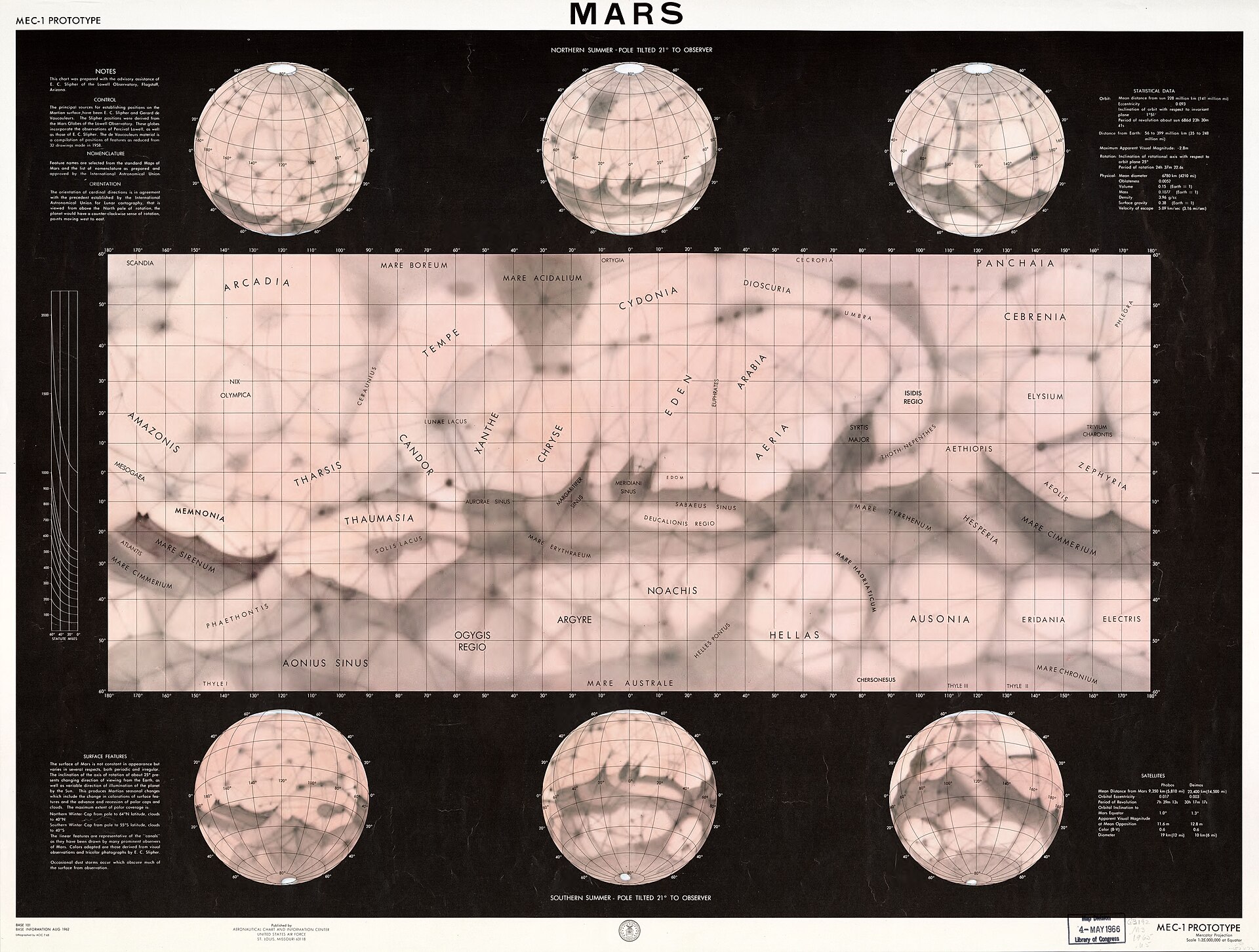
Other astronomers, using equally good or better telescopes, often could not see the canals at all, and the reported networks differed from observer to observer. As telescopes improved and, finally, as spacecraft flew past and orbited Mars in the twentieth century, the verdict became absolute: there are no canals.
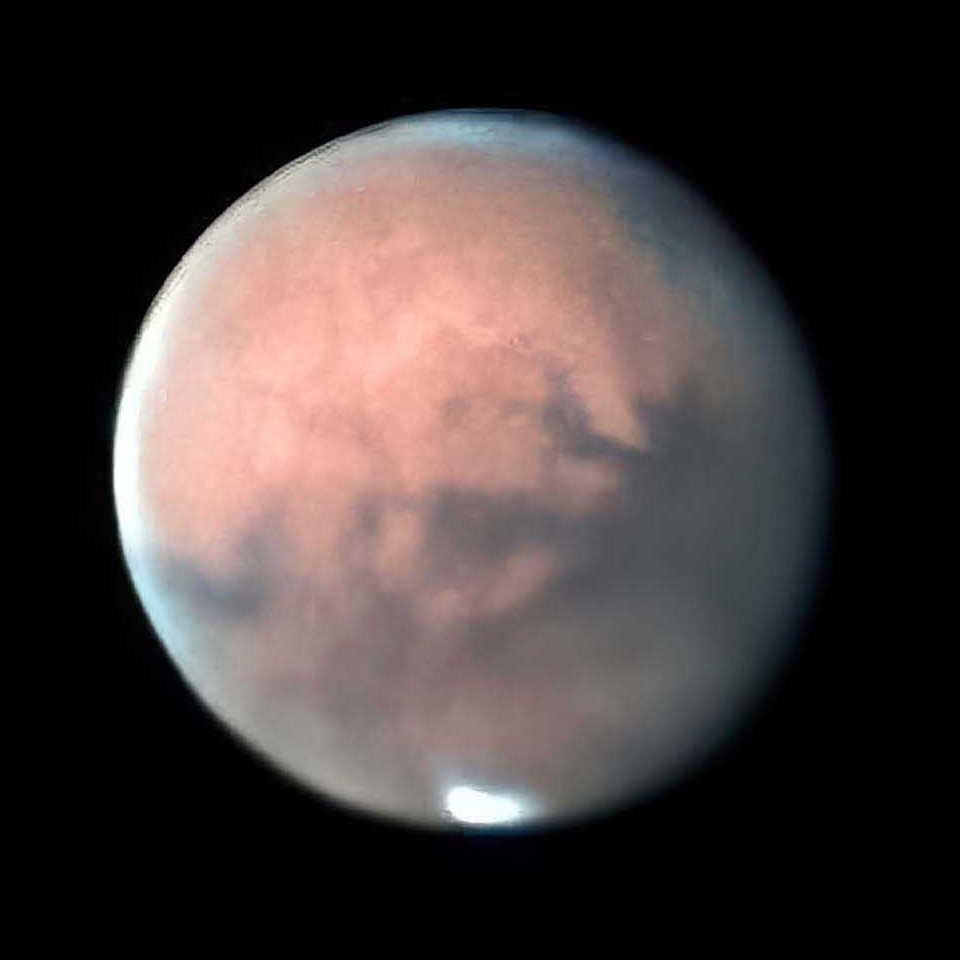
The straight lines were an optical illusion. At the very limit of what the early telescopes could resolve, the human eye and brain tend to join scattered, faint surface features into continuous lines, imposing order on a blur. Tired eyes straining at a shimmering image saw connections that were not really there.
The Martian canals are a famous reminder that observation is never purely passive, and that expectation can quietly shape what even careful, honest scientists believe they see. The observers were not frauds; they genuinely saw lines, which makes the episode all the more instructive about the limits of human perception.
The real Mars revealed by modern exploration is extraordinary in its own right, just not in the way Lowell imagined. It has the largest volcano in the Solar System, a canyon system that would stretch across a continent, and clear evidence that liquid water once flowed across its surface, making it a central target in the search for past life.
