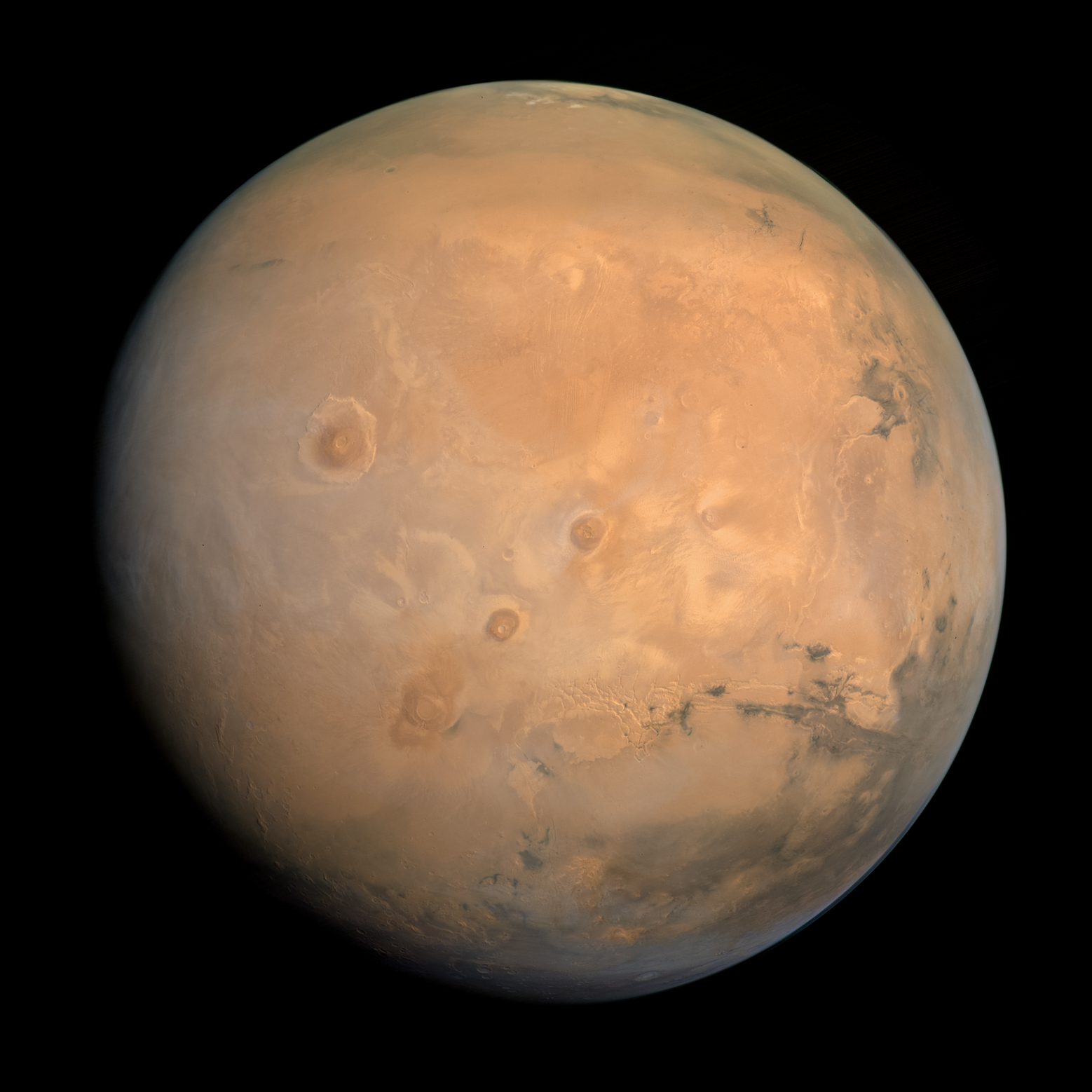
Mars is the fourth planet from the Sun and the most Earth-like of our neighbours, a cold, rusty-red desert world that has captivated humans for centuries. Often called the Red Planet for the iron oxide, essentially rust, that covers its surface, it is the focus of an intense ongoing effort to explore and perhaps one day inhabit another world.
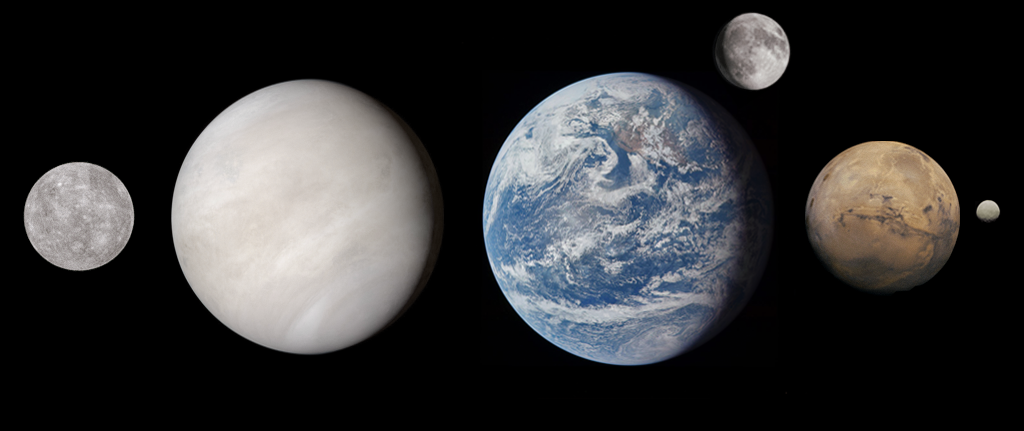
Mars is about half the diameter of Earth and far colder, with an average temperature well below freezing and a thin atmosphere made mostly of carbon dioxide, less than one percent as dense as Earth's. A day on Mars is almost the same length as ours, but its year is nearly twice as long, and because its axis is tilted much like Earth's, it has seasons.
Frozen caps of water and carbon-dioxide ice grow and shrink at the Martian poles with the changing seasons, advancing in winter and retreating in summer. Most of the planet's water is locked up as ice, both in these caps and buried beneath the surface across much of the world.
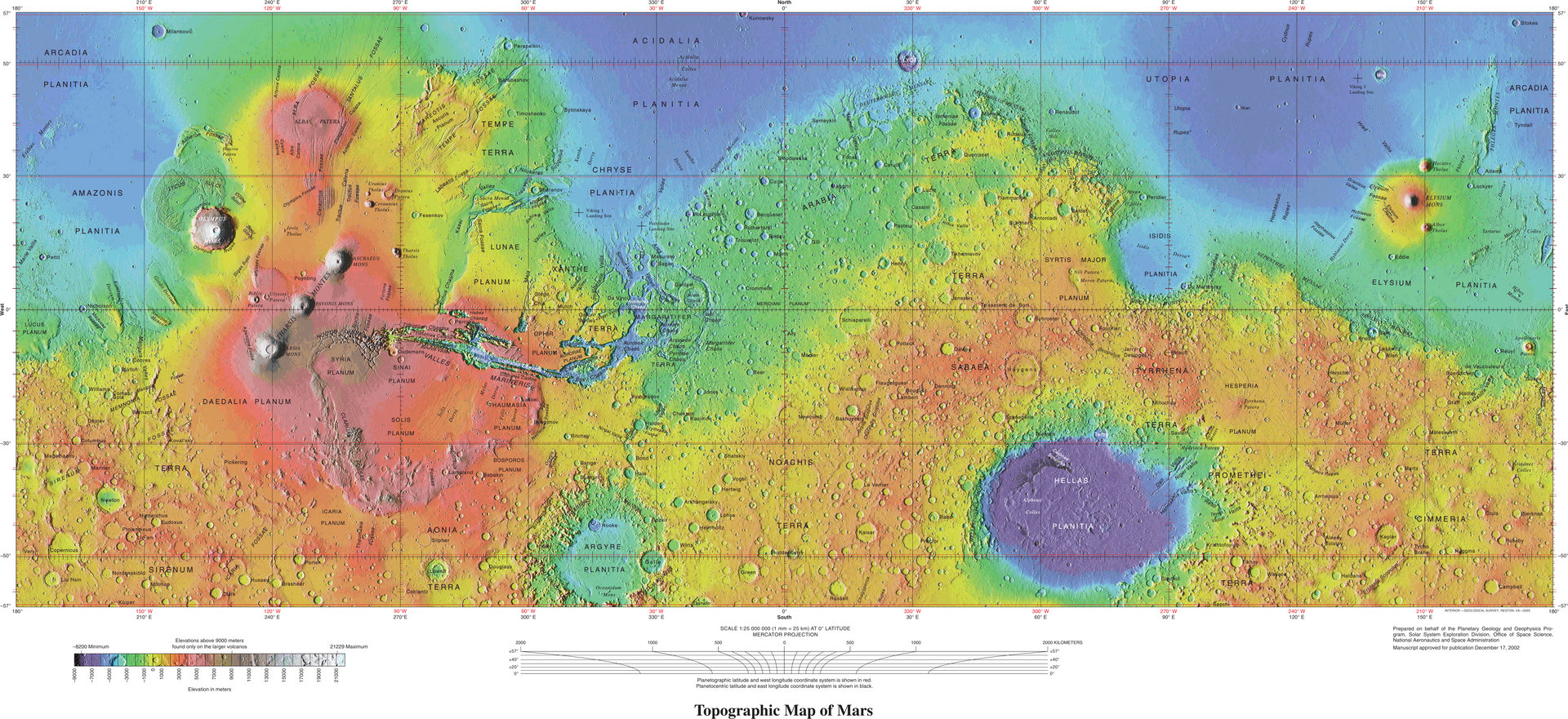
Mars boasts the most extreme terrain in the Solar System. Olympus Mons is the largest known volcano, rising about 22 kilometres, nearly three times the height of Mount Everest. Valles Marineris is a system of canyons so vast it would stretch across the entire United States.
The planet is circled by two small, potato-shaped moons, Phobos and Deimos, probably captured asteroids. Phobos orbits so close and so fast that it rises and sets twice a day as seen from the surface, and it is slowly spiralling inward, destined in the distant future to break apart or crash into the planet.
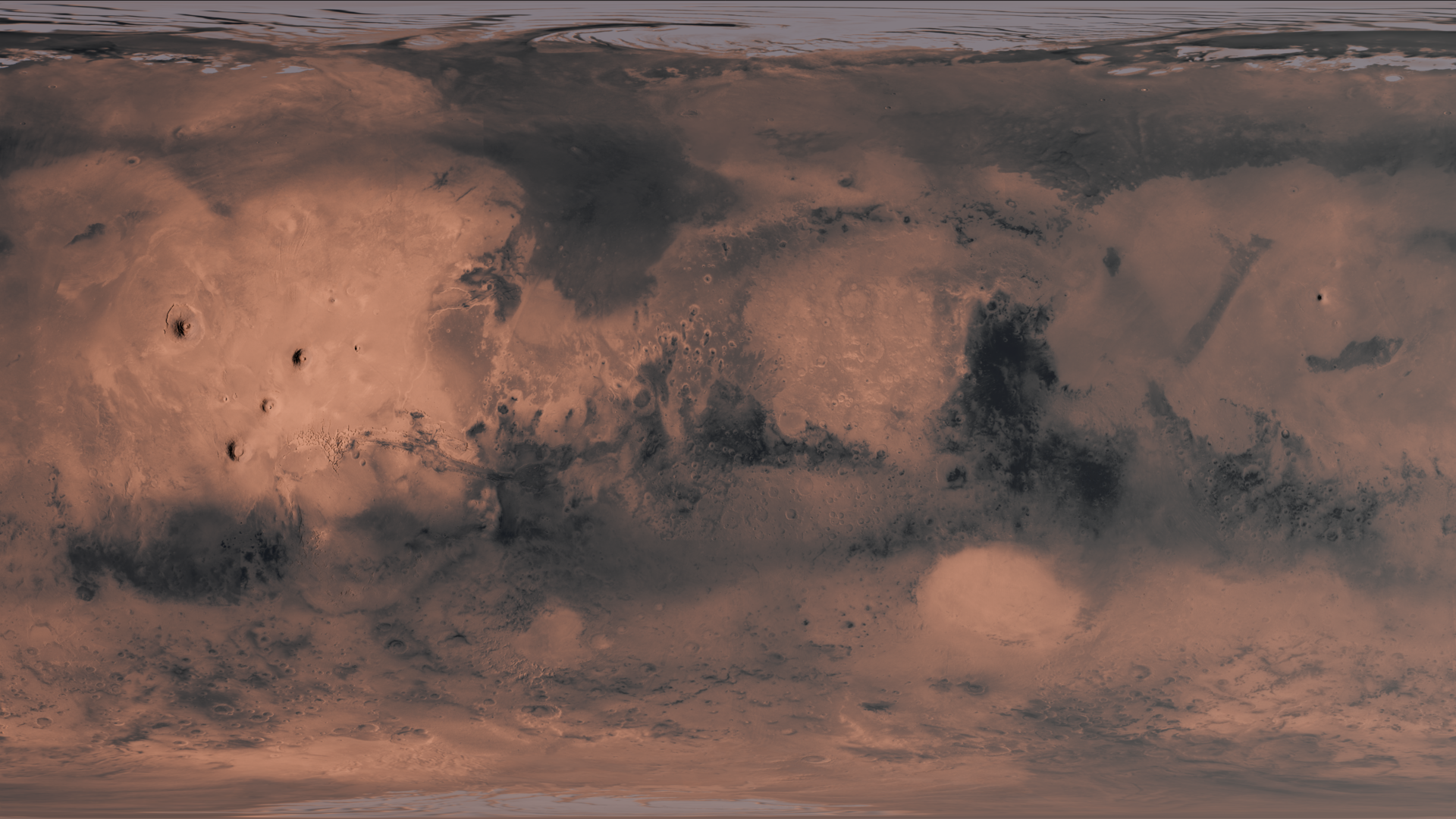
Although its surface is dry today, Mars was once a far warmer, wetter world. Spacecraft have found dried-up riverbeds, ancient lake basins, and minerals that form only in water, strong evidence that rivers and lakes, and perhaps a shallow sea, once existed there billions of years ago.
This watery history is the central reason scientists wonder whether Mars could have hosted simple life, and whether traces of it might remain, frozen in the rocks or hidden underground. So far no sign of life, past or present, has been confirmed, but the search is one of the main goals of Mars exploration.
No planet beyond Earth has been studied so closely. A fleet of orbiters, landers, and rovers has mapped Mars in detail, analysed its rocks and air, and searched for signs of past life, and samples are being gathered for eventual return to Earth. Mars is also the leading candidate for future human missions, making it both a scientific frontier and, in many people's eyes, humanity's next destination.
