The luminiferous aether was a hypothetical substance once believed to fill all of space and to serve as the medium through which light waves traveled. It was a central assumption of nineteenth century physics, and its quiet disproof helped launch one of the great revolutions in science.
Physicists knew that familiar waves need a medium to move through. Sound travels through air, ripples through water. Since light had been shown to behave as a wave, it seemed it too must travel through something, an invisible, weightless, all pervading aether that filled the entire universe.
In this picture, the Earth was constantly rushing through the motionless aether as it orbited the Sun, like a ship moving through still water. That motion, physicists reasoned, should create a kind of "aether wind," and light should travel at slightly different speeds depending on whether it moved with that wind or across it.
In 1887, Albert Michelson and Edward Morley built an exquisitely sensitive instrument to detect exactly this effect. Light sent in the direction of the Earth's travel should arrive at a slightly different time than light sent across it, like a swimmer racing with or against a current.
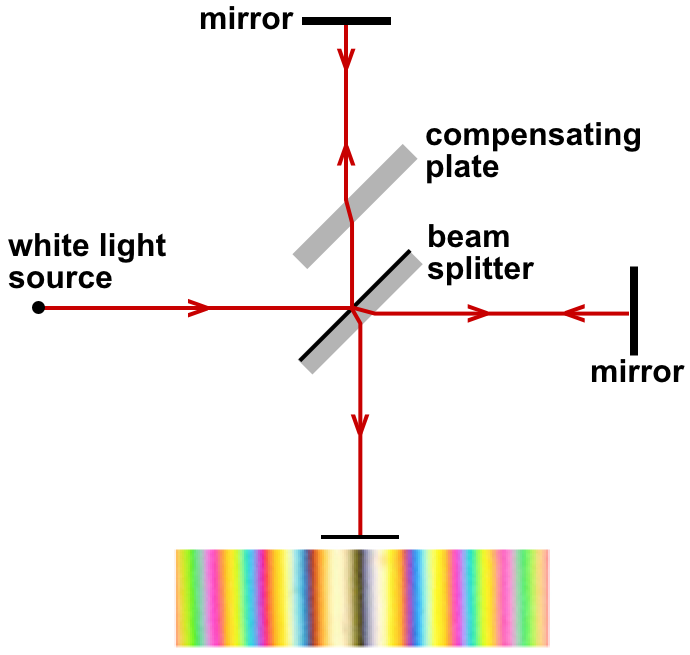
They measured with extraordinary care, turning their apparatus in every direction, and found no difference at all. This result, one of the most famous null results in the history of science, meant that the aether, if it existed, left no detectable trace whatsoever. The harder physicists looked for the aether wind, the more clearly it simply was not there.
The puzzle hung over physics for nearly twenty years until Albert Einstein resolved it in 1905. His special theory of relativity showed that light needs no medium at all, and that its speed is the same for every observer regardless of how they move. There was no aether to detect because there was no aether.
The episode is remembered as a model of how a single, well aimed experiment can topple an idea that seemed beyond question. The failure to find the aether was not a dead end but an opening, clearing the way for relativity and a far stranger, more accurate picture of space and time.
