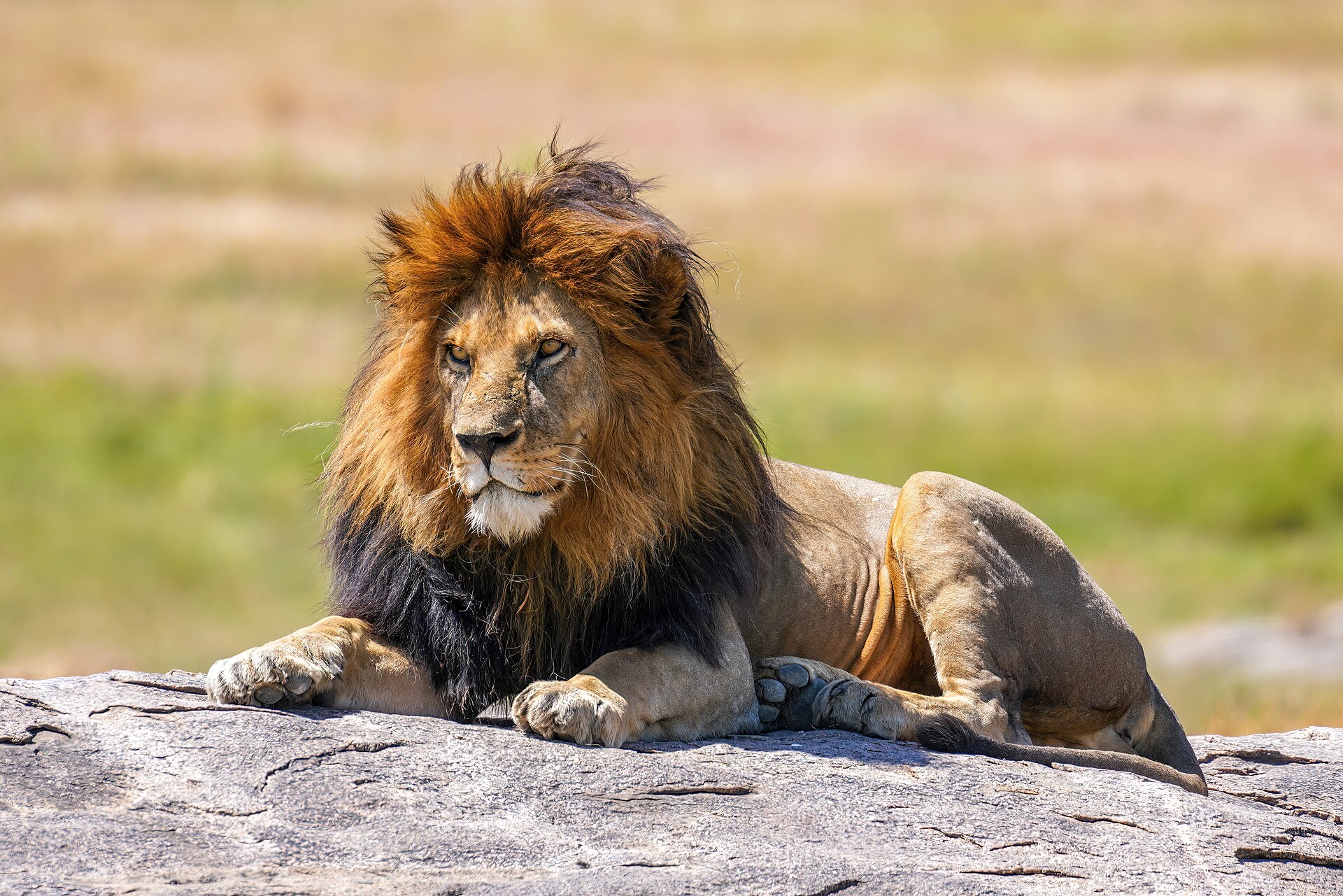
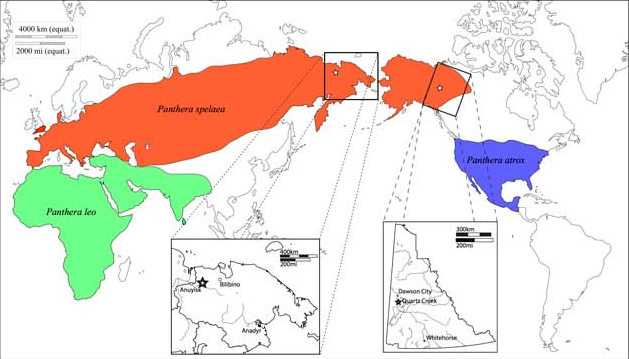
The lion (Panthera leo) is a large cat of the genus Panthera, the second-largest living cat after the tiger. Once spread across Africa, southern Europe, the Middle East, and into India, it now survives mainly in scattered populations across sub-Saharan Africa, with a single small population of Asiatic lions in the Gir Forest of India. Unusually among cats, the lion is intensely social, and its cooperative family groups are central to how it hunts, breeds, and defends territory.
Lions are powerfully built, with adult males typically weighing 150 to 250 kilograms and the more lightly built females 110 to 180 kilograms. The species is strongly sexually dimorphic: mature males grow a mane of long hair around the head, neck, and chest whose colour and fullness signal age, condition, and testosterone, and which females appear to favour in mates. The coat is a tawny gold that blends into dry grassland, and the tail ends in a dark tuft concealing a small, hard spur.
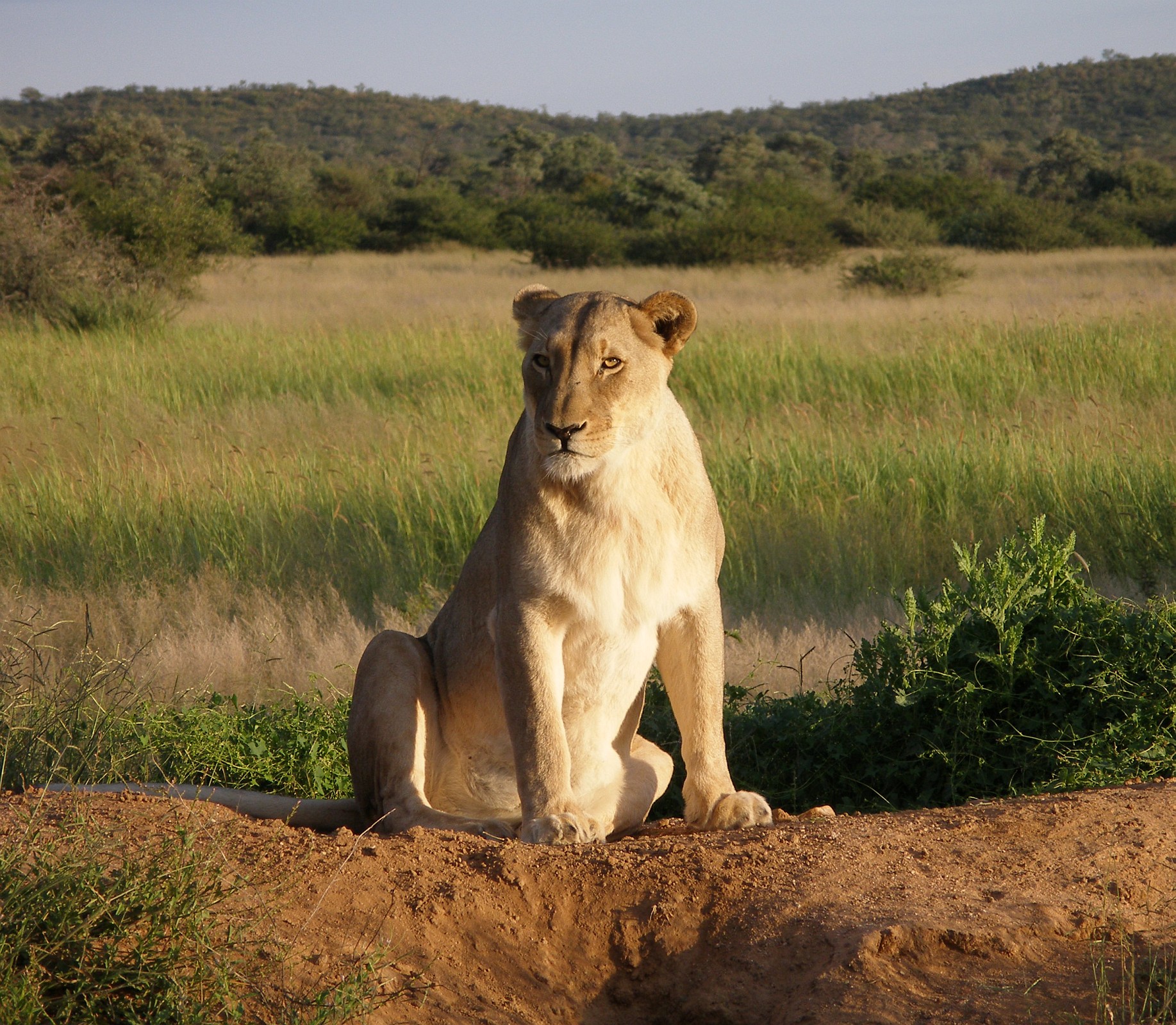
Lions are apex predators that take a wide range of prey, concentrating on medium-to-large hoofed animals such as wildebeest, zebra, and buffalo. The lionesses do most of the hunting, and their advantage lies in cooperation: they fan out, stalk in the cover of dusk or darkness, and coordinate an ambush in a way solitary cats cannot. Lions also readily scavenge and will drive other predators, such as hyenas and leopards, off their kills.
Lionesses give birth to litters of one to four cubs after a gestation of around three and a half months. Cubs are vulnerable: when a new male coalition takes over a pride, the incoming males commonly kill cubs they did not father, which brings the females back into breeding condition sooner, a harsh but well-documented strategy. Cubs that survive are weaned at six to seven months and reach independence at around two years. In the wild, lions rarely live beyond their mid-teens; females tend to outlive males, who are worn down by the violence of competition.
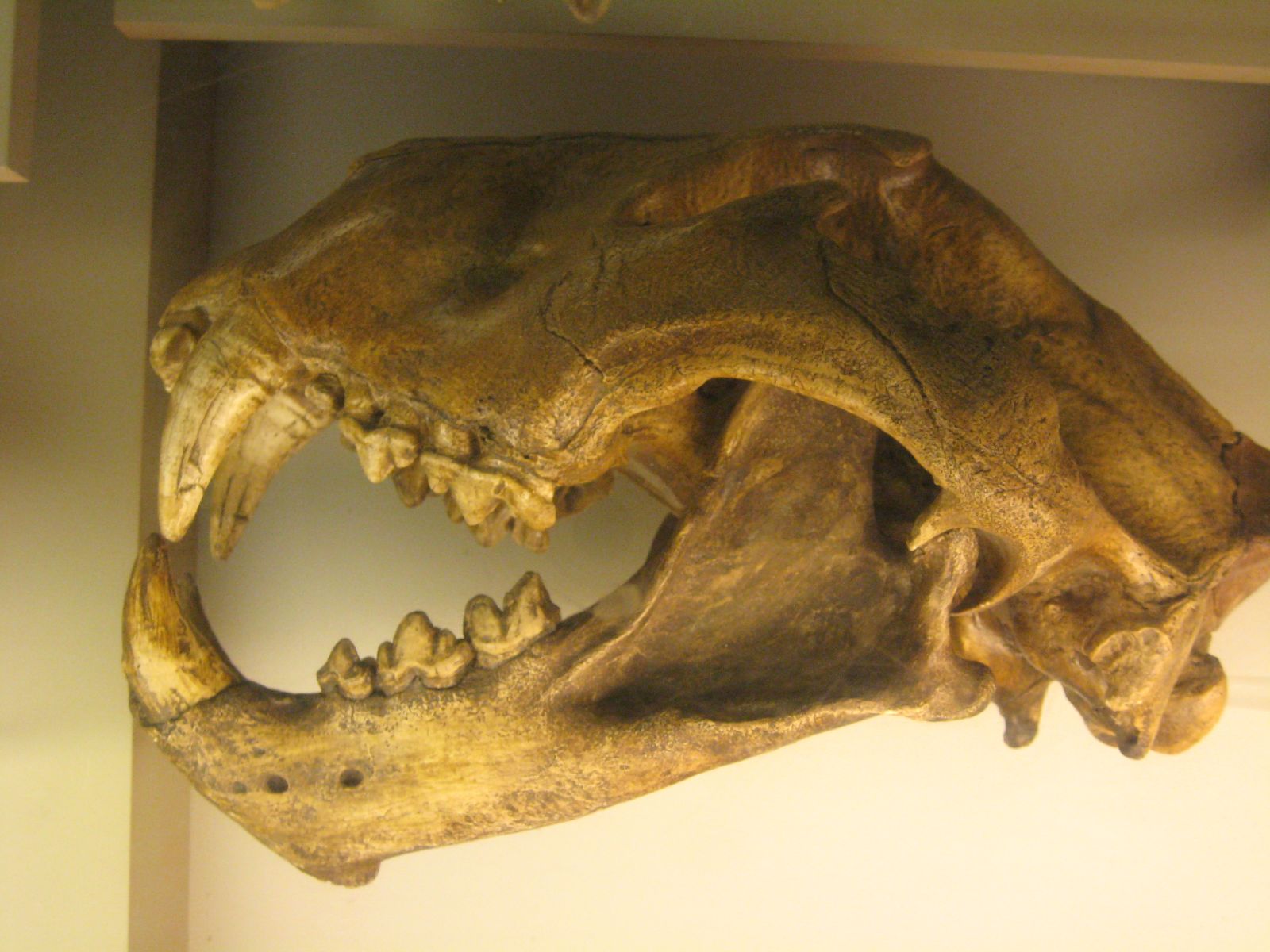
Lions belong to the Panthera lineage of cats, which also includes tigers, leopards, and jaguars. During the Pleistocene, lions and their close relatives were among the most widespread large land mammals on Earth: the cave lion (Panthera spelaea) ranged across Europe and northern Asia, and the related American lion spread into the Americas. These cold-climate lions appear repeatedly in Ice Age cave art before they died out at the end of the last glacial period.
The lion has loomed over human culture for millennia, from the lion hunts of Assyrian kings to its ubiquity in heraldry as a symbol of courage and royalty, the "king of beasts." Today the reality is more precarious. Wild lions number on the order of 20,000 and the species is classified as Vulnerable, its range and numbers shrinking under habitat loss, conflict with herders, prey depletion, and poaching. The Asiatic lions of Gir, reduced to a few dozen animals a century ago, survive only through sustained protection.
