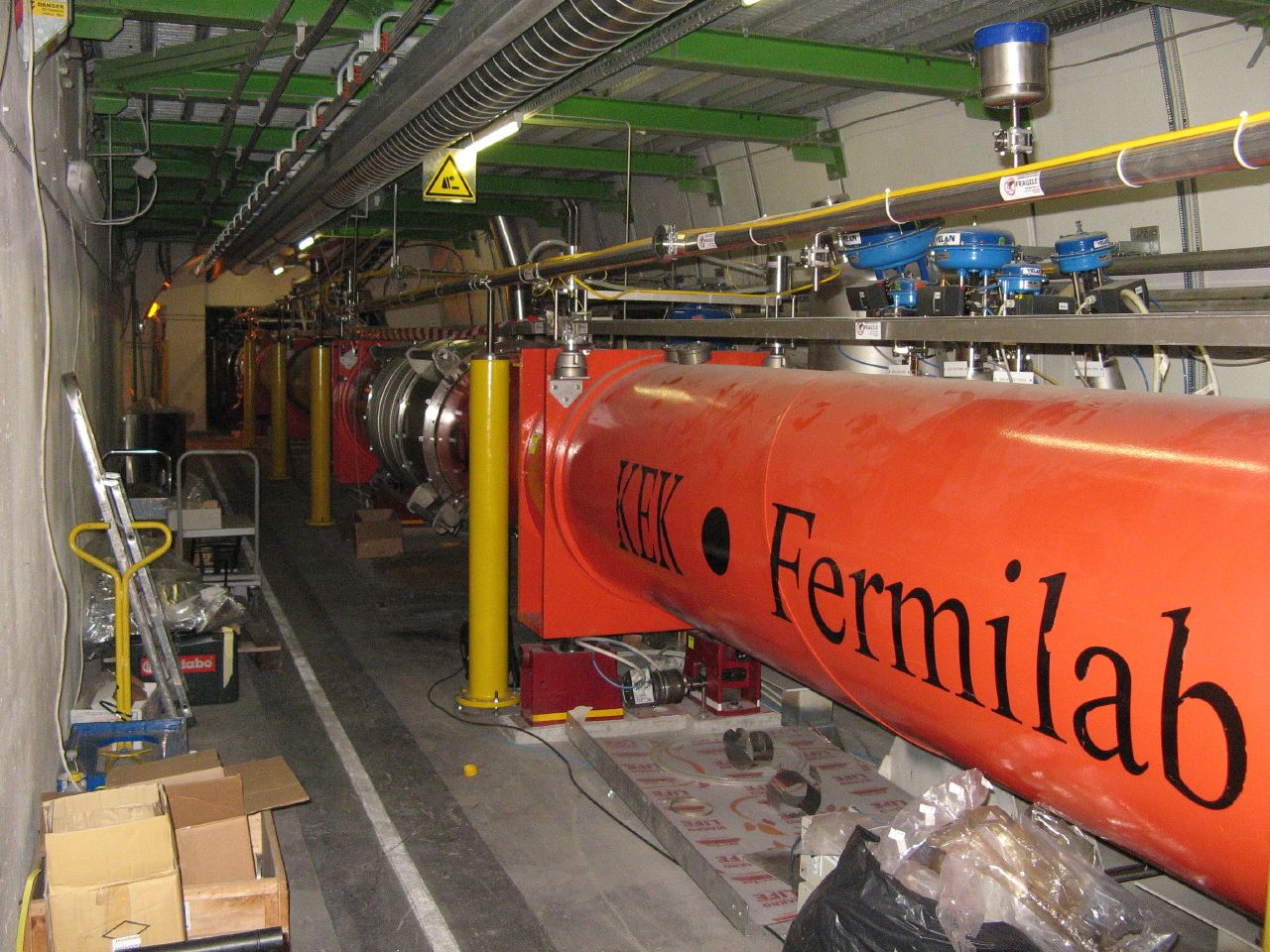
The Large Hadron Collider, or LHC, is the world's largest and most powerful particle accelerator, built by the European laboratory CERN near Geneva. It smashes particles together at nearly the speed of light to probe the deepest questions about the nature of matter.
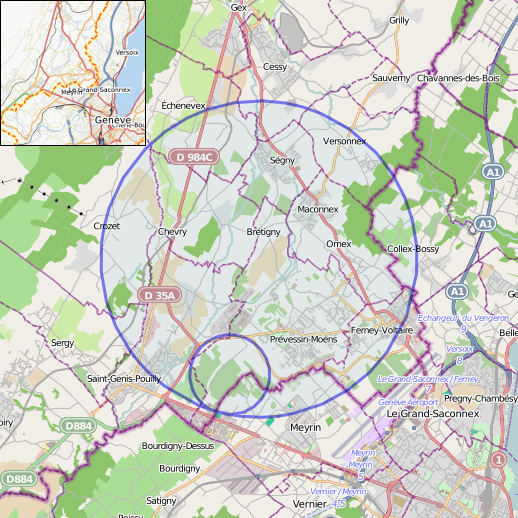
The LHC sits in a circular tunnel 27 kilometres around, buried deep underground beneath the border of France and Switzerland. This enormous ring, one of the largest machines ever built, guides beams of particles around and around, accelerating them to tremendous energies before bringing them to collide.
Inside the ring, powerful electric fields accelerate beams of protons to nearly the speed of light, while thousands of superconducting magnets, chilled colder than outer space, steer and focus them. Two beams race in opposite directions, gaining energy with each lap until they are ready to collide.
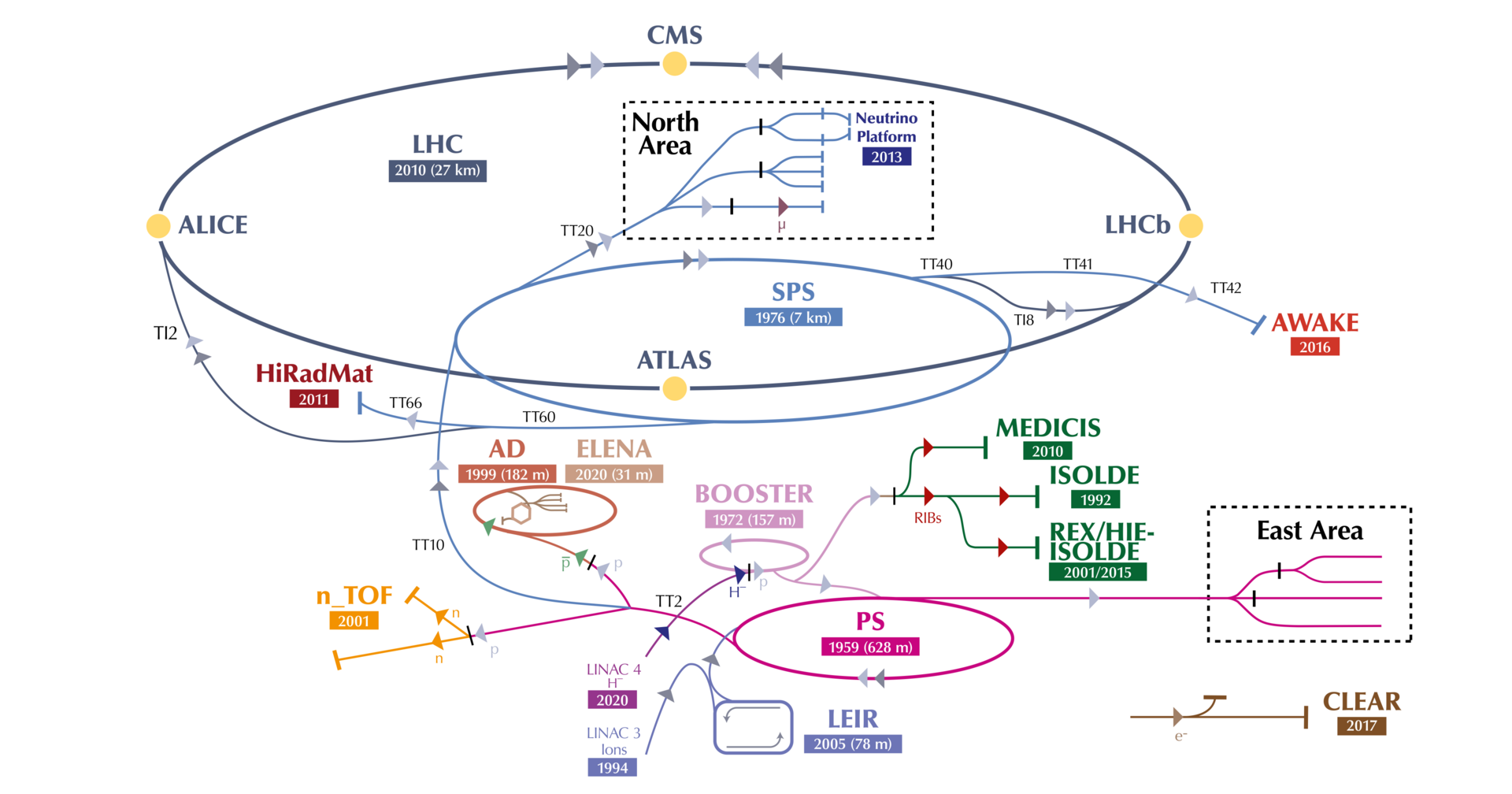
The two beams are brought to collide head on at four points around the ring, where giant detectors, themselves marvels of engineering, record the debris. Each collision recreates, for a fleeting instant, conditions like those a tiny fraction of a second after the Big Bang, when the universe was unimaginably hot and dense.
Out of the energy of these collisions, fleeting new particles can appear, in accordance with Einstein's insight that energy and matter are interchangeable. By studying the showers of particles produced, physicists can detect new particles and probe the fundamental building blocks and forces of nature.
The detectors capture the collisions in extraordinary detail, generating a torrent of data far too vast for any single computer to handle. The information is distributed and analysed by scientists around the world, in one of the largest computing efforts ever undertaken, sifting through countless collisions for rare and revealing events.
The LHC's greatest triumph came in 2012, when it discovered the Higgs boson, the long sought particle that explains how others gain mass. This completed the Standard Model of particle physics, the remarkably successful theory of the fundamental particles and forces, and confirmed a prediction nearly fifty years old.
Beyond the Higgs, the LHC continues to search for clues to deeper mysteries: the nature of the invisible dark matter that pervades the universe, why the cosmos is made of matter rather than antimatter, and whether undiscovered particles or forces await. It probes the frontiers of the known.
The Large Hadron Collider stands as one of the greatest scientific instruments ever built, the product of international collaboration on a vast scale and of a deep human desire to understand the fundamental nature of reality. It is a monument to curiosity, pushing the boundaries of what we know about the universe.
