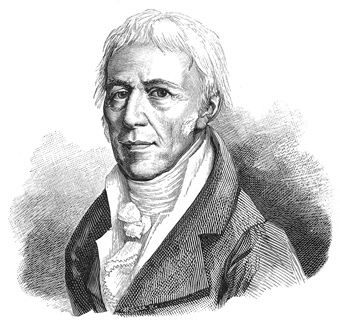
Lamarckism is the discredited idea that organisms can pass on to their offspring the characteristics they acquire during their lifetime. Its classic example is the claim that giraffes got long necks because individuals stretched to reach high leaves and passed the longer necks to their young.
The core of Lamarckism is the idea that what an organism does in its life can directly shape what its offspring inherit. A blacksmith who builds strong arms, on this view, would have stronger armed children. It was an intuitive idea, matching the everyday observation that practice changes the body.
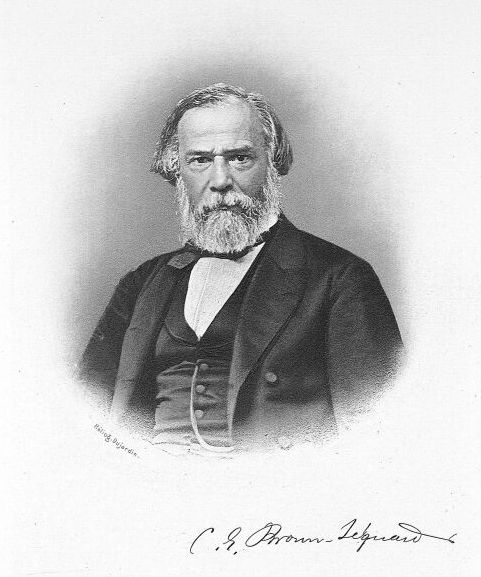
The idea is named for the French naturalist Jean-Baptiste Lamarck, who in the early nineteenth century proposed it as a mechanism of evolution, before the true mechanism was known. He suggested that the use or disuse of body parts caused them to grow or shrink, and that these changes were then inherited.
It is important to see Lamarck's idea as a serious, pioneering attempt to explain a real phenomenon: that species change over time. Lamarck was among the first to argue clearly that life evolves, and his theory, though wrong in its mechanism, helped put the very idea of evolution on the table.
The idea was overturned by the discovery of how inheritance actually works. Traits are passed on through genes, carried in the reproductive cells, the eggs and sperm. Changes to the body during life, such as building muscle, getting a tan, or losing a limb, do not alter the genes in those cells, and so are not inherited.
The claim was tested directly. In a famous experiment, the tails of mice were cut off for many generations, yet the offspring were always born with normal tails. No matter how the body was changed, the change did not pass to the next generation, exactly as the gene theory predicts.
Charles Darwin's theory of natural selection gave the correct explanation for how species change. Giraffes did not get long necks by stretching; rather, those born with slightly longer necks tended to survive and reproduce, passing the trait on, so over many generations necks grew longer through selection, not effort.
Curiously, modern biology has found that the activity of genes can sometimes be influenced by an organism's life and, in limited cases, passed to offspring, a field called epigenetics. This is a narrow, controlled effect, not the wholesale inheritance of acquired traits, but it has given the old idea a faint, qualified echo.
Lamarckism is debunked as a general theory of evolution. The body's life experiences are not written into the genes our children inherit. The giraffe's neck, and the diversity of all life, is still best explained by natural selection acting on inherited variation, just as Darwin proposed.
