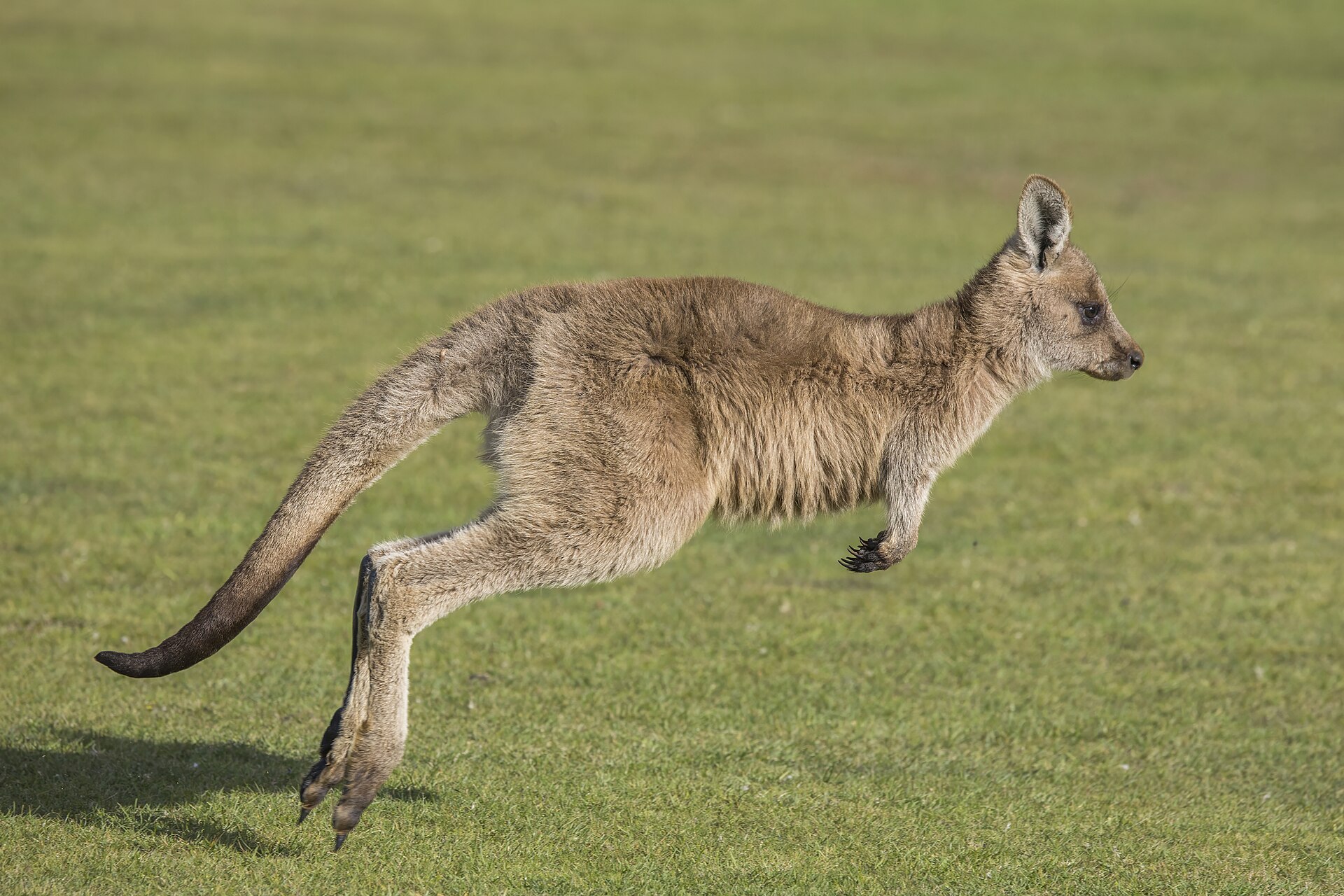
The kangaroo is a large marsupial native to Australia and the unofficial emblem of that country. Famous for hopping on its powerful hind legs and for carrying its young in a pouch, it is one of the most distinctive animals on Earth and a creature found in the wild nowhere else.
Kangaroos are the largest marsupials, and the biggest, the red kangaroo, can stand taller than a person and travel in great bounds. Their build is unmistakable: huge, muscular hind legs and feet, small forelimbs, and a long, heavy tail that acts as a balance and even as a fifth limb to push off from.
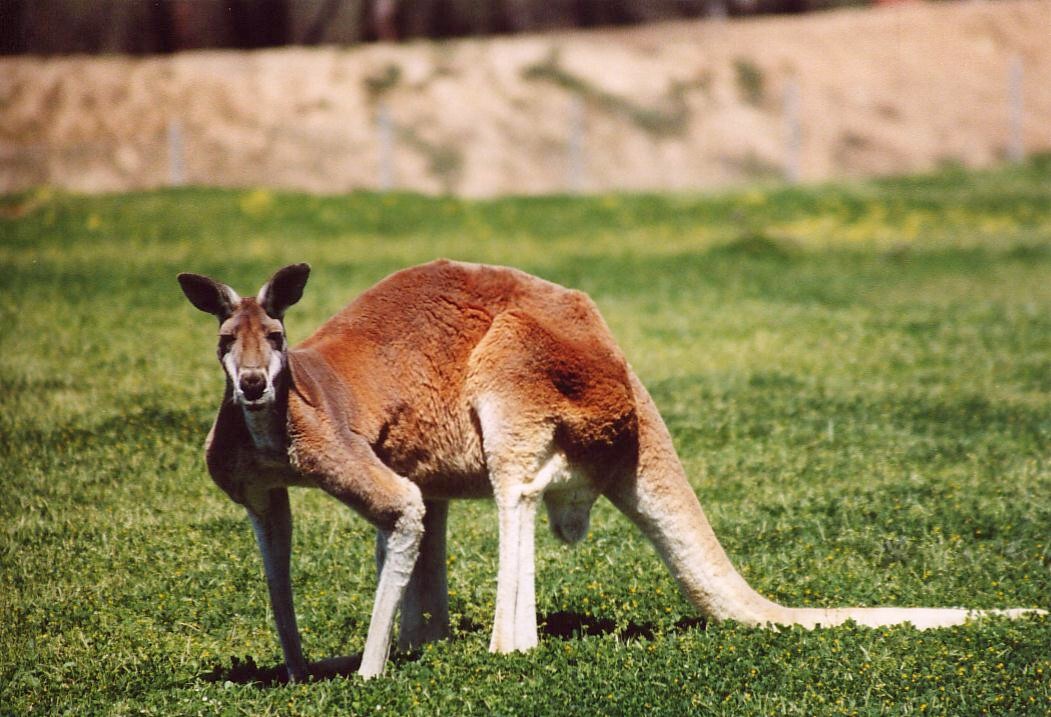
Hopping is a remarkably efficient way to move. At speed, the springy tendons in a kangaroo's legs store and release energy with each bound, like a pogo stick, letting it cover ground quickly while using little energy. A kangaroo can reach speeds of over 50 kilometres per hour and clear large distances in a single leap, yet it cannot easily move backward, which is part of why it features, ever forward-facing, on Australia's coat of arms.
As marsupials, kangaroos give birth to extraordinarily undeveloped young. A newborn, called a joey, is no bigger than a jellybean and crawls, blind and tiny, into its mother's pouch, where it latches onto a teat and continues to grow for months. Only gradually does it begin to poke its head out, then venture from the pouch, returning for safety and milk long after it has started to explore the world outside.
Kangaroos are grazing animals, feeding mainly on grasses, and they often gather in groups known as mobs. Living in a hot, dry land, they have ways of coping with the heat, resting in shade during the warmest hours and licking their forearms to cool down. Males sometimes "box," balancing on their tails to kick and grapple with their strong hind legs in contests over mates.
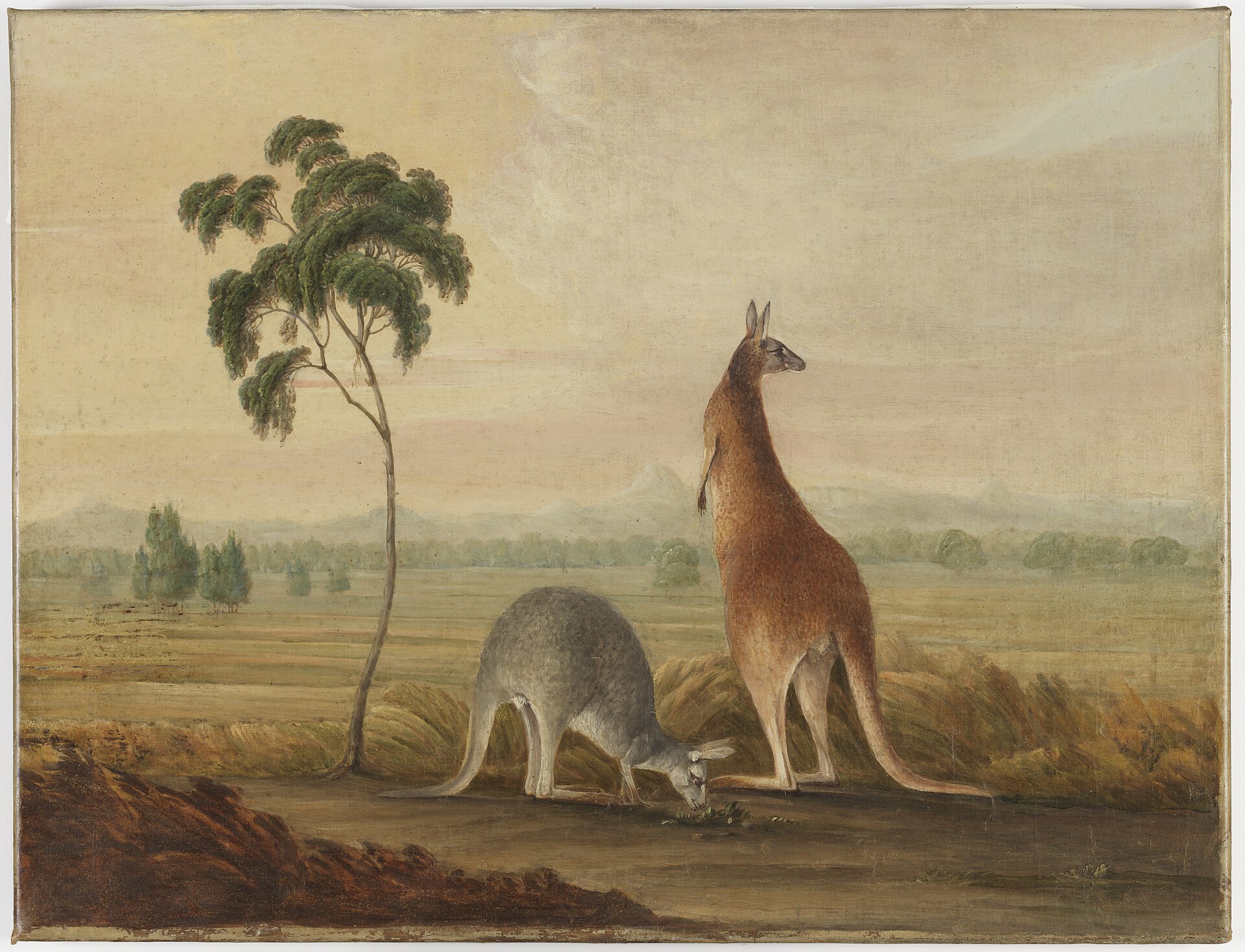
Kangaroos have astonished outsiders ever since they were first encountered, and they were drawn and described with fascination in the early years of European settlement, even as Aboriginal Australians had known and depicted them for tens of thousands of years.
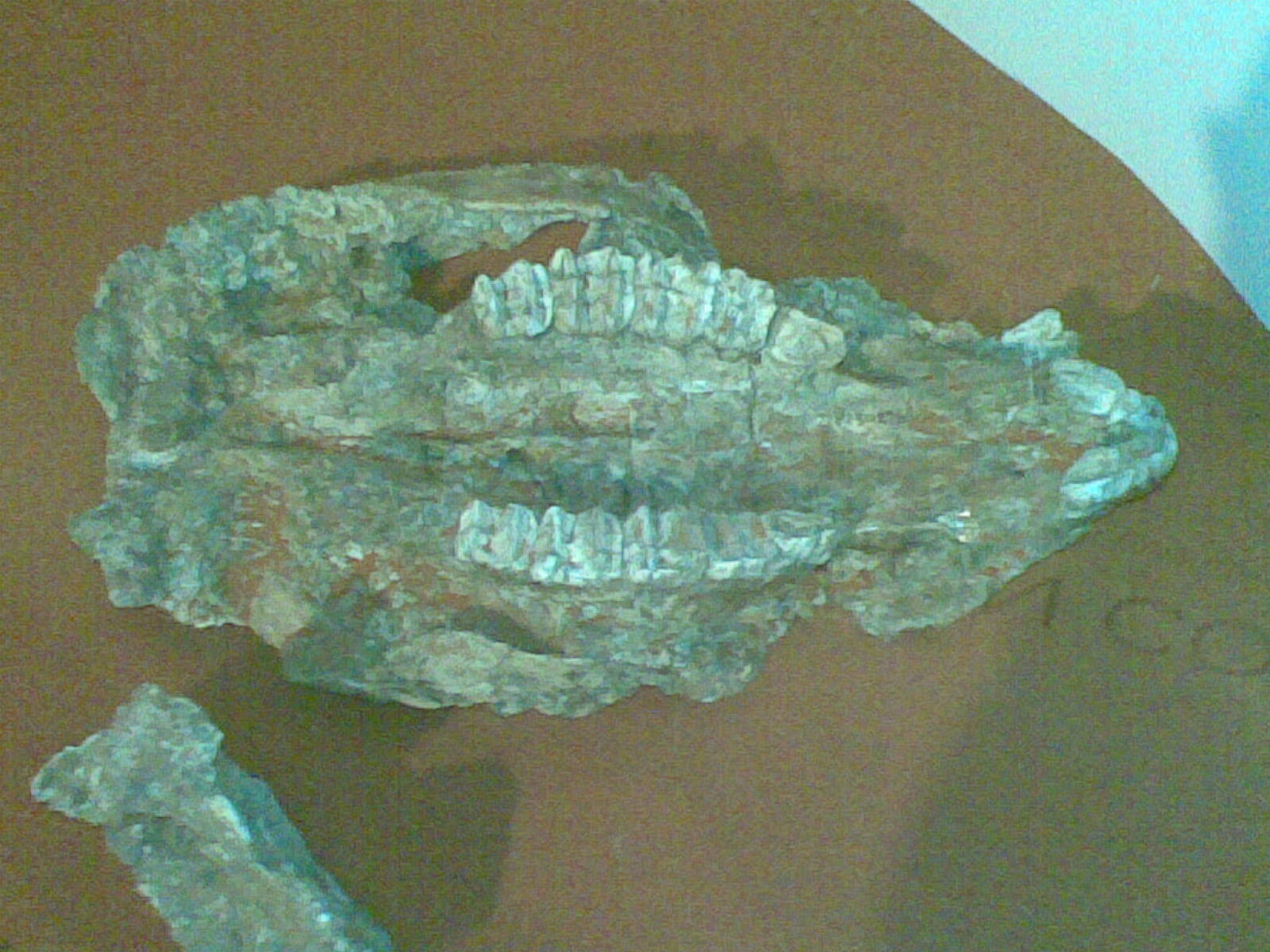
Today's kangaroos are the survivors of a once far stranger family. During the Ice Age, Australia was home to giant short-faced kangaroos such as Sthenurus, heavy browsers that may have walked rather than hopped, which vanished along with much of the continent's giant wildlife.
Kangaroos are deeply woven into Australia's identity, appearing on its coat of arms, its currency, and its sporting emblems, and they are abundant across much of the continent. They also feature prominently in the traditions of Aboriginal Australians, who have lived alongside them for tens of thousands of years, leaving today's kangaroos as the enduring symbol of a unique island continent.
