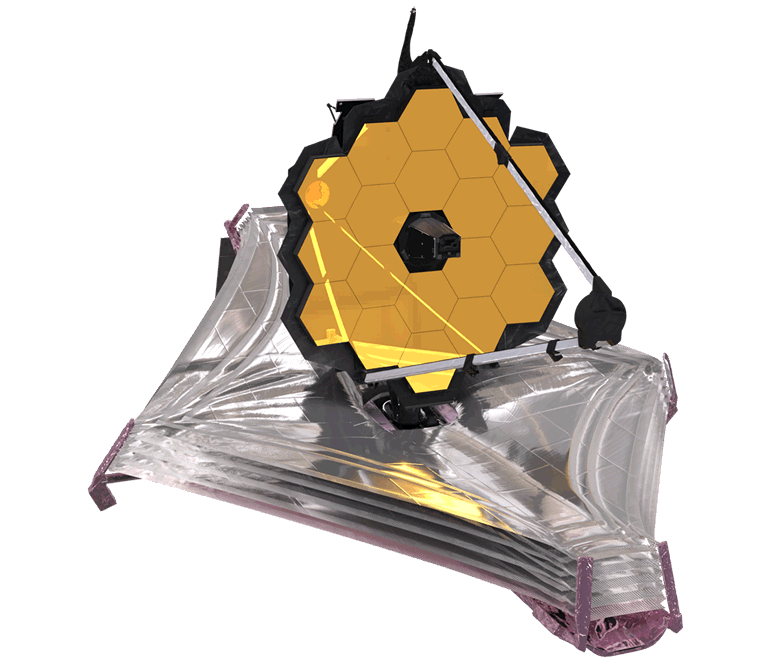
The James Webb Space Telescope is the most powerful space observatory ever built, launched in 2021 as the successor to the Hubble Space Telescope. From a vantage point far beyond the Moon, it is peering deeper into space and further back in time than ever before.
For more than three decades the Hubble Space Telescope transformed astronomy with its stunning images. The James Webb telescope was conceived as its successor, far larger and more powerful, designed to see things even Hubble could not, and to push the boundary of the observable universe still further outward.
Unlike Hubble, which sees mainly visible light, Webb observes chiefly in infrared, the heat radiation just beyond what our eyes can detect. This lets it peer through clouds of cosmic dust that block visible light, and detect the faint, stretched light of the most distant galaxies, whose light has been reddened by the expansion of the universe.
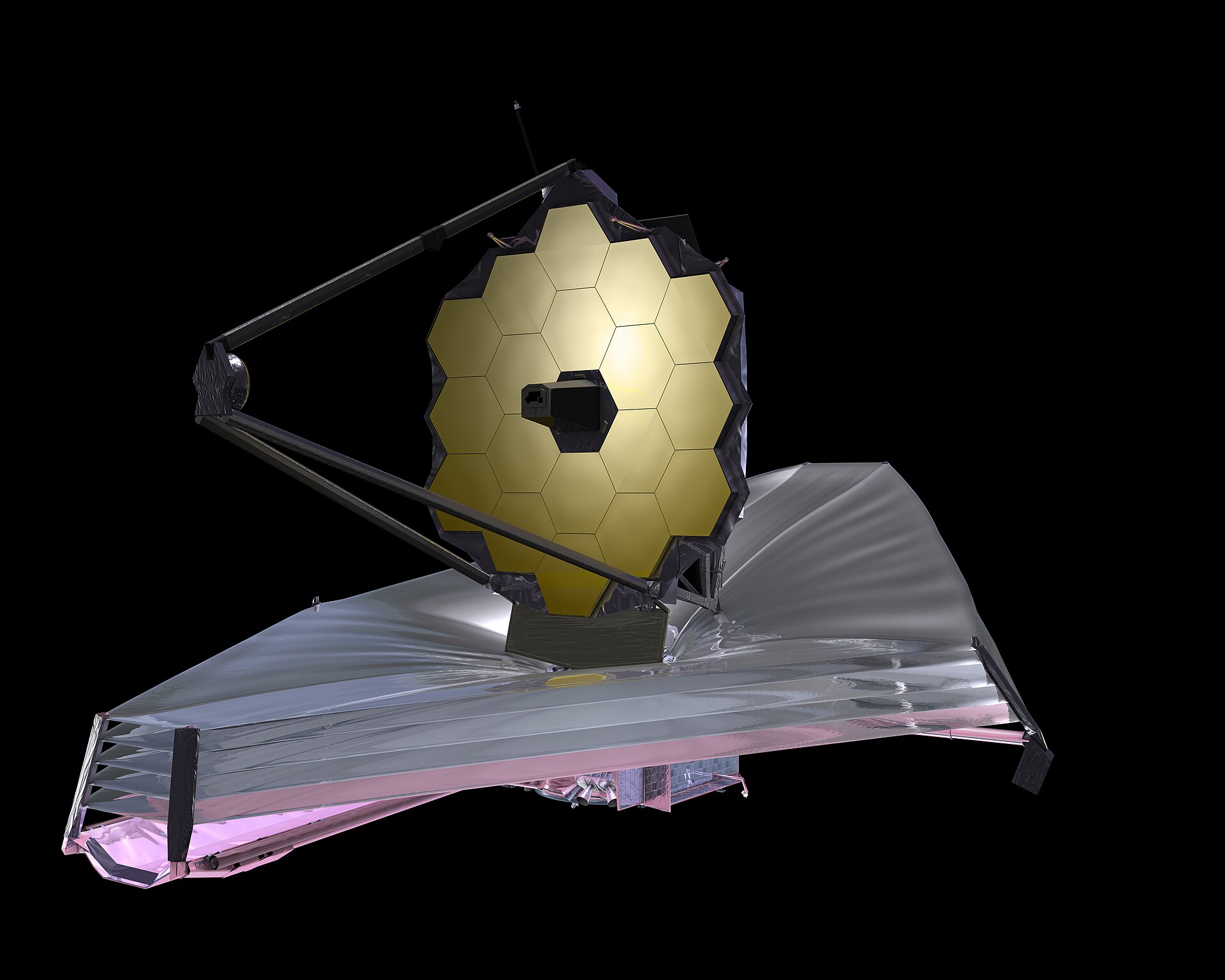
At Webb's heart is a huge mirror, far larger than Hubble's, made of segments coated in gold and folded for launch. The larger the mirror, the more light it gathers and the fainter the objects it can see. Its great size is the key to Webb's extraordinary sensitivity and reach.
To detect faint infrared light, Webb's instruments must be kept extremely cold, shielded from the heat of the Sun, the Earth, and even the telescope itself. A tennis court sized sunshield, made of thin layers, blocks the Sun's warmth, keeping the instruments at temperatures close to absolute zero.
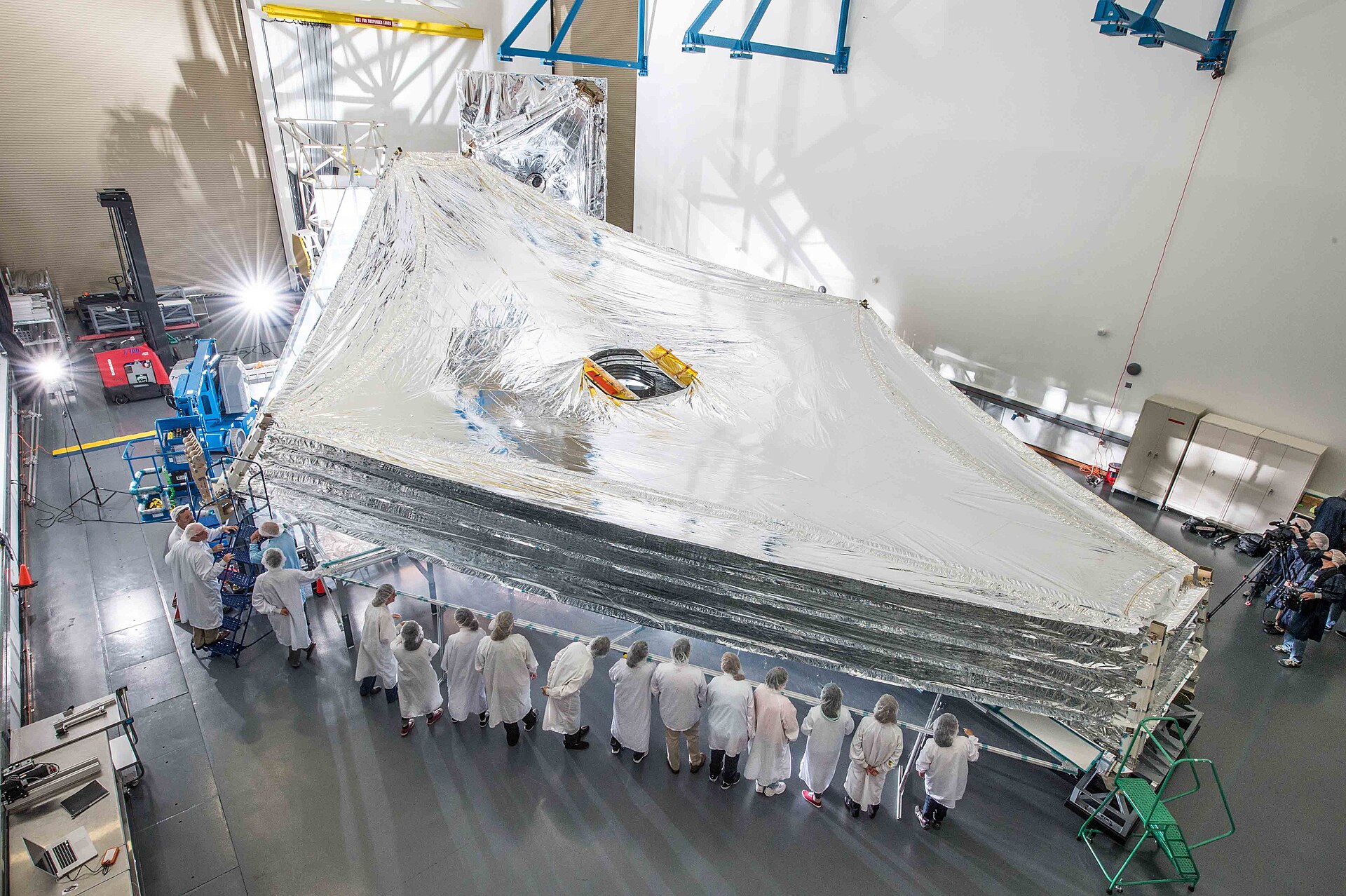
Webb orbits the Sun about 1.5 million kilometres from Earth, far too distant for astronauts to reach and repair. Folded up for launch, it had to unfurl its mirror and giant sunshield through hundreds of precise, nerve wracking steps in space, any of which could have doomed the mission. Remarkably, it all succeeded flawlessly.
The result is one of the most complex and ambitious machines humans have ever flown, the product of decades of work and the collaboration of many nations and thousands of people. Its successful deployment, after years of delays and setbacks, was a triumph of engineering and persistence.
Since beginning its work, Webb has delivered breathtaking images and discoveries: galaxies as they were in the universe's infancy, soon after the Big Bang; stars being born inside glowing clouds of gas; and detailed views of distant worlds. It is helping astronomers understand how the first galaxies formed.
Webb can study the atmospheres of planets orbiting other stars, sampling the light that passes through their air for chemical signs that might hint at life. By probing these distant worlds, and by gazing back toward the dawn of the cosmos, Webb has opened a stunning new window onto the universe.
