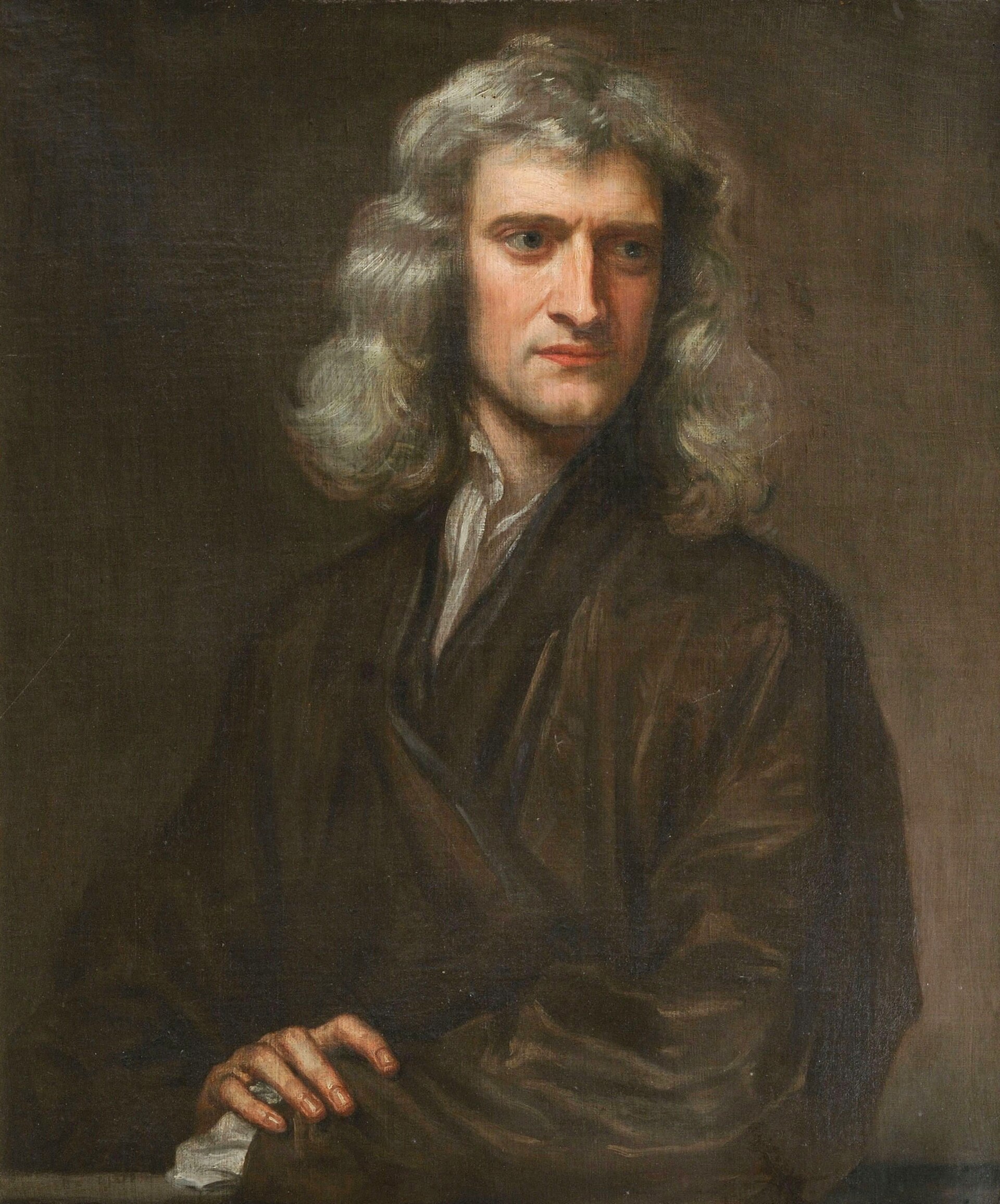
Isaac Newton (1642 to 1727) was an English mathematician and physicist, widely regarded as one of the greatest scientists who ever lived. His discoveries in motion, gravity, and mathematics laid the foundations of modern physics.
Newton was born prematurely on a farm in England and had a difficult childhood, raised partly by his grandmother after his mother remarried. A quiet, solitary, and intense boy, he showed early skill at building models and machines, hinting at the extraordinary mind that would later transform science.
When plague closed his university, Newton returned home for nearly two years, and in this period of solitude he made some of his greatest breakthroughs, in mathematics, optics, and gravity. He later looked back on these "plague years" as the most creative and productive of his entire life.
In his masterwork, the Principia of 1687, Newton set out his three laws of motion, the rules that govern how objects move under the action of forces. These few principles, simple to state, accurately describe the motion of everything from a thrown ball to a planet, and remain the foundation of physics and engineering.
Newton's deepest insight was universal gravitation: the realization that the same force that makes an apple fall also holds the Moon in its orbit and governs the planets. With a single law he unified the heavens and the Earth, showing that one set of rules applies throughout the cosmos.
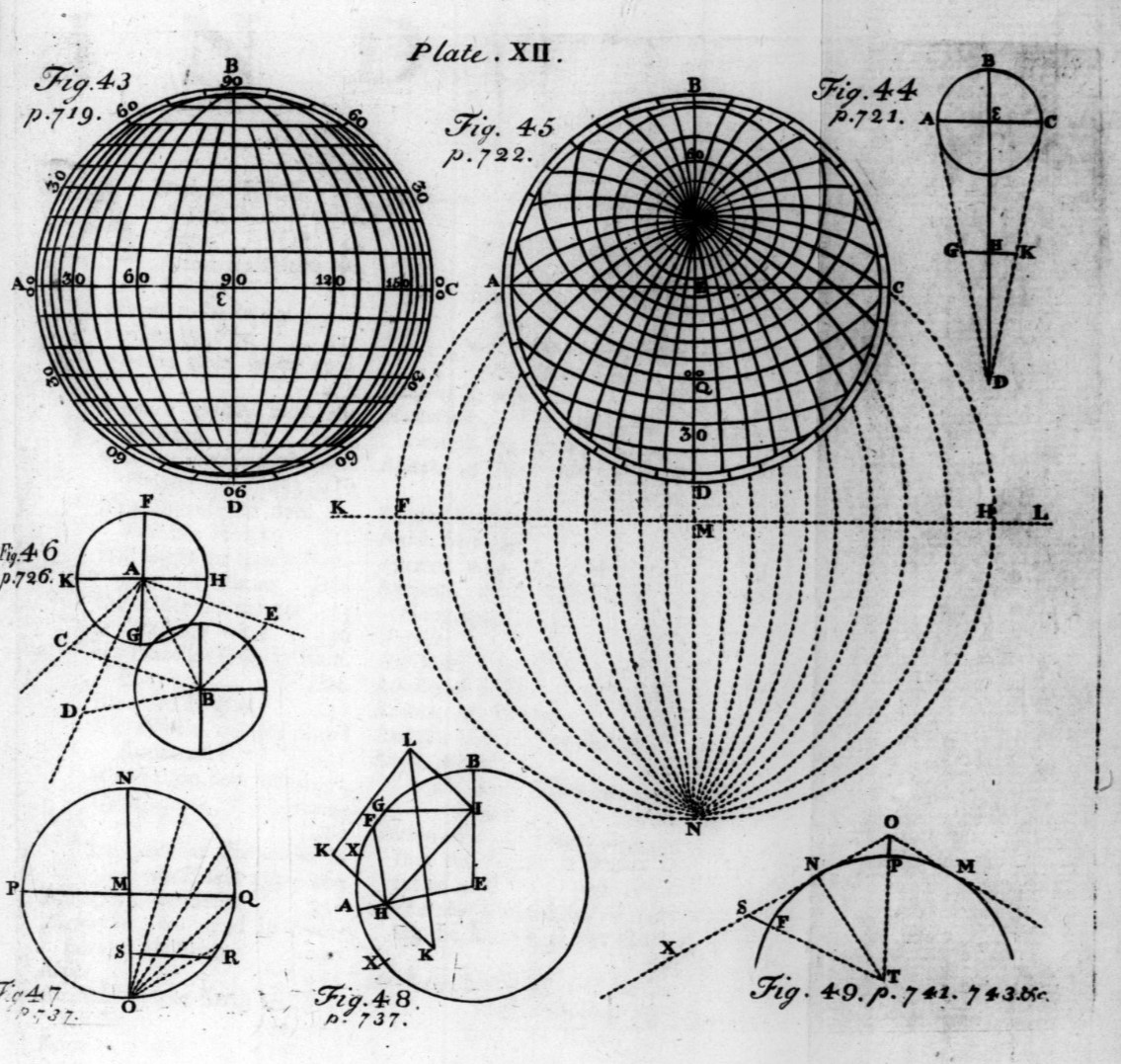
To work out his physics, Newton invented calculus, a powerful new branch of mathematics for handling change and motion, around the same time as the German mathematician Leibniz did independently. A bitter dispute over priority followed, but calculus became essential to science ever after.
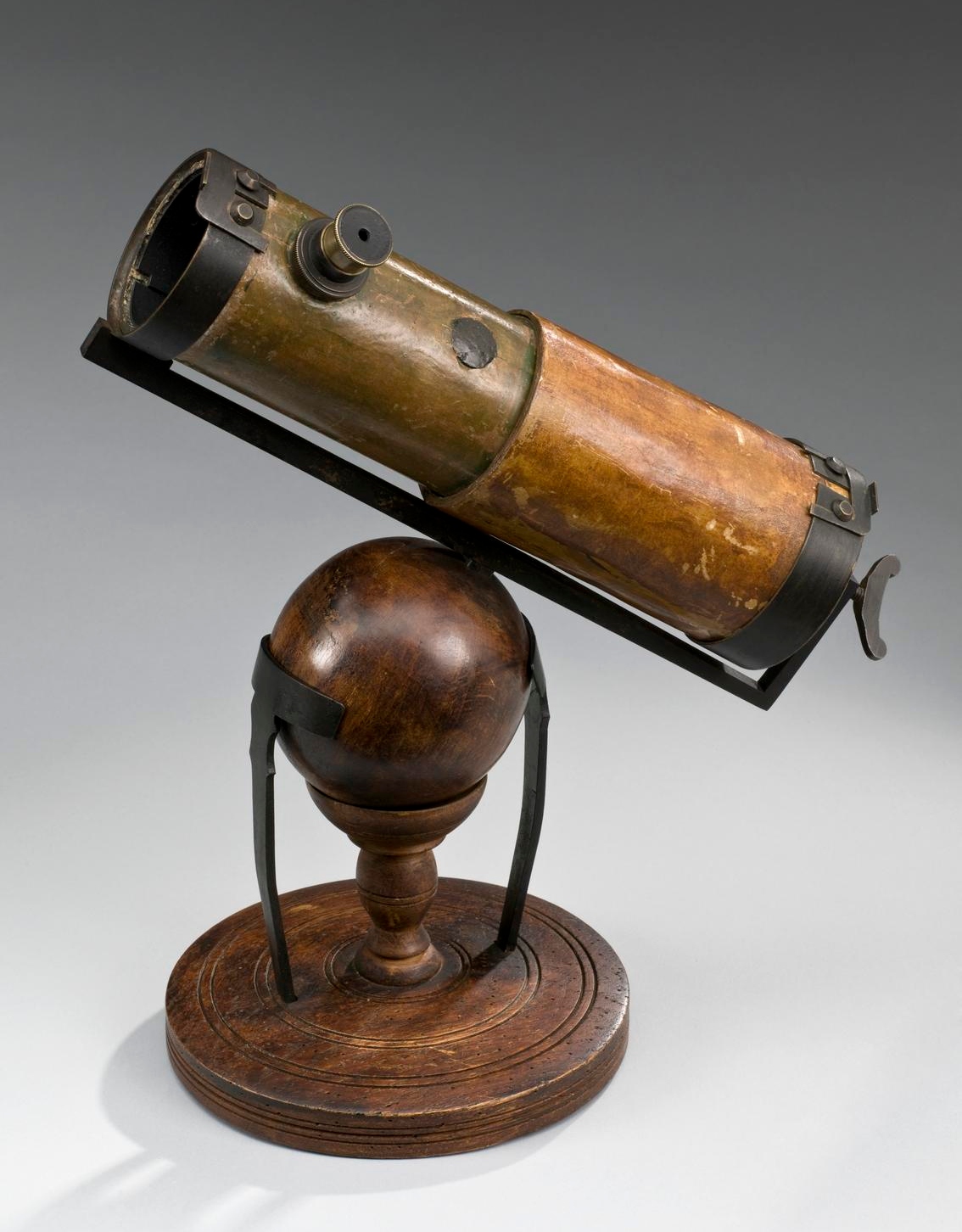
Newton also transformed the study of light. Passing sunlight through a prism, he showed that white light is made of all the colours, which the prism merely separates. He built the first practical reflecting telescope, using a mirror, a design that underlies most great telescopes today.
Newton was a man of strange contradictions. Alongside his science he spent years on alchemy and on unorthodox religious studies, pursuits he took as seriously as his physics. Secretive and prickly, he guarded his work and quarrelled fiercely with rivals, yet his genius was beyond question.
In later life Newton became a powerful public figure, serving as Master of the Royal Mint, where he pursued counterfeiters relentlessly, and as President of the Royal Society. He was knighted, the first scientist to be so honoured, and was celebrated as a national treasure.
Newton's physics reigned essentially unchallenged for over two centuries, until Einstein refined it in the realm of the very fast and very massive. Even today, his laws describe the everyday world with such accuracy that they remain the foundation of engineering and the starting point of physics education.
