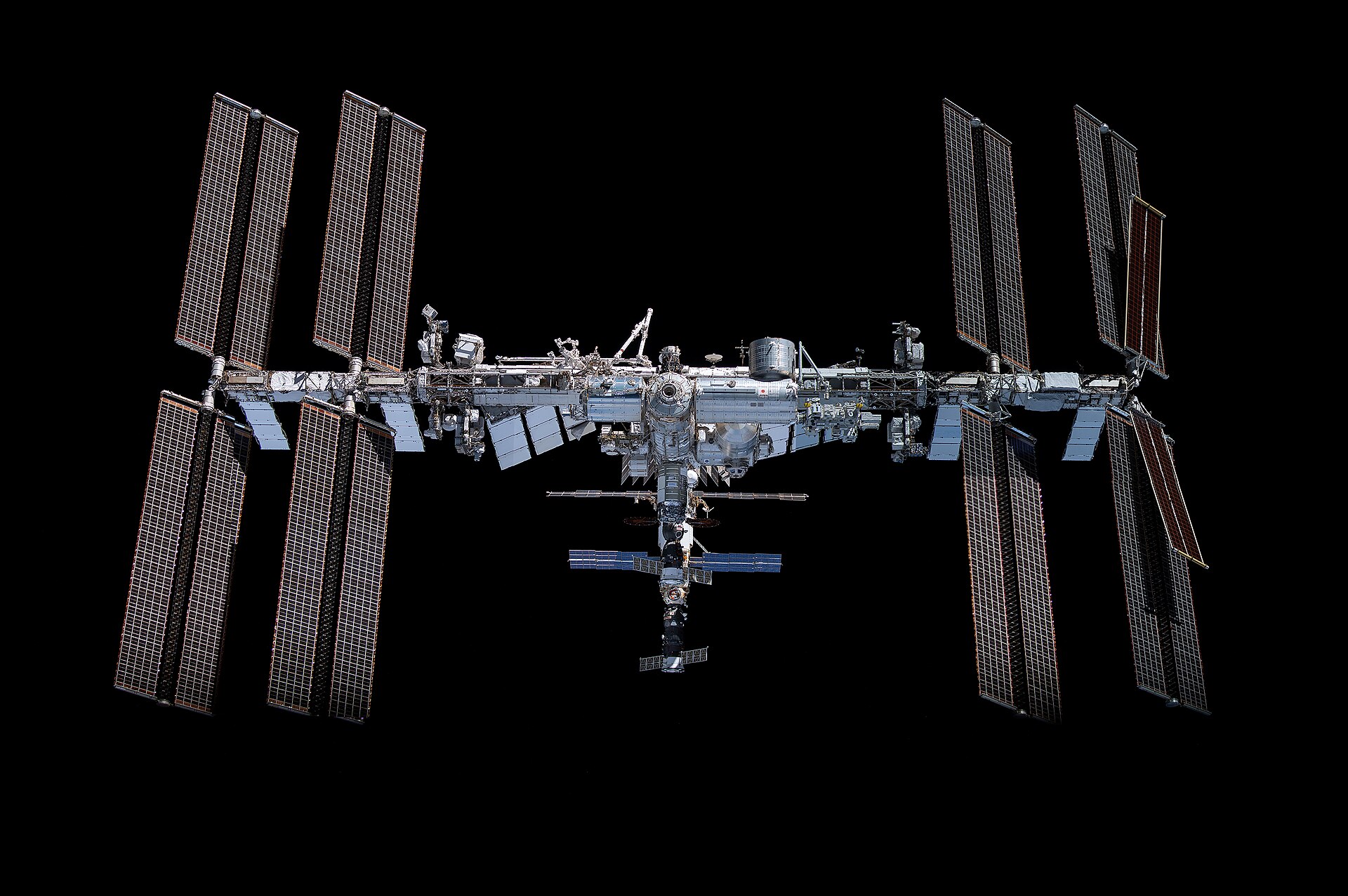
The International Space Station, or ISS, is a large spacecraft in orbit around the Earth that serves as a home and laboratory for astronauts. The largest structure humans have ever placed in space, it is also one of the most ambitious peacetime engineering projects ever undertaken, built and run by nations working together.
The ISS circles the Earth at an altitude of around 400 kilometres, travelling at roughly 28,000 kilometres per hour and completing an orbit about every ninety minutes, so its crew sees sixteen sunrises and sunsets a day. Roughly the size of a football field including its huge solar arrays, it is a cluster of pressurised modules where astronauts live and work, connected to trusses, panels, and docking ports.
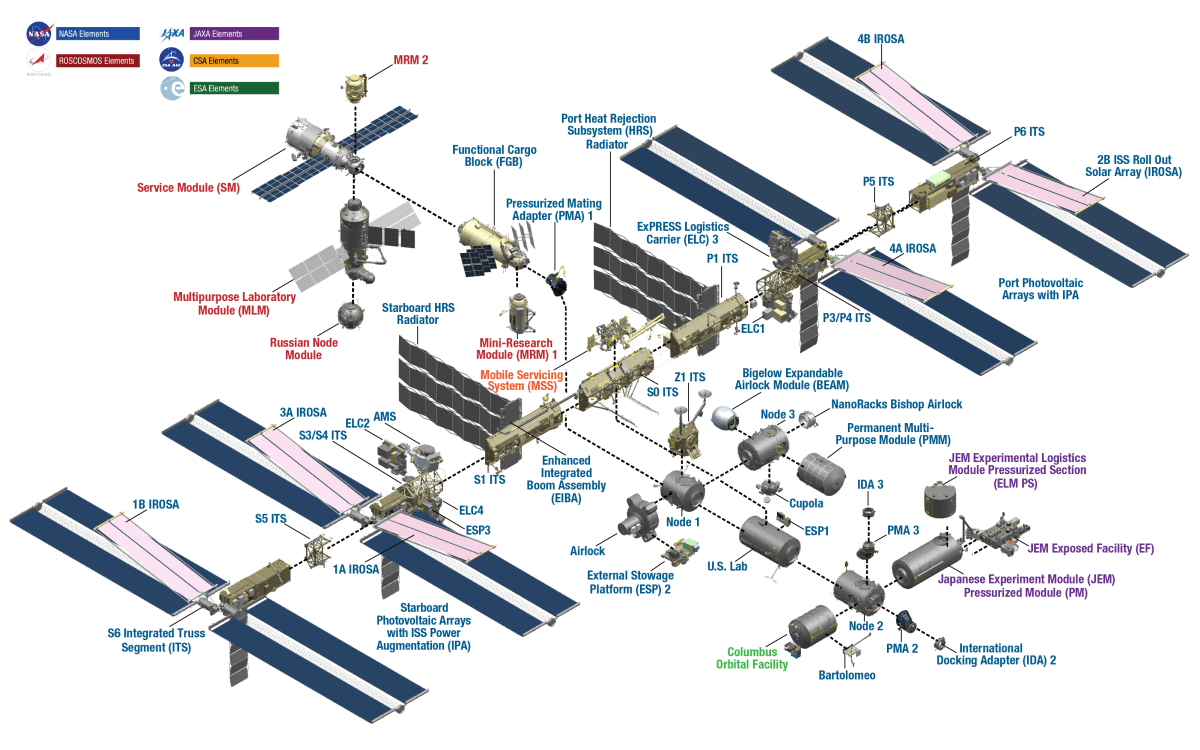
The station has been continuously occupied since the year 2000, making it one of the longest-running crewed outposts in the history of spaceflight. For more than two decades there has never been a moment when no human was living in space, as crews rotate every few months, arriving and departing aboard capsules that dock with the station.
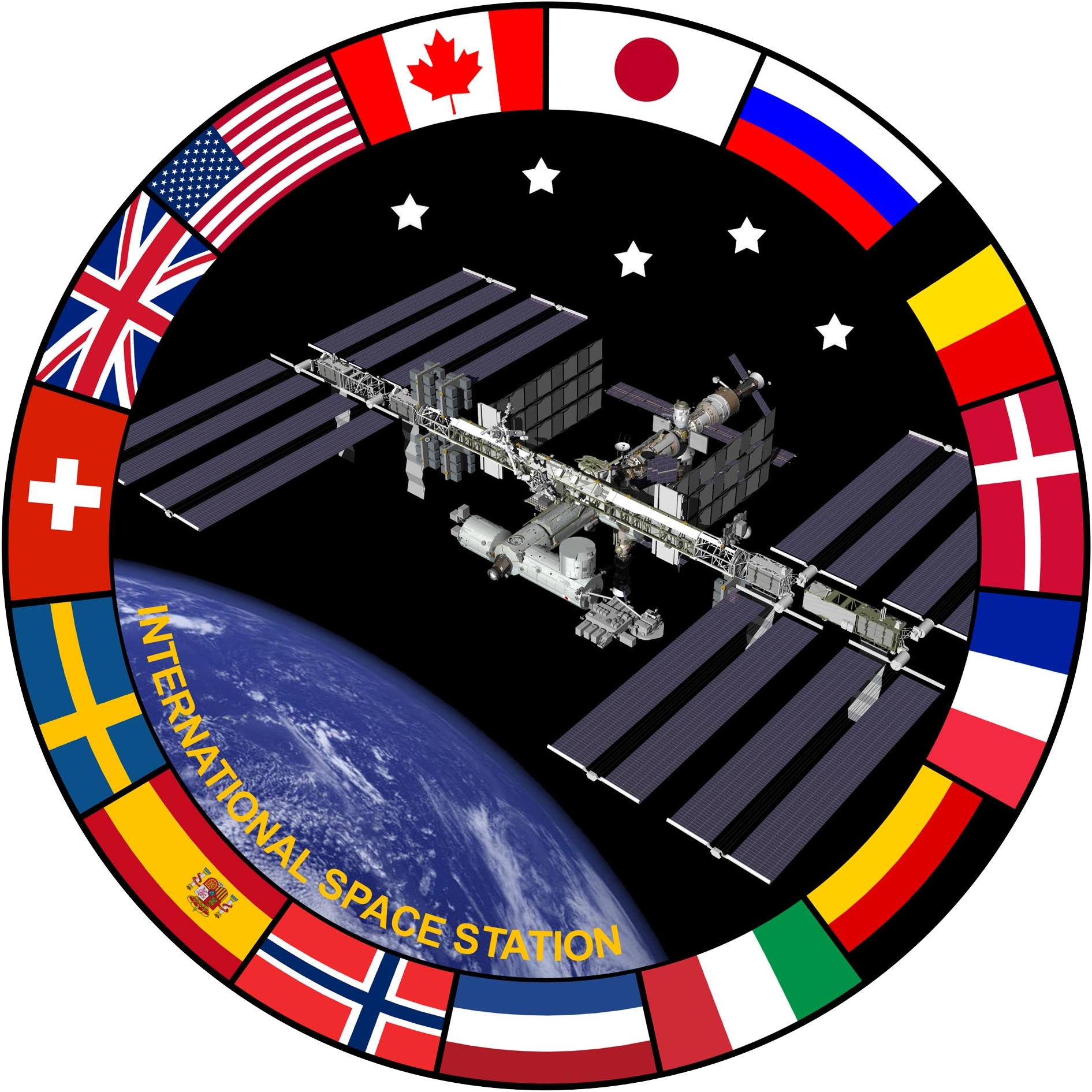
The station is a partnership among the space agencies of the United States, Russia, Europe, Japan, and Canada, and its modules were launched separately and assembled in orbit over many years. Crews from many countries live aboard together, and the project has become a powerful example of international cooperation.
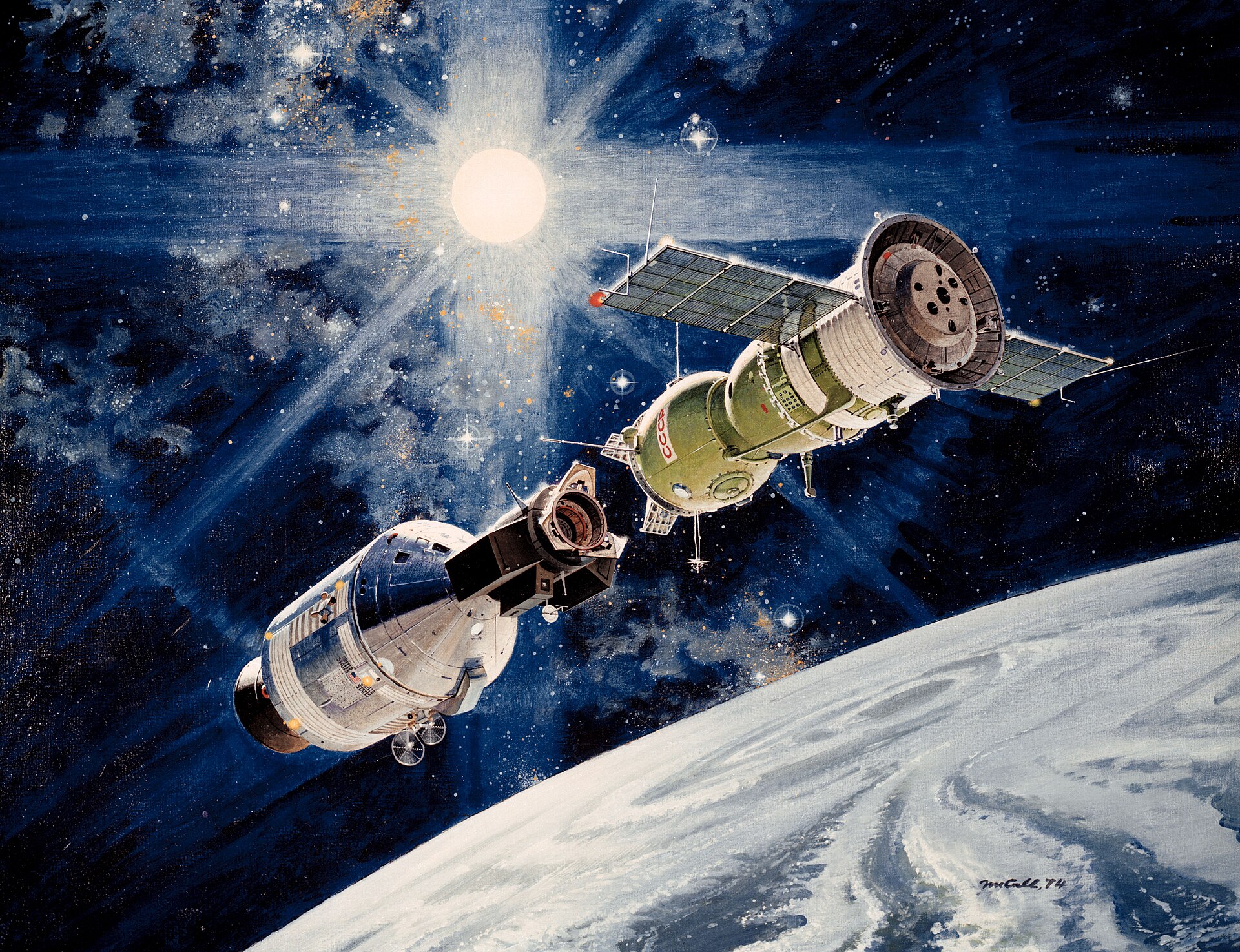
That spirit of cooperation in space has deep roots. As far back as the 1970s, American and Soviet spacecraft docked together in orbit in the Apollo-Soyuz mission, a first handshake between rival powers that helped pave the way for the partnership the ISS represents, which has continued even through periods of tension between the partner nations on the ground.
Aboard the ISS everything floats in continuous free fall, the condition we call weightlessness. Astronauts must strap themselves down to sleep, exercise for hours each day to keep their muscles and bones from wasting away, and adapt to a world where there is no up or down.
The station is also a unique scientific laboratory: in the absence of gravity's usual effects, researchers study everything from how flames burn and fluids behave to how the human body copes with long spaceflight, knowledge essential for future journeys to the Moon and Mars. Experiments run aboard the ISS have advanced medicine, materials science, and our understanding of life in space.
The ISS is bright enough to be seen from the ground with the naked eye, a fast-moving point of light crossing the night sky, and people around the world track it as it passes overhead. After more than two decades of continuous operation, the station is nearing the end of its planned life, but it has already transformed human spaceflight, proving that people can live and work in space for the long term and laying the groundwork for the next era of exploration.
