The Hubble tension is a genuine and growing puzzle in cosmology: two careful ways of measuring how fast the universe is expanding give answers that stubbornly disagree. Whether this signals a measurement error or new physics is hotly contested.
The universe is expanding, with galaxies on average moving apart. The rate of this expansion is captured by a single number, the Hubble constant, which tells us how fast the cosmos is growing. Measuring it accurately is one of the central tasks of cosmology, and it underpins our understanding of the universe's age and history.
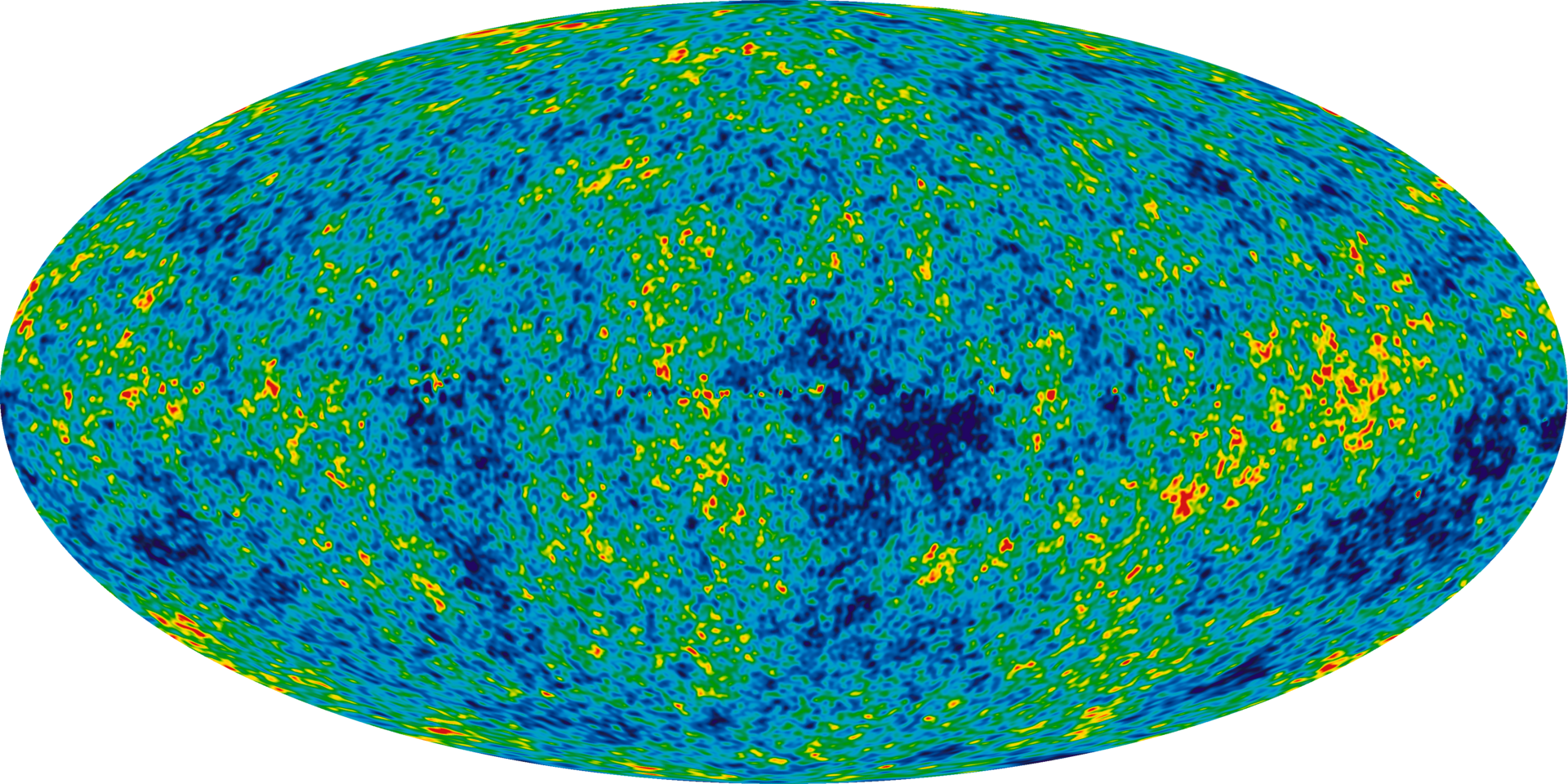
Astronomers measure the expansion rate in two main ways. One looks at the early universe, using the patterns in the cosmic microwave background, the afterglow of the Big Bang, to predict how fast the universe should be expanding today. The other measures it directly in the nearby universe, using stars and exploding stars as distance markers.
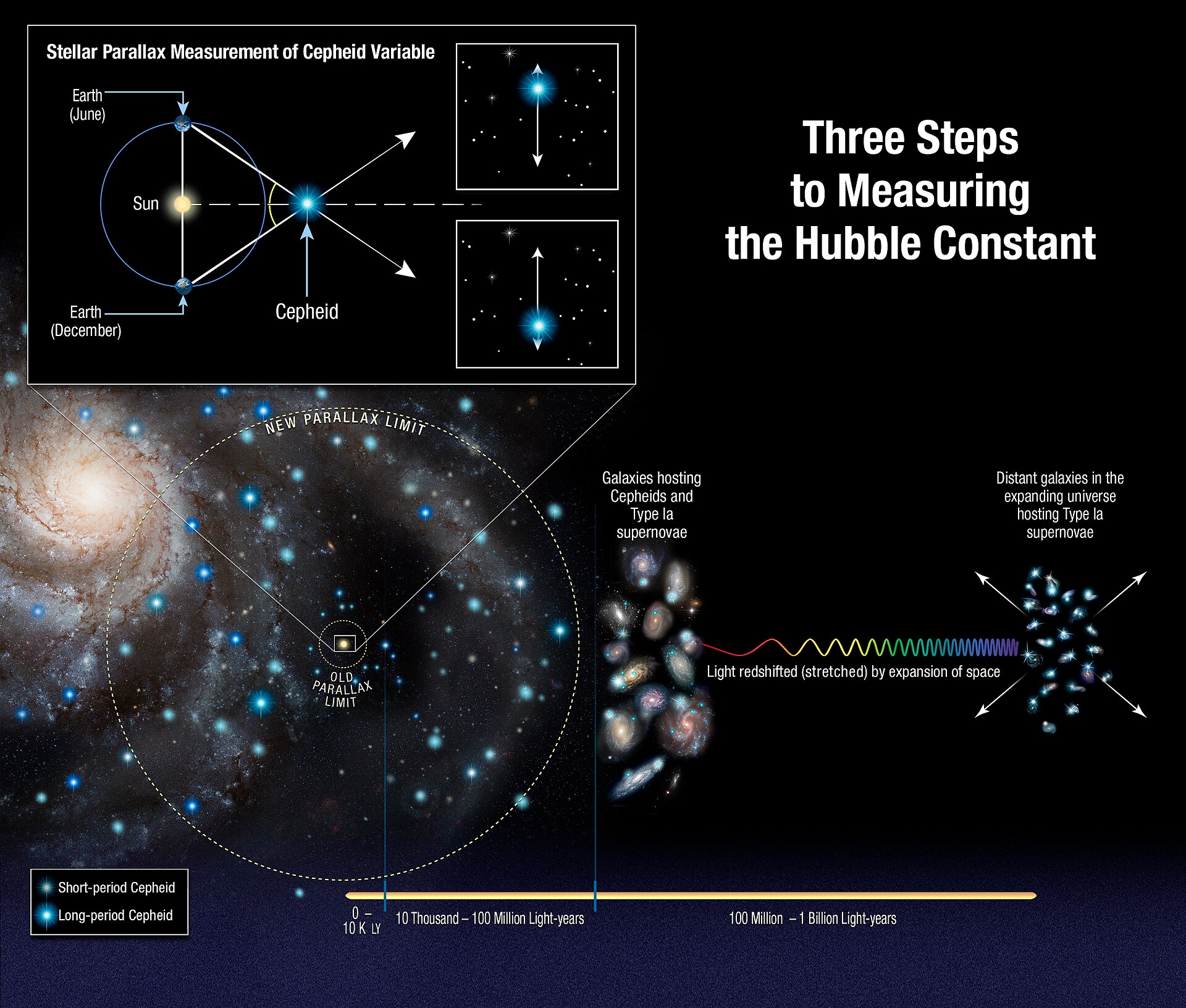
The local method relies on a "cosmic distance ladder," a chain of overlapping techniques for measuring ever greater distances, each calibrated against the one below it. Certain stars of known brightness, and a particular kind of supernova, serve as the rungs, allowing astronomers to gauge how fast distant galaxies are receding.
The trouble is that the two methods give different answers, and the gap has not gone away as the measurements have improved. The local method consistently finds a faster expansion than the early universe method predicts. The two numbers should match, but they do not, and the mismatch refuses to disappear.
For a long time the difference could be dismissed as ordinary uncertainty. But as both methods have grown more precise, the gap has remained, and is now large enough that it is unlikely to be a mere statistical fluke. This is what turns a disagreement into a genuine "tension," a real and pressing problem.
The more exciting possibility is that our standard model of the universe is incomplete, and new physics is needed. Perhaps dark energy behaves differently than assumed, or some exotic ingredient was present in the early universe. If so, the Hubble tension could be the first crack pointing toward a deeper understanding of the cosmos.
Scientists are working hard to close the gap, refining both methods and searching for errors and new ideas alike. Whether the tension is a sign of a mistake or a clue to new physics is genuinely unknown, which is what makes it one of the most actively debated and exciting problems in cosmology today.
