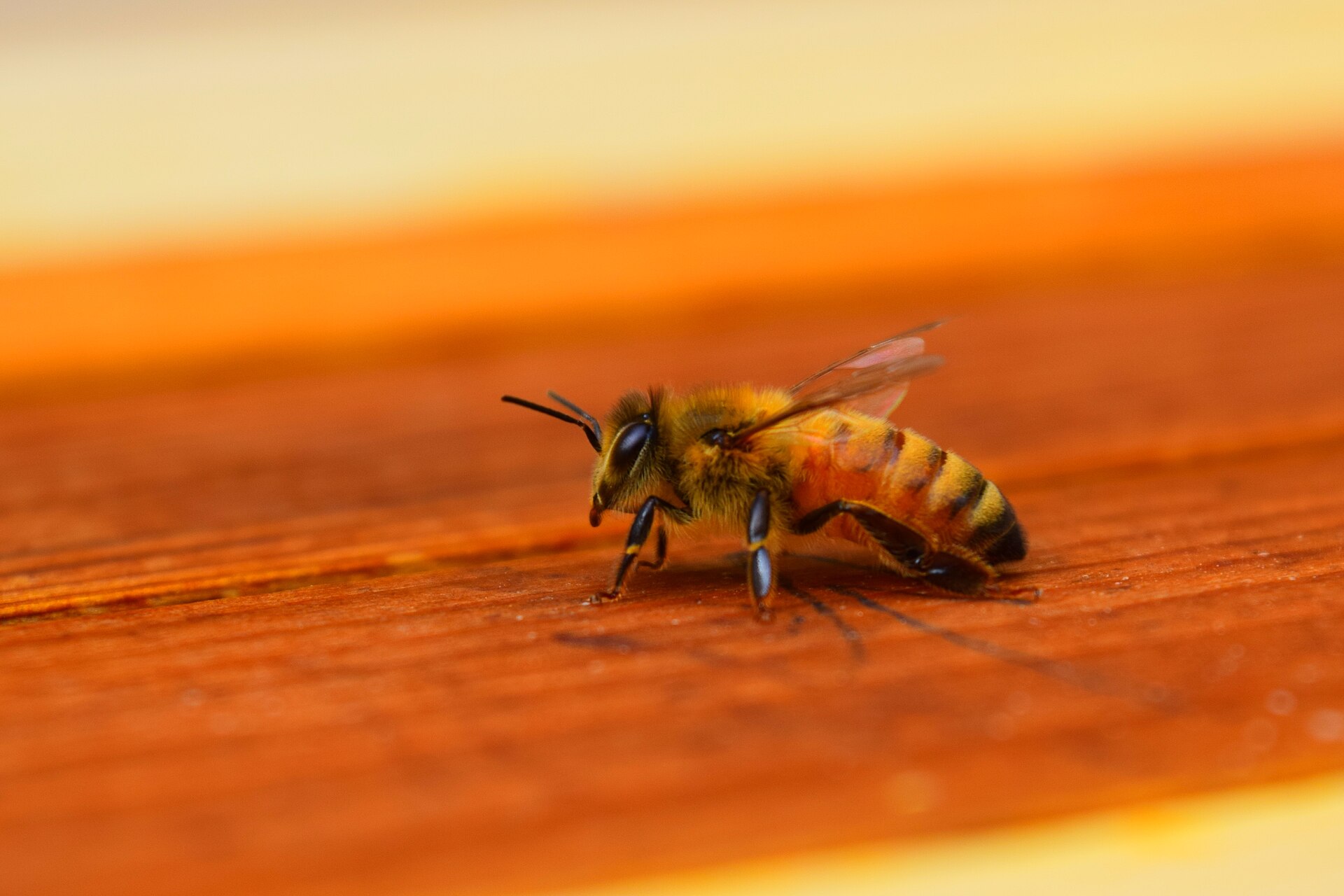
The honey bee is a flying insect famous for two things: producing honey, and pollinating a vast share of the plants that humans and ecosystems depend on. Living in highly organised colonies of tens of thousands, honey bees are among the most studied and most economically important insects on Earth.
A honey bee colony functions almost like a single organism. It is built around one queen, the only fully fertile female, who can lay over a thousand eggs a day. The great majority of the colony are sterile female workers, who progress through a sequence of jobs as they age, cleaning, nursing larvae, building wax comb, guarding the entrance, and finally foraging. A few hundred male drones exist only to mate with queens.
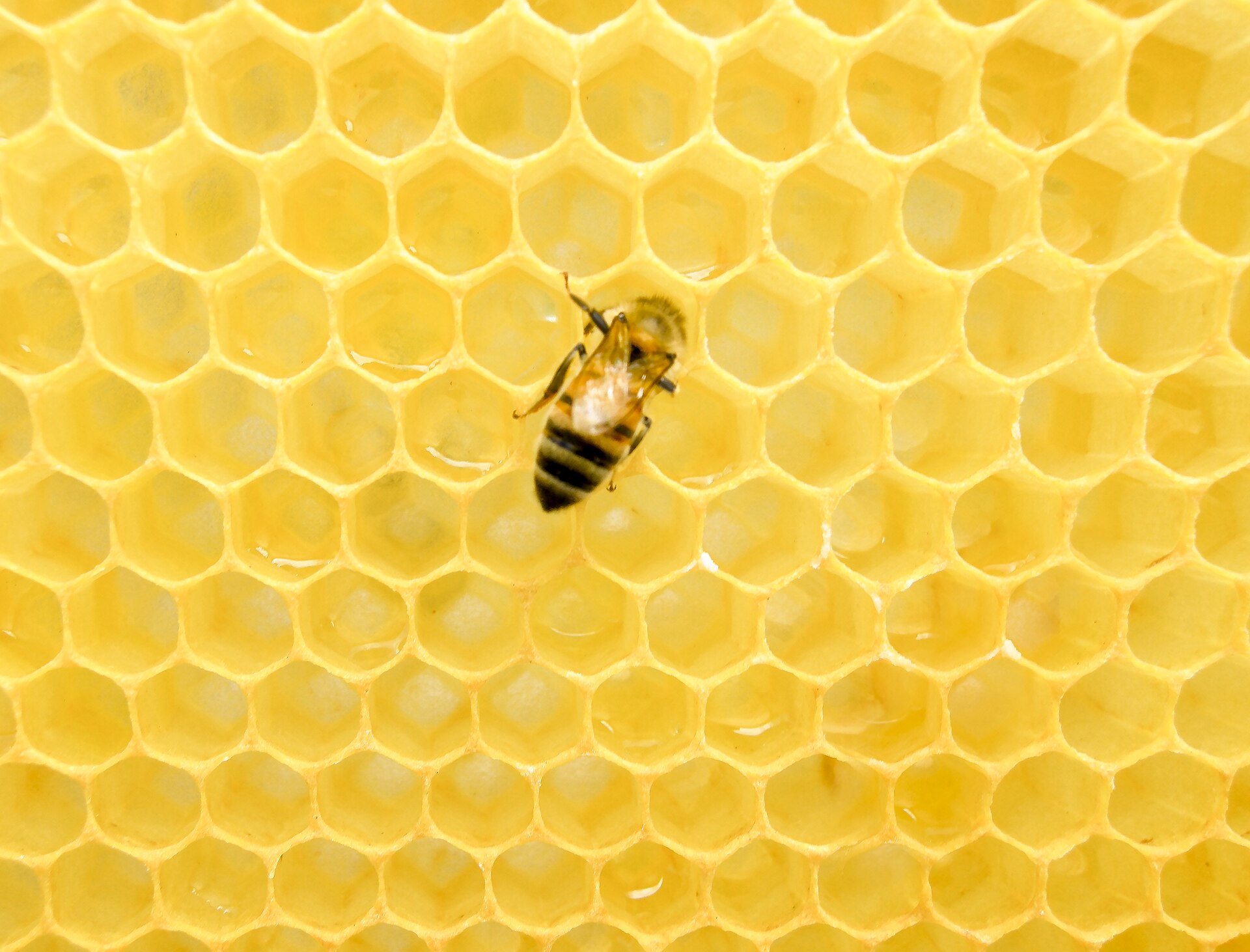
Honey bees communicate the location of food with one of the most remarkable behaviours in the animal kingdom: the "waggle dance," in which a returning forager dances in a figure-eight whose angle and duration encode the direction and distance of a flower patch. Through this dance a single scout can send hundreds of nestmates to a meadow it has found, a form of symbolic communication rare outside humans.
Honey is made from nectar, which workers gather from flowers, concentrate by evaporation, and seal in the comb. It serves as a stable, long-lasting food supply that sustains the colony through winter when no flowers bloom. A strong hive can store many kilograms of it, far more than the bees themselves need, which is what makes beekeeping possible.
The honey bee's greatest importance lies not in honey but in pollination. As bees move from flower to flower collecting nectar, they carry pollen with them, fertilising the plants and enabling them to produce fruit and seed. A large fraction of the crops people eat, from almonds and apples to melons and many vegetables, depend on insect pollination, and managed colonies are trucked across whole countries each year to pollinate them.
Bees have been doing this work for a very long time. Fossil bees preserved in amber and rock show that bees and flowering plants have evolved together for tens of millions of years, each shaping the other. The flowers' colours, scents, and nectar are, in a real sense, advertisements aimed at insects like the honey bee.

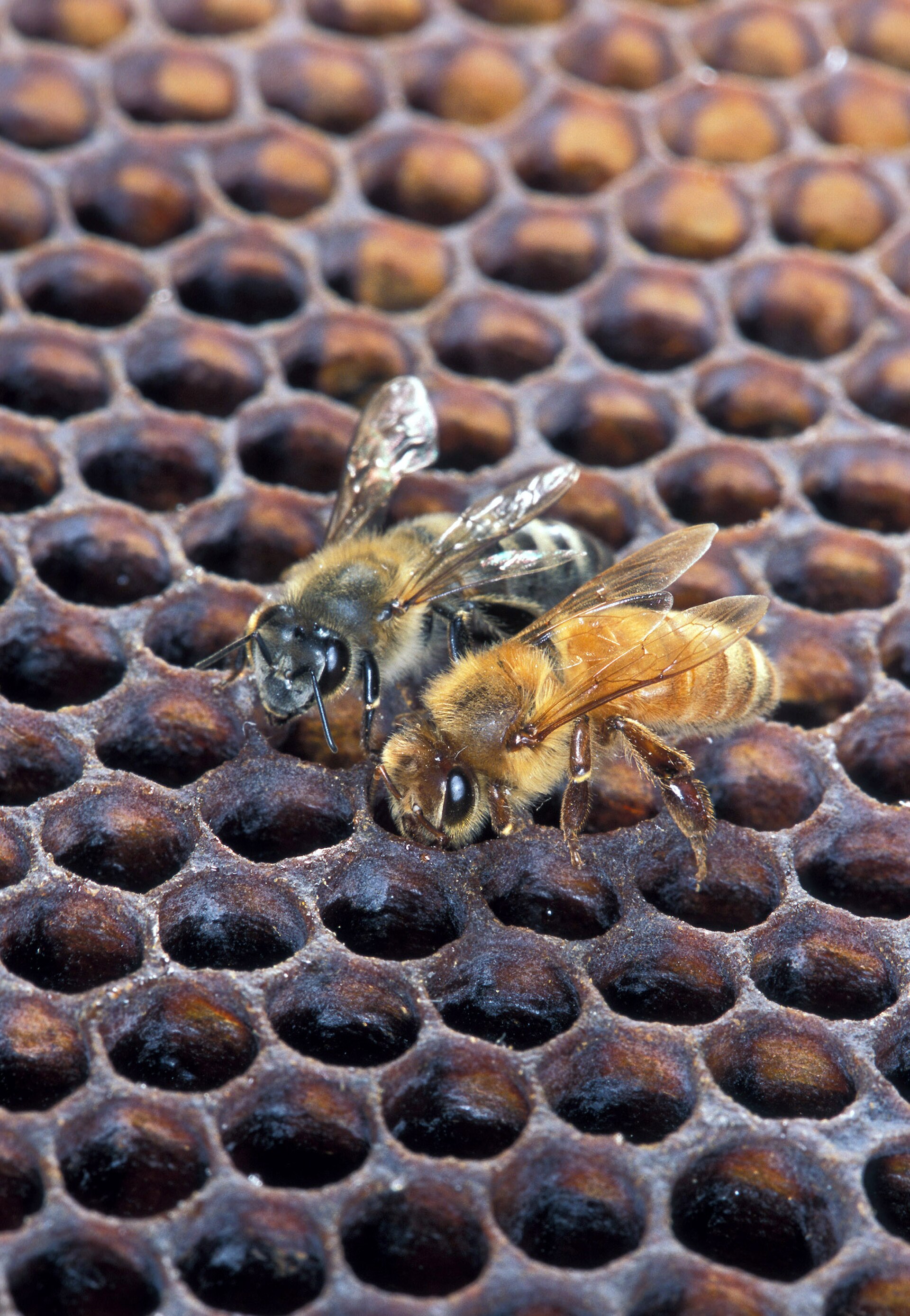
The familiar western honey bee exists in many regional varieties, and beekeepers have long bred them for gentleness and productivity. Some forms, such as the so-called "Africanized" bees that spread through the Americas, are far more defensive, a reminder that even within one species behaviour can vary widely.
In recent decades beekeepers have reported alarming losses, and both managed and wild bees face mounting pressures: parasites such as the varroa mite, diseases, the loss of wildflowers and habitat, and exposure to certain pesticides. Because so much of agriculture leans on pollination, the health of bees has become a matter of food security, and efforts to protect them have spread well beyond the world of beekeeping.
