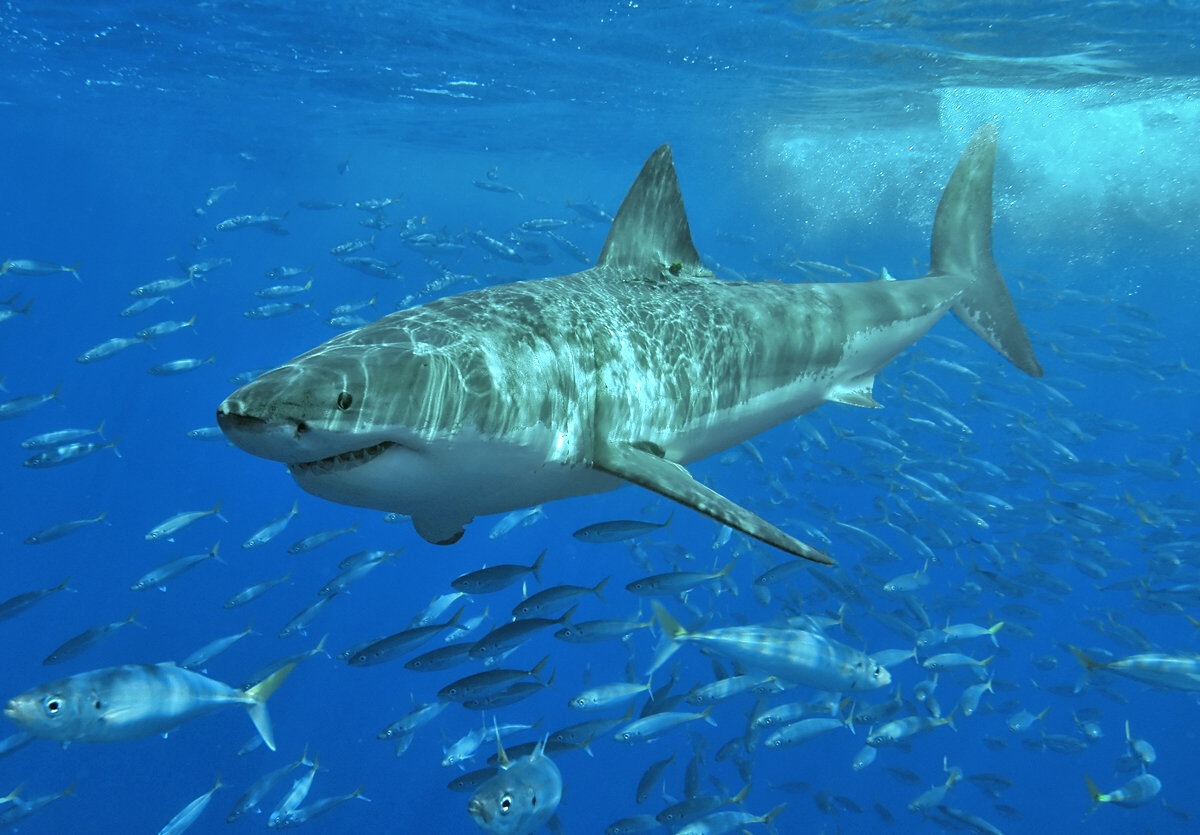
The great white shark (Carcharodon carcharias) is the largest predatory fish in the ocean and one of the most formidable hunters on Earth. Found in cool, coastal waters around the world, it has loomed large in human imagination, feared, mythologised, and, in reality, far more vulnerable than its fearsome reputation suggests.
Great whites can grow to around six metres long and weigh over two tonnes, though most are smaller. Their bodies are perfectly streamlined torpedoes of muscle, countershaded grey above and white below so that they blend into the dark sea floor when seen from above and into the bright surface when seen from below.
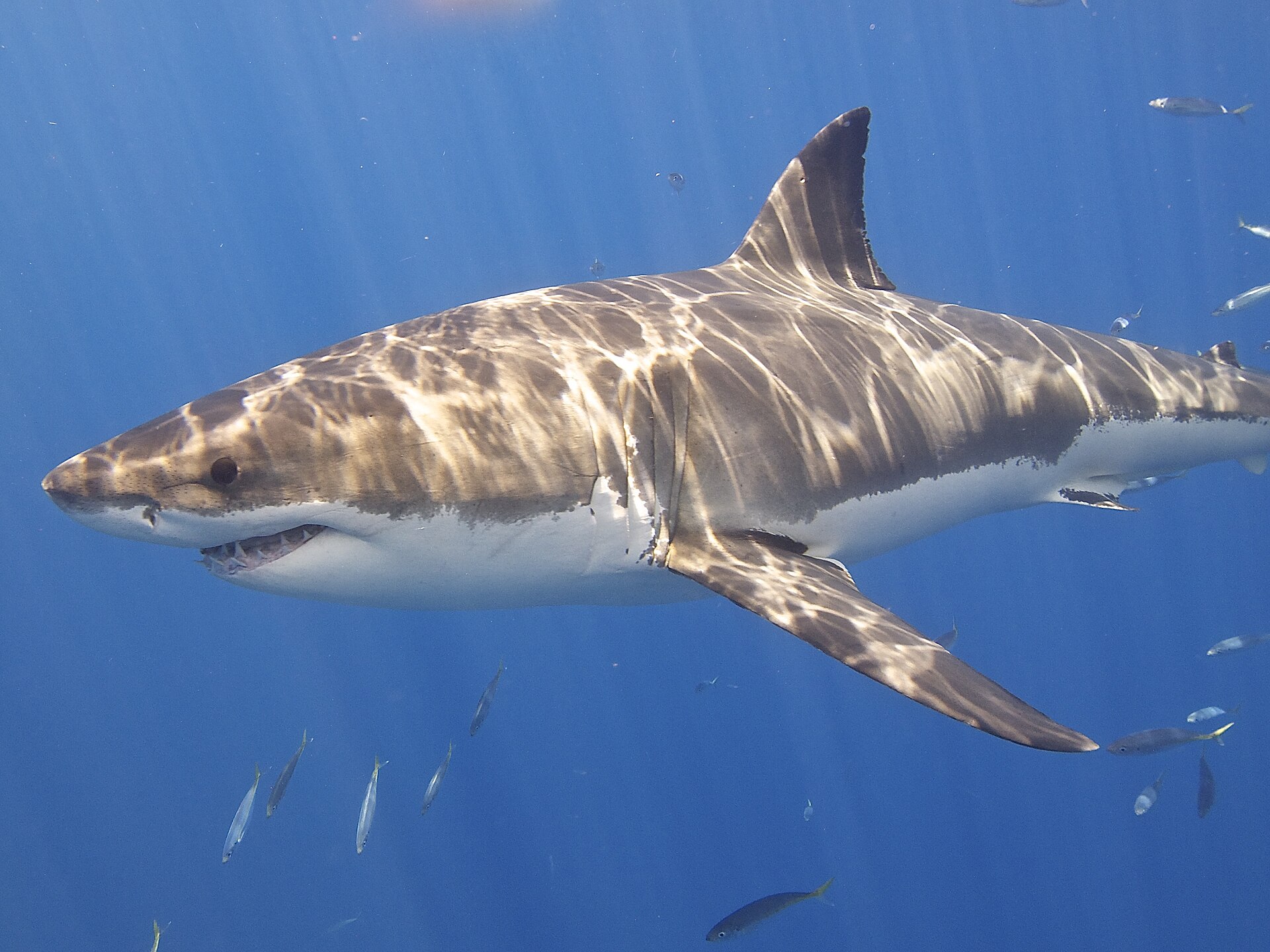
Great whites have rows of serrated, triangular teeth that are continually replaced through life, with new teeth rotating forward to take the place of those that break or fall out. Unlike most fish they are also partly warm-blooded, keeping their muscles, stomach, and brain warmer than the surrounding water, which gives them bursts of power and speed in cold seas.
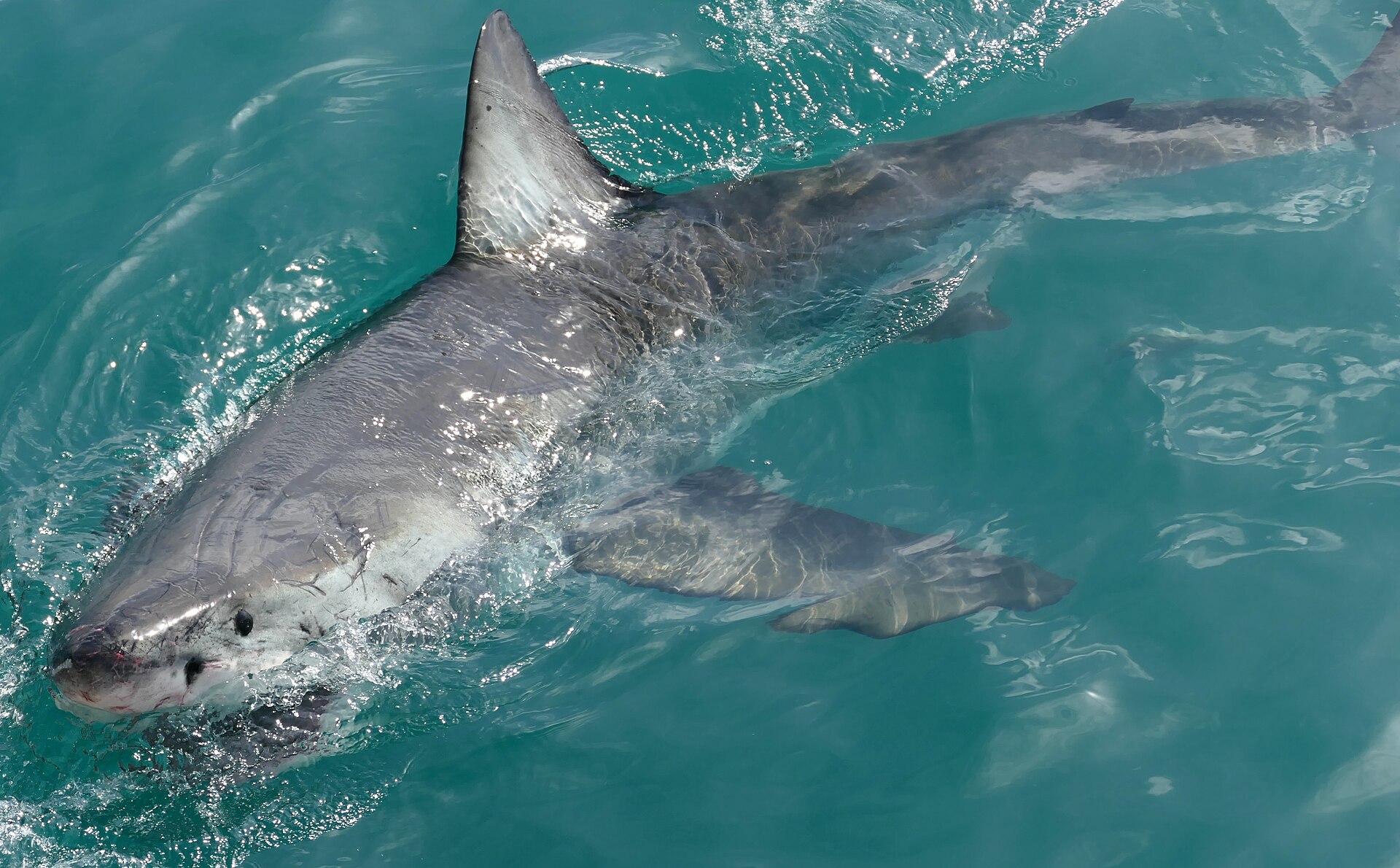
Few animals are so finely tuned to detect prey. Great whites have an acute sense of smell, sharp eyesight, and special organs called the ampullae of Lorenzini that sense the faint electrical fields given off by living animals. They hunt seals, sea lions, fish, and other sharks, often attacking from below in a single explosive strike, sometimes launching their whole body clear of the water, a behaviour known as breaching.
Sharks are an ancient lineage that predates the dinosaurs by hundreds of millions of years. The great white's exact ancestry is debated, but many scientists trace it to a line of broad-toothed mako-like sharks. Its design has been refined over millions of years into one of the most effective predatory forms the oceans have produced.
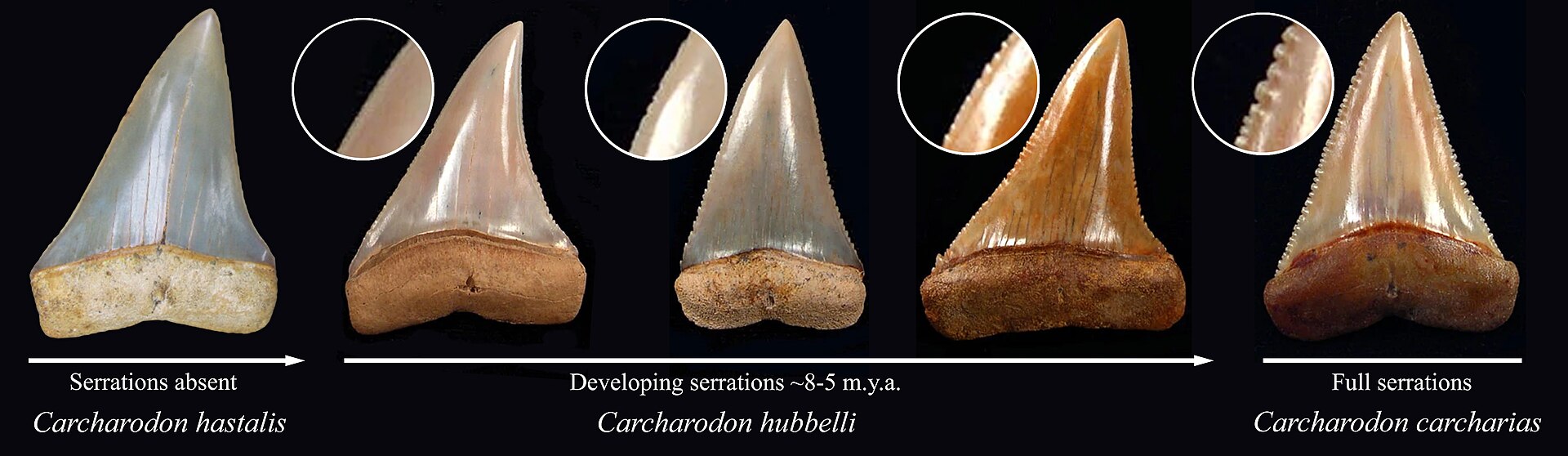
The great white is often confused with Megalodon, the gigantic prehistoric shark that grew perhaps three times its length and died out millions of years ago. Despite the resemblance, most researchers now think the two are not closely related, and the great white is better understood as the descendant of a separate, mako-like lineage rather than a shrunken Megalodon.
Far more dangerous is the threat humans pose to them. Great whites are slow to mature and produce few young, which makes them highly vulnerable to overfishing, accidental capture, and the shark-fin trade. They are now classified as a vulnerable species and are legally protected in many countries, where they are increasingly valued alive, as apex predators that keep marine ecosystems in balance, and as a major draw for ecotourism.
