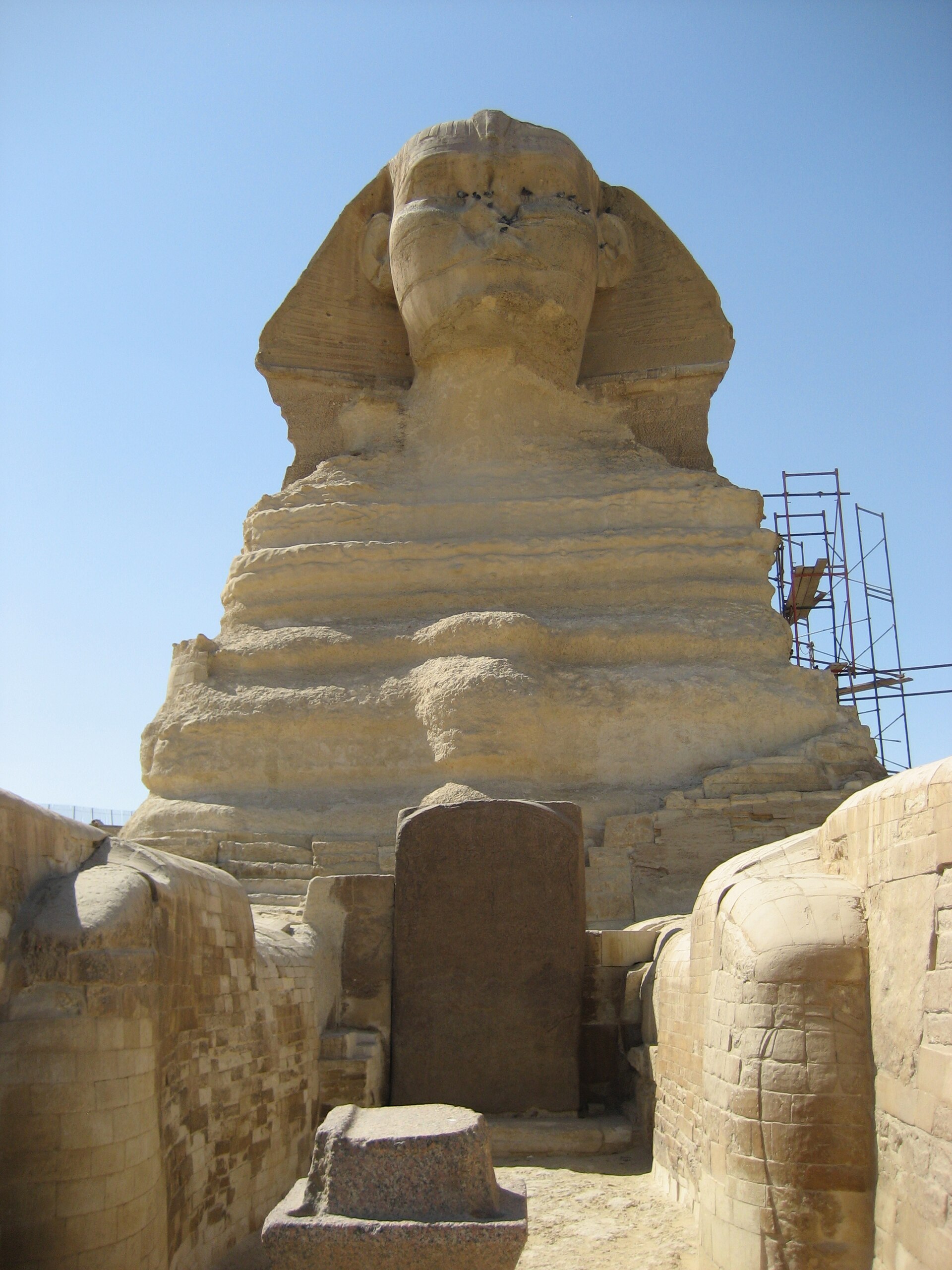
The Great Sphinx of Giza is a colossal ancient statue in Egypt, with the body of a lion and the head of a human. Carved from a single mass of limestone around 4,500 years ago, it is one of the largest and oldest monumental sculptures in the world.
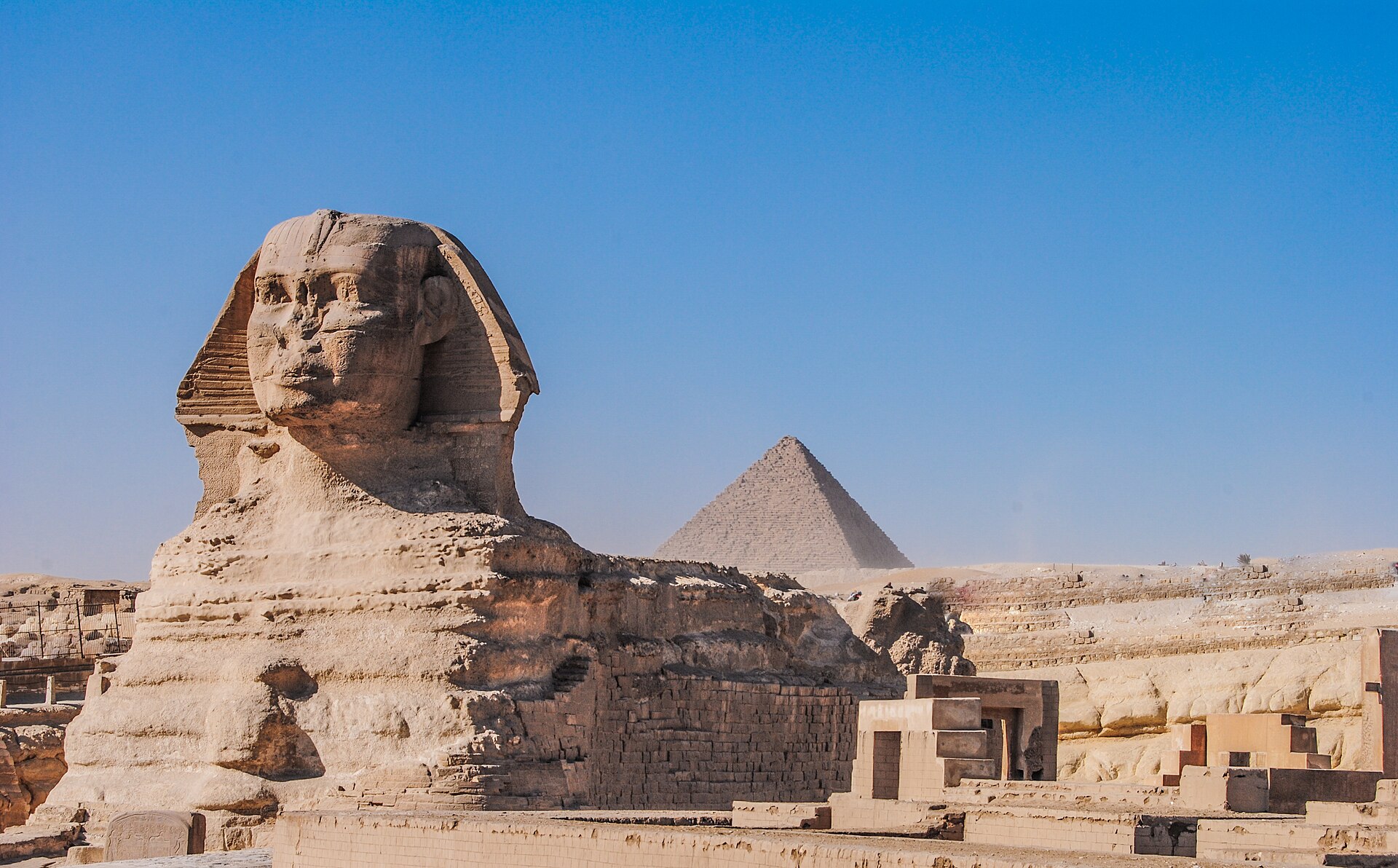
The Sphinx stands on the Giza plateau near the famous pyramids, measuring about 73 metres long and 20 metres high. Astonishingly, it was carved directly from the bedrock, its body, paws, and head shaped from the living rock where it still sits, rather than built from separate blocks.
Most scholars believe the Sphinx was built during the reign of the pharaoh Khafre, around 2500 BC, as part of his great pyramid complex. Its face, some suggest, may be modelled on the king himself. It would have been a fresh, brightly painted monument when the pyramids beside it were new.
The sphinx was a powerful symbol in ancient Egypt, combining the strength of a lion with the intelligence of a human, and was often linked to royal power and to the sun god. The Great Sphinx faces the rising sun in the east, and it likely served a sacred role in the rituals of the plateau.
Between the Sphinx's paws stands a stone tablet known as the Dream Stele. It records a legend in which a young prince, sleeping in the Sphinx's shadow, was promised the throne of Egypt if he cleared away the sand that had buried the monument. He did so, and, the story says, became pharaoh.
Over the millennia the Sphinx was repeatedly swallowed by the desert sand, sometimes up to its neck, and dug out again by those who revered it. For long stretches only its head showed above the dunes. Each rediscovery added to its air of mystery and antiquity.
The Sphinx has lost its nose and its ceremonial beard, and its face is deeply weathered. Stories blaming the damage on cannon fire are doubtful; the nose appears to have been deliberately chiselled off long ago. Fragments of the beard survive in museums, hinting at how the monument once looked.
The Great Sphinx has inspired endless theories about its age, its purpose, and hidden chambers said to lie beneath it. A few researchers have argued, controversially, that water weathering makes it far older than Egyptologists accept, though most reject this. Its silence has always invited the human urge to wonder.
Today the Great Sphinx stands as one of the most recognizable monuments on Earth, weathered by wind, sand, and time yet still gazing eastward after forty five centuries. It remains an enduring emblem of the grandeur, mystery, and endurance of ancient Egyptian civilization.
